












Retail and e-commerce have never moved faster, yet many brands still operate with yesterday’s playbook. Campaigns are tied to rigid schedules, prices stay static while customer demand shifts by the hour, and insights arrive long after opportunities are gone. Inventory piles up where interest fades, while trending products sell out in a blink.
You can see the cracks everywhere. Today’s commerce demands more. They are systems that sense, predict, and adapt as quickly as the customers they serve.
And that’s where the next chapter of retail begins, powered by AI, where intelligence becomes the new engine of experience.
- Retailers once reacted to yesterday's data; AI lets them act on today's signals before the window closes.
By reading behavioral and digital signals in real time, AI systems anticipate demand spikes and pricing opportunities the instant they appear, removing the lag that costs sales.
- AI shifts retail marketing from broad demographic segments to real-time, individual-level personalization.
By understanding each shopper's context, emotion, and intent as they change moment to moment, AI turns generic campaigns into one-to-one experiences that build lasting loyalty.
- Static retail workflows that required manual updates are being replaced by adaptive systems that learn from every transaction.
Machine learning creates a continuous feedback loop where every click, purchase, and message automatically refines forecasts, prices, and recommendations without human intervention.
- AI transforms retail data from noise into insight by connecting sales figures, click paths, and reviews into a unified signal.
Where traditional dashboards required analysts to interpret mountains of reports, AI surfaces the specific pattern that matters right now, such as shifting demand or emerging risk.
- AI is simultaneously reshaping retail at the storefront (personalized experiences) and in operations (predictive supply chains).
The customer-facing and behind-the-scenes transformations are connected: better demand forecasting means fewer stockouts, which means the personalized recommendation AI surfaces is actually available to buy.
How AI solves and opens up new models for commerce
After years of chasing visibility, retailers are now realizing that the next frontier isn’t about seeing more data. It’s about acting on it instantly
In this new model, AI becomes the operational heartbeat. It is the invisible strategist that senses change before humans can see it and acts before customers can drift away.
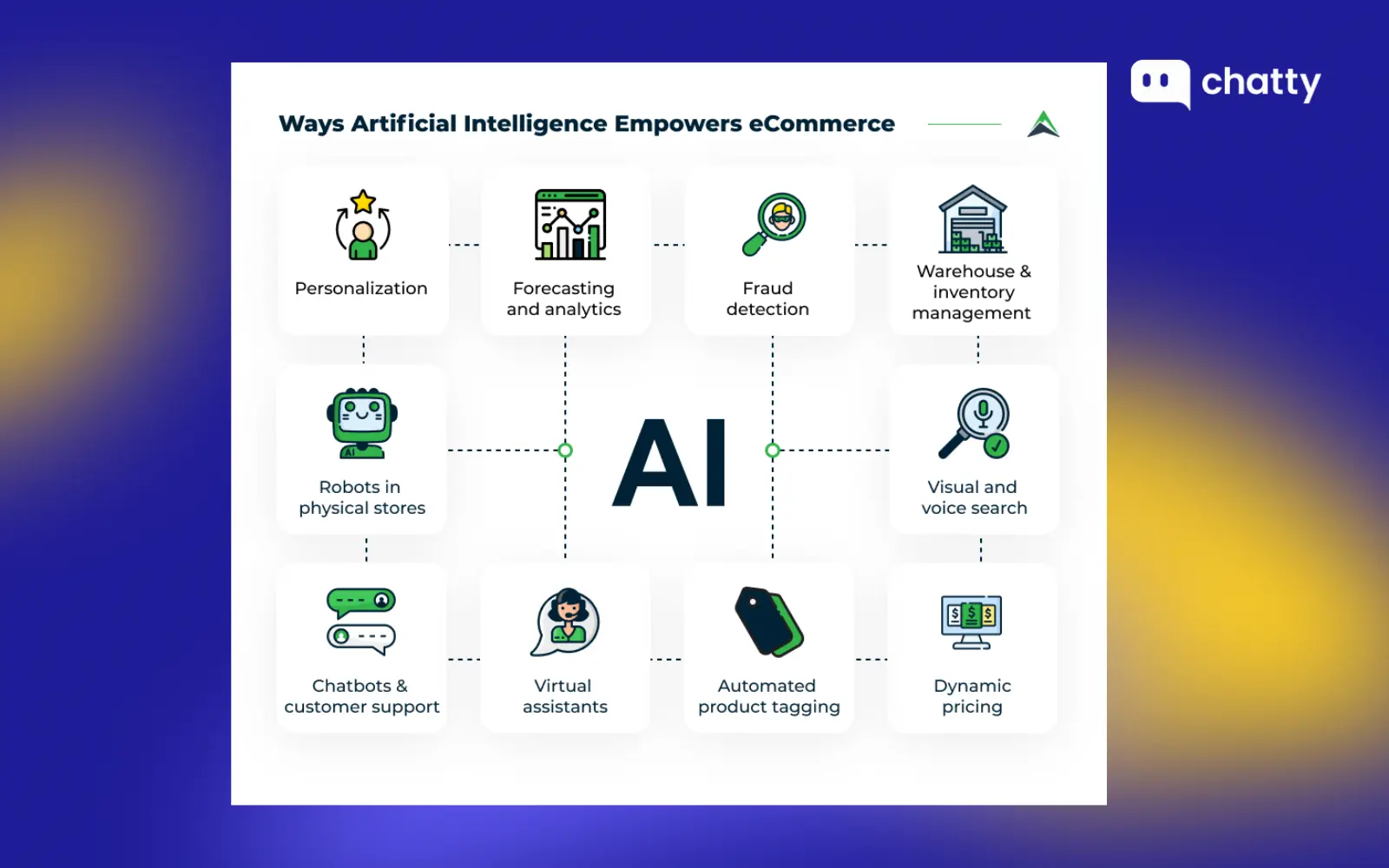
From reacting to predicting
For years, retail and e-commerce decisions were made after the fact: adjusting campaigns, prices, or stock once results appeared. But the world no longer moves at that pace.
AI shifts the entire timeline forward. It reads digital and behavioral signals as they happen, anticipating demand spikes, spotting shifts in intent, and uncovering pricing opportunities the instant they appear.
Instead of reacting to yesterday, brands can now act in the moment, which is proactive, agile, and always ahead.
From segmentation to personalization
In the past, marketing relied on broad demographics, hoping a message would fit. But shoppers today act as individuals, driven by personal context, emotion, and intent that change by the moment.
AI bridges this complexity with understanding. It understands behaviors in real time and tailors offers, timing, and content to each shopper’s context. What was once generic now feels personal, turning every interaction into a one-to-one experience and building loyalty.
From manual operation to adaptive systems
Retail once ran on fixed schedules and static updates. AI replaces that rigidity with systems that learn and adapt.
Through machine learning, every transaction, message, or customer click feeds a continuous feedback loop. Forecasts evolve automatically. Prices adjust to real-time demand. Product recommendations refine themselves as preferences change.
These adaptive systems create a new kind of intelligence. It is an ecosystem that senses shifts, learns from each outcome, and optimizes without waiting for human input.
From data noise to insight clarity
Retail generates mountains of data daily (sales figures, click paths, reviews, etc.), yet most of it sits untapped, buried in dashboards too complex to interpret.
AI filters the noise, connects the dots, and turns it into insight that matters, like spotting shifting demand or emerging risks instantly.
With this clarity, decision-making transforms; retailers gain vision with a unified understanding of operations and customers that guides every move forward.
How AI impacts retail and e-commerce
AI is no longer a backstage tool. From storefront to supply chain, it reshapes how businesses serve, decide, and grow.
Customer experience: The shift is most visible at the storefront. Shoppers expect the store to recognize them: what they like, when they browse, and how they prefer to engage. AI delivers this through personalized storefronts, predictive search, and 24/7 conversational support that feels human.
The result is frictionless commerce: faster checkouts, instant recommendations, and an emotional connection that turns convenience into loyalty.
Operations and logistics: Behind the scenes, AI makes operations smarter and more sustainable. It forecasts demand with remarkable accuracy, helping retailers avoid both overstock and shortages. Predictive supply chains anticipate delays before they occur, while intelligent routing minimizes fuel use and delivery times.
Together, these systems make retail operations smarter, more sustainable, and more cost-efficient, reducing waste and improving margins.
Marketing and merchandising: AI transforms marketing into a continuous learning process where dynamic pricing reacts to live trends, and automated testing refines creative performance in real time. Campaigns no longer depend on instinct; they grow stronger with every click and impression, ensuring that every marketing dollar works harder and smarter.
Decision-making and strategy: The biggest change happens in how teams think. Teams are moving from debating opinions to interpreting live insights drawn from millions of data points. Strategy becomes less about intuition and more about collaboration, a partnership where human vision is guided by machine clarity.
10 proven use cases of AI driving growth in retail and e-commerce
AI’s true impact becomes clear when theory meets action. Building on our earlier discussion of how AI transforms experience, operations, and decision-making, here are 10 concrete ways that AI drives growth today
1. Personalized product recommendations
AI enables retailers to understand customers at an individual level, not by who they are on paper, but by how they behave in real time.
By analyzing browsing patterns, clicks, purchase history, and even how long a shopper lingers on a product, AI predicts what each person is most likely to buy next.
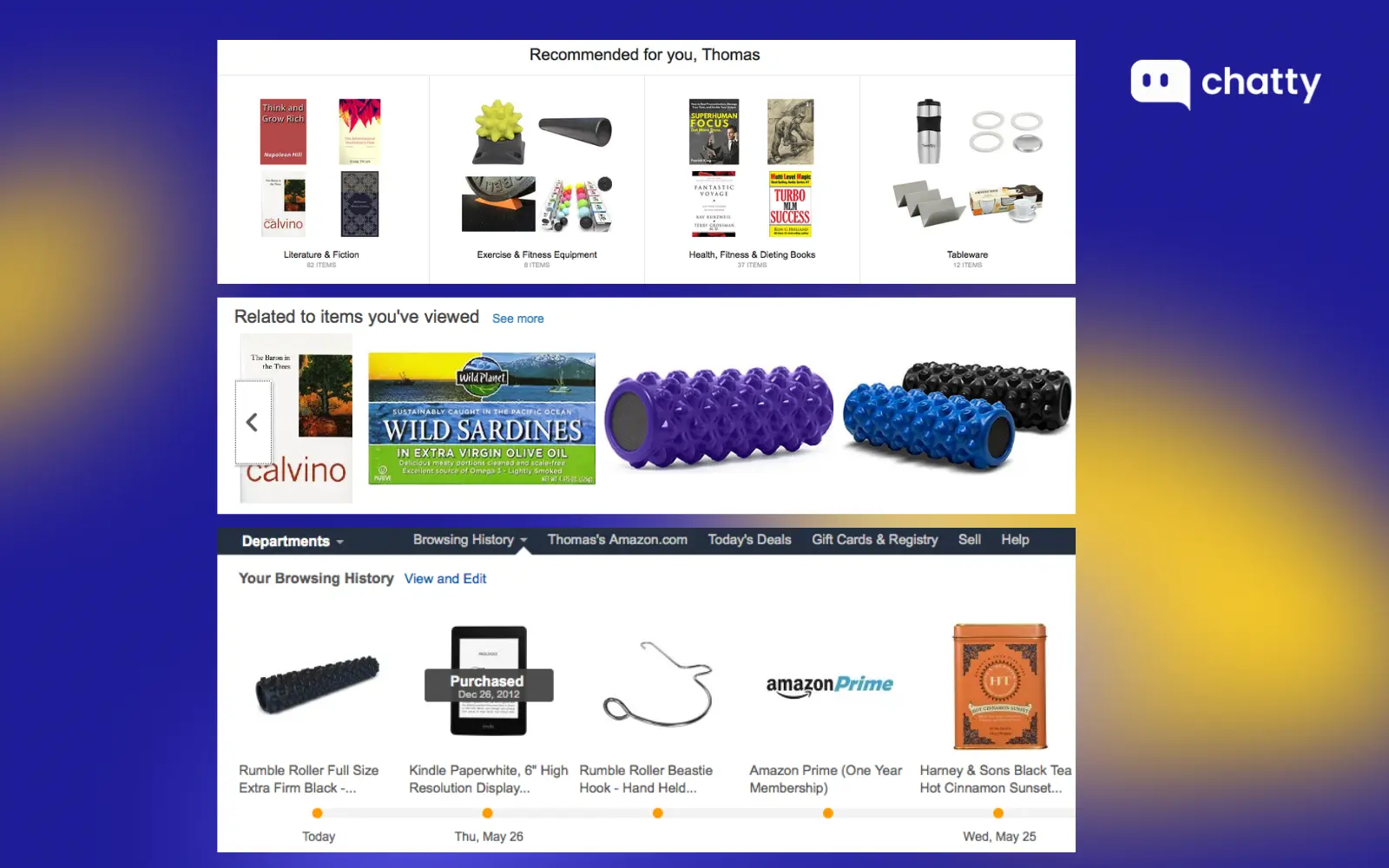
Amazon is the benchmark for this strategy. According to Rejoiner (2024), about 35% of Amazon’s total sales come directly from these personalized recommendations. Specifically, Amazon has blended personalization into every touchpoint through:
- Product suggestions appear across the homepage, cart, and checkout, making discovery effortless.
- AI adjusts recommendations in real time as shoppers browse, reflecting instant intent shifts.
- Data from Alexa, email, and mobile apps are integrated, creating consistent personalization across channels.
2. Conversational commerce and AI chatbots
Beyond simple FAQ tools, AI chatbots harness natural language processing and machine learning to replicate human-like interaction at scale to act as real-time assistants in the buying journey.
By engaging customers conversationally, they help answer questions, make recommendations, upsell or cross-sell products, and guide users toward purchase.
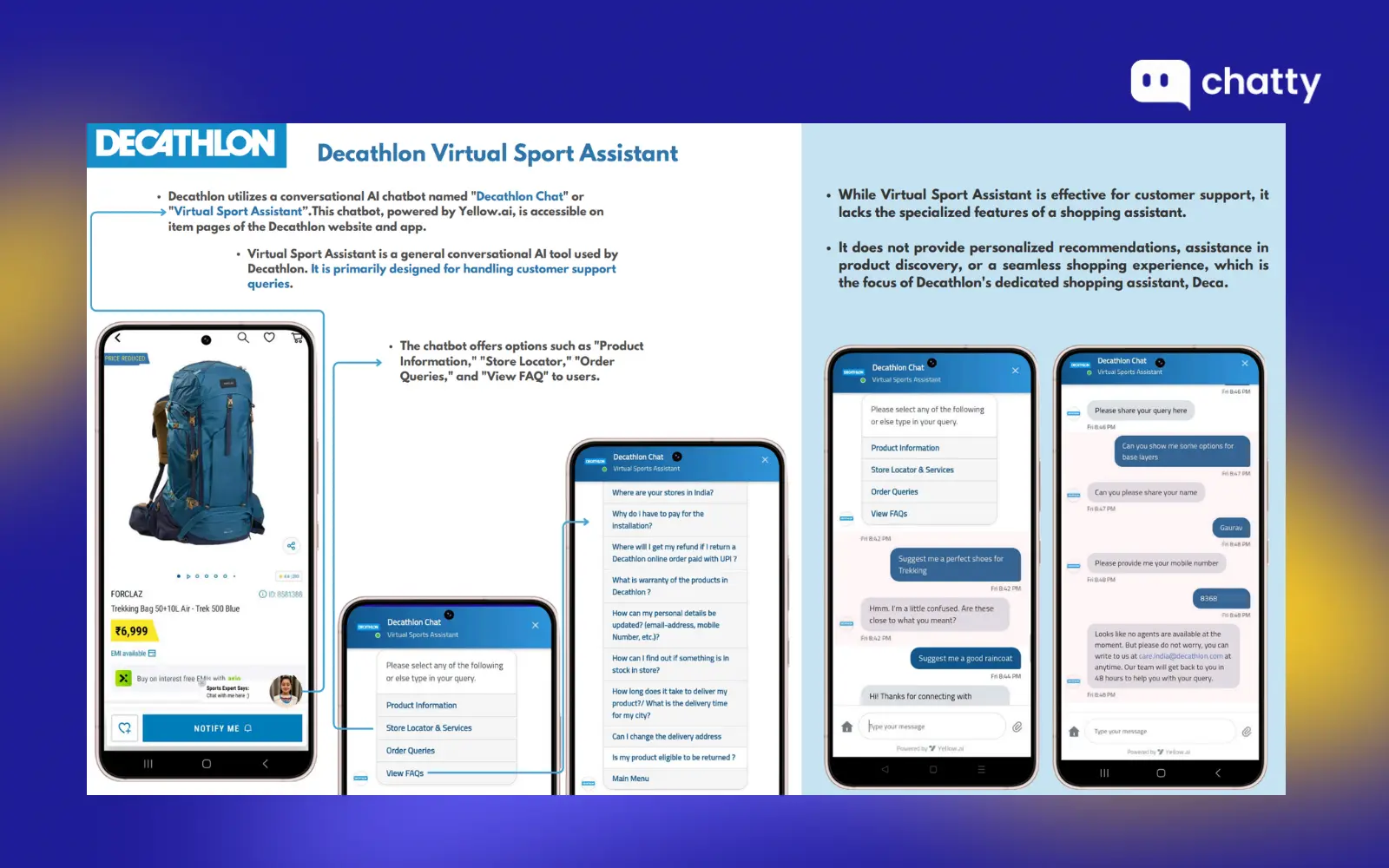
One prominent example is Decathlon’s deployment of an AI chat assistant using the platform Chatty. According to case-study data:
- Decathlon’s system was able to learn over 10,000 SKUs overnight. After implementation, they achieved that about 65% of customer queries were automated, and they boosted online conversions by about 15%.
- The chatbot handled product-related queries across web and mobile, lifted click-through on product pages, and freed support teams from repetitive tasks.
3. Dynamic pricing
AI uses machine learning to set the right price at the right moment, factoring in demand, inventory, competitor moves, seasonality, and customer signals. The strategy increases margin where possible and keeps offers competitive without blunt manual guesswork.
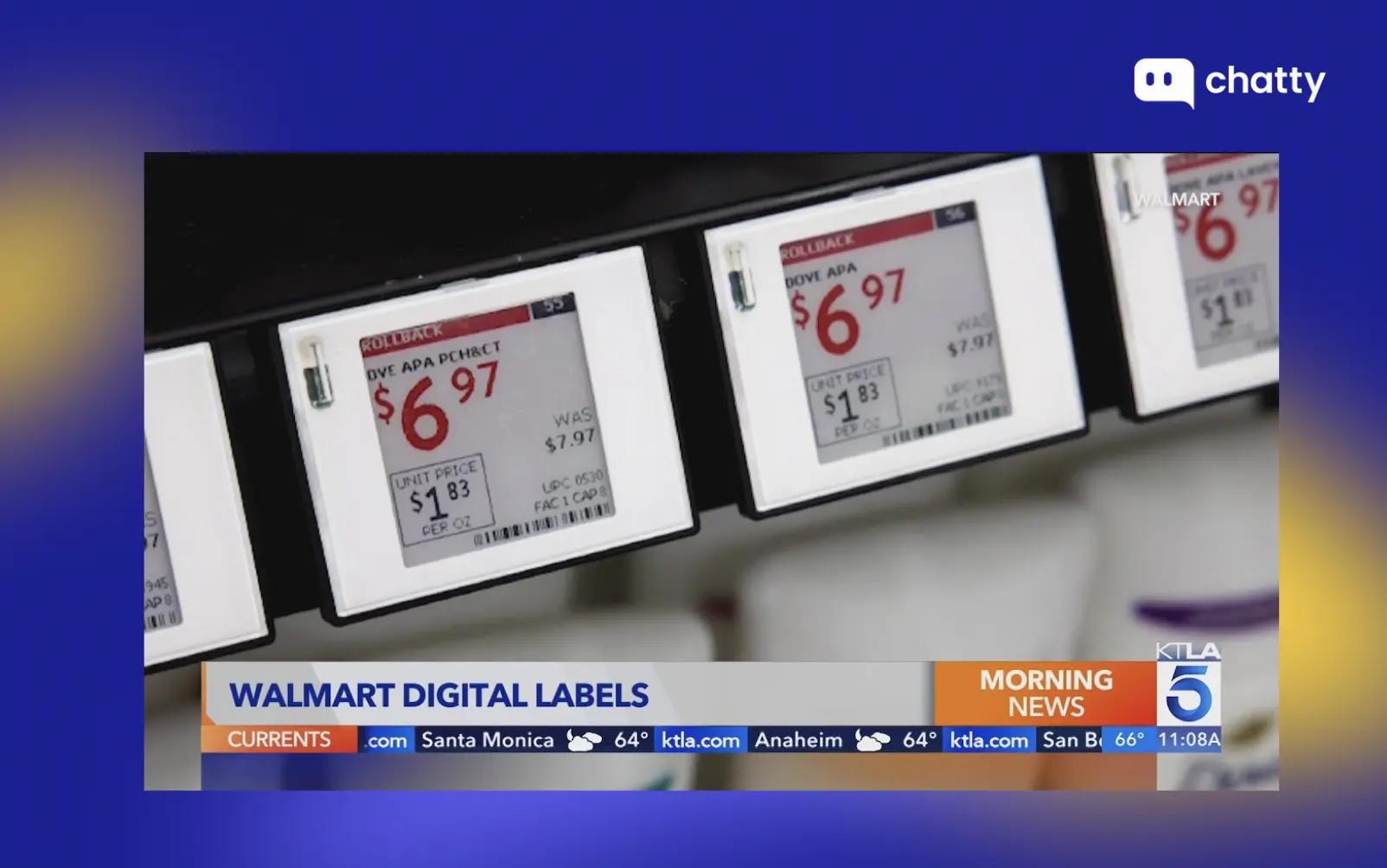
Walmart, a giant retailer, has become a pioneer in AI-driven pricing through its AI Center of Excellence, which integrates pricing, forecasting, and inventory data across online and offline channels. Its strategies include:
- Using predictive analytics, Walmart adjusts thousands of prices daily based on market demand, competitor trends, and external factors like weather or seasonality.
- The retailer also introduced digital shelf labels to enable instant price updates in stores.
As a result, Walmart reported a 30% reduction in stockouts, 20% decrease in overstock costs, and higher inventory turnover after implementing AI pricing systems
4. Demand forecasting and inventory optimization
AI forecasting models process years of sales data, real-time shopping behavior, and external signals such as weather, holidays, and even social media trends. The result is a demand prediction that is contextually smarter, allowing brands to plan production, replenishment, and logistics before trends fully emerge.
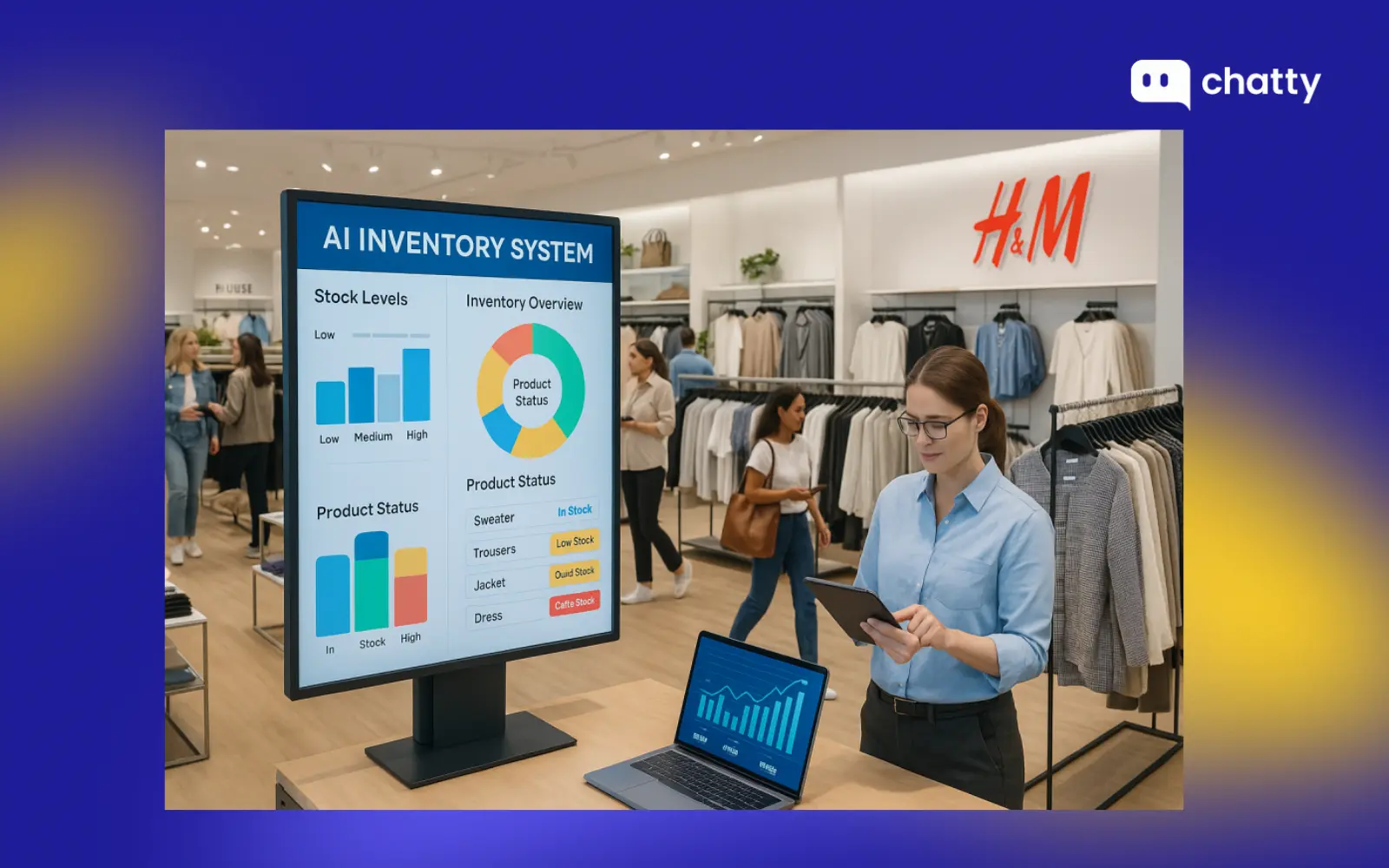
H&M, a leading fast fashion retailer, applies AI forecasting across its entire value chain, from product design to store replenishment, driving this transformation.
Its AI systems have worked for
- Analyzing multi-layered data to anticipate what styles will sell in each market
- Each store’s demand model is tailored by region and climate
- Neural networks and decision trees blend sales, trend, and weather data to predict inventory needs in near real time.
- H&M began with pilot markets before scaling globally, refining data pipelines and model accuracy.
By aligning production with predicted demand, H&M has significantly reduced unsold stock and textile waste.
5. Visual search and image recognition
Shoppers today don’t just search with words; they search with images.
AI-powered visual recognition allows customers to upload a photo, screenshot, or even a camera snapshot and instantly find visually similar items in a retailer’s catalog. This bridges inspiration and purchase, reducing friction between discovery and conversion.

ASOS pioneered this trend with its “Style Match” tool, an AI-driven visual search feature which
- Embedded directly in the ASOS app’s camera and search bar, creating a frictionless user experience.
- Analyzes shapes, colors, and patterns in any uploaded photo in seconds, then matches them to ASOS’s inventory of over 85,000 products.
6. Personalized marketing and customer segmentation
This day is an era for dynamic, behavior-based personalization. AI now analyzes purchase history, app interactions, time of day, location, and even weather to tailor messages and offers that truly resonate.

Starbucks has become a benchmark for AI-powered personalization for 30% ROI upside through its Deep Brew initiative. It is an in-house AI platform integrated across its loyalty and mobile app ecosystem. Deep Brew processes billions of data points daily.
The outstanding points of its AI systems consist of the following:
- Customers are segmented dynamically based on intent signals, frequency, and contextual factors rather than static demographics. Each sector is suggested with a different drink menu or space.
- The Starbucks app automatically updates product suggestions and deals each time a customer engages, ensuring offers stay relevant.
- Deep Brew synchronizes personalization across the app, in-store POS systems, and email marketing, creating a unified experience.
7. Smart logistics and route optimization
Building on earlier practices of personalization and forecasting, smart logistics ensures that goods move efficiently and reliably from the warehouse to the customer.
Each delivery becomes a point of delight rather than a delay. AI-powered systems optimize routes, adapt to real-time conditions, and reduce operational friction at scale.
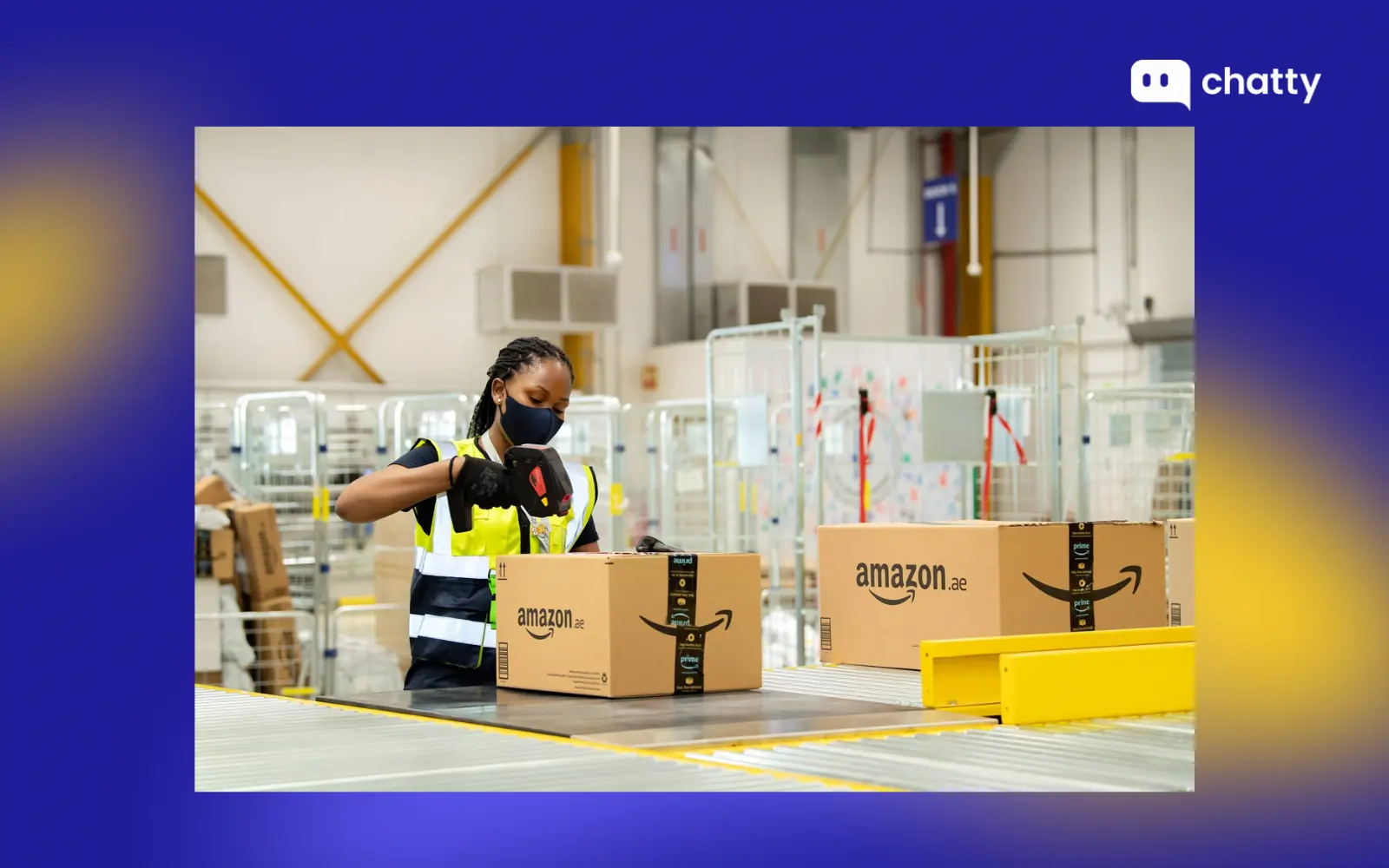
Amazon uses machine learning and simulation models to optimize its fulfillment network and last-mile delivery. Its strategy specifically includes:
- By integrating deep reinforcement learning with route-planning tools (e.g., via the platform AnyLogic), Amazon reduced average grocery delivery times from 17 to 10 minutes, a 38% improvement.
- Additionally, by geo-clustering fulfillment centers and adjusting routing dynamically, travel distance per package was cut by approximately 48%.
8. In-store analytics and smart shelves
Building on smart logistics and predictive inventory, in-store analytics brings intelligence directly to the storefront, letting retailers monitor customer behavior, shelf stock, and visual merchandising in real time.
AI-powered solutions using computer vision, IoT sensors, and data fusion transform traditional aisles into a network of insights.
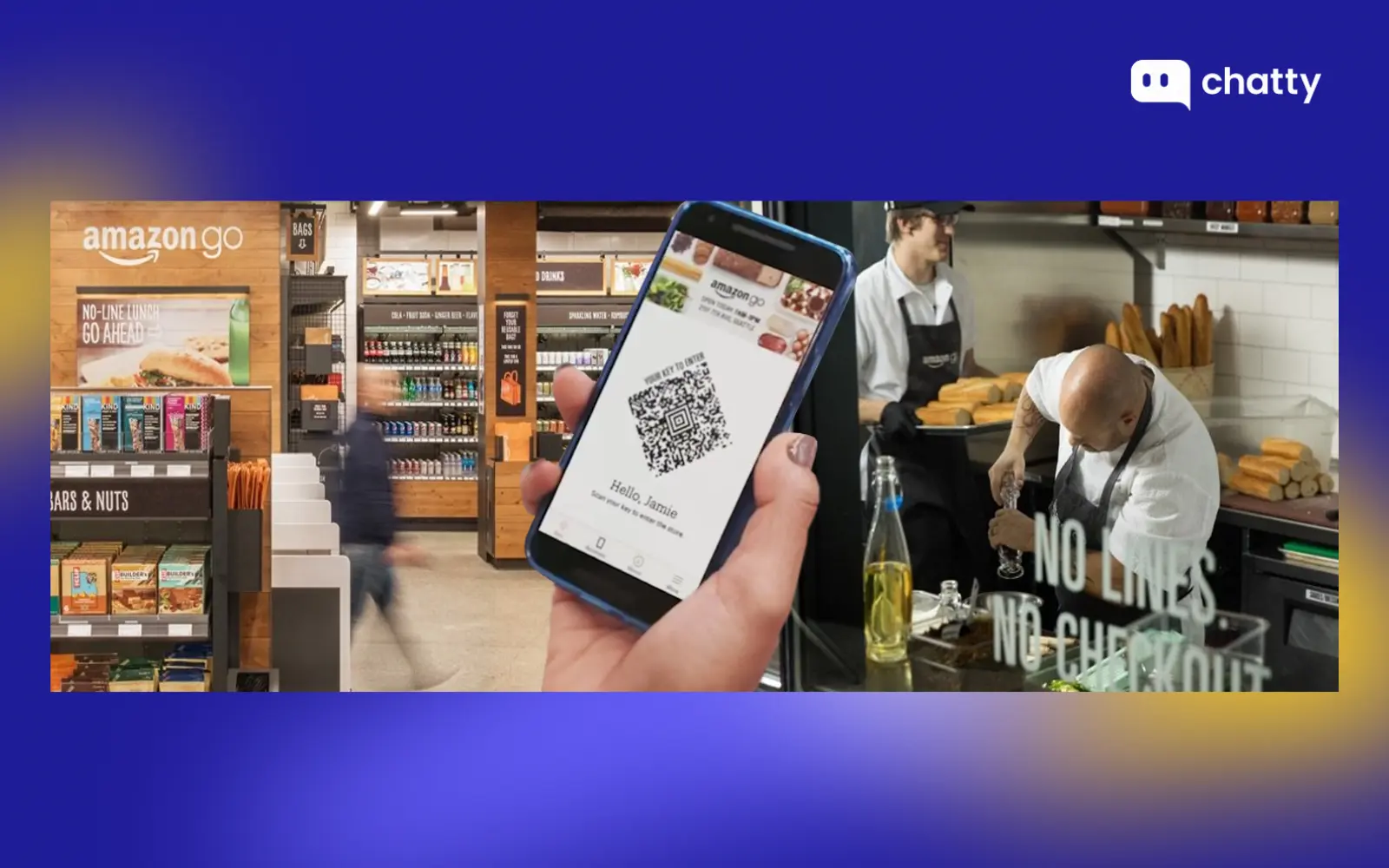
Amazon Go stores, as a well-known example, combine computer-vision cameras, depth-sensing sensors, and weight-equipped shelves to track every item a customer picks up, examines, or returns.
The core strategy of it includes
- Cameras detect hand movements; weight sensors validate item removal or return.
- The system knows instantly when a shelf becomes empty or when a product is returned to the wrong place.
- Insights on traffic flow, dwell time, and popular zones support layout optimization and targeted in-store offers.
When a shopper enters via their mobile app, the system links their account to the shopping session, tracks movements seamlessly, and charges them automatically when they leave.
9. Fraud detection and payment security
AI elevates payment security by analyzing transaction patterns in real time: identifying anomalies, assessing risk, and acting instantly to block fraudulent activity.
It continuously learns from behavior, devices, merchant profiles, and external signals to spot threats as soon as they emerge.
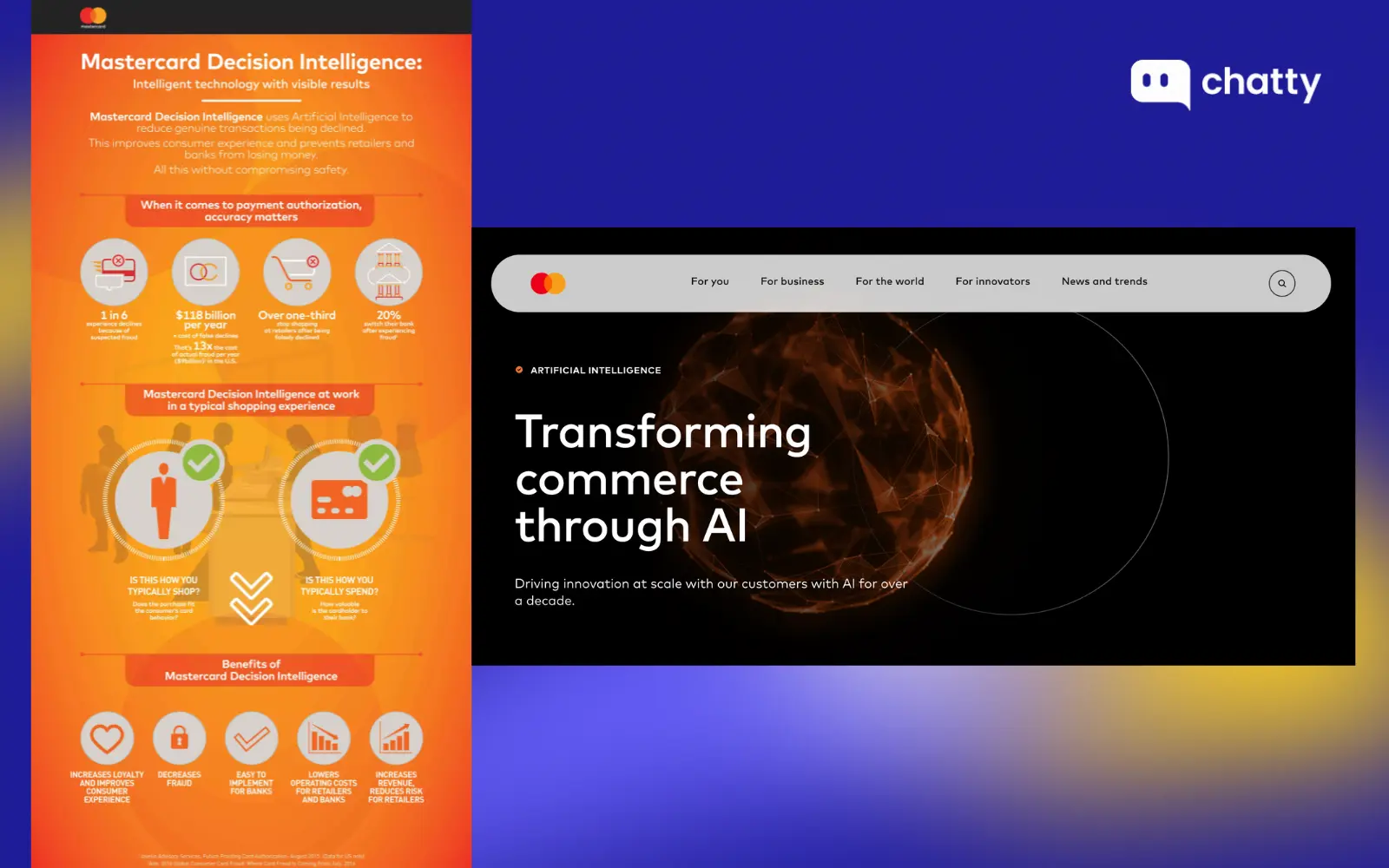
Mastercard’s “Decision Intelligence Pro” platform uses generative AI and graph-network technology to scan over a trillion data points, detecting emerging fraud patterns at a rate previously unreachable. More detailed:
- Each transaction is evaluated in about 50 milliseconds against thousands of features (cardholder behavior, merchant network links, device patterns)
- Relationships between cards, merchants, and networks are mapped to detect coordinated fraud rings or “mule” accounts.
- The system adapts as fraud tactics evolve. Retailers and payment platforms are protected from emerging threats, not just known ones.
10. Generative AI for content and creative automation
Today, generative AI enables retailers to automatically and easily create high-volume, high-quality content while preserving brand voice and relevance. AI drafts, optimizes, and iterates in minutes, letting human teams focus on strategy and differentiation.

A U.S.-based dress distributor, Amarra, uses ChatGPT to author product descriptions and support copy at scale. Specifically, it
- Import SKU attributes (materials, dimensions, use cases) so the model generates accurate, utility-first descriptions
- Create prompts and templates for a consistent tone
- Produce language-localized variations and test them in target markets rather than translating raw copy.
The brand reports faster content production, a 40% reduction in overstock through better catalog clarity, and fewer pre-sale queries
Chatty: The best AI tool for your commerce journey!
AI in retail and e-commerce is powerful, but for many brands, it’s also complex, costly, and hard to personalize. That’s where Chatty steps in, which is a top pick for merchants in the market today, designed specifically for online retailers.
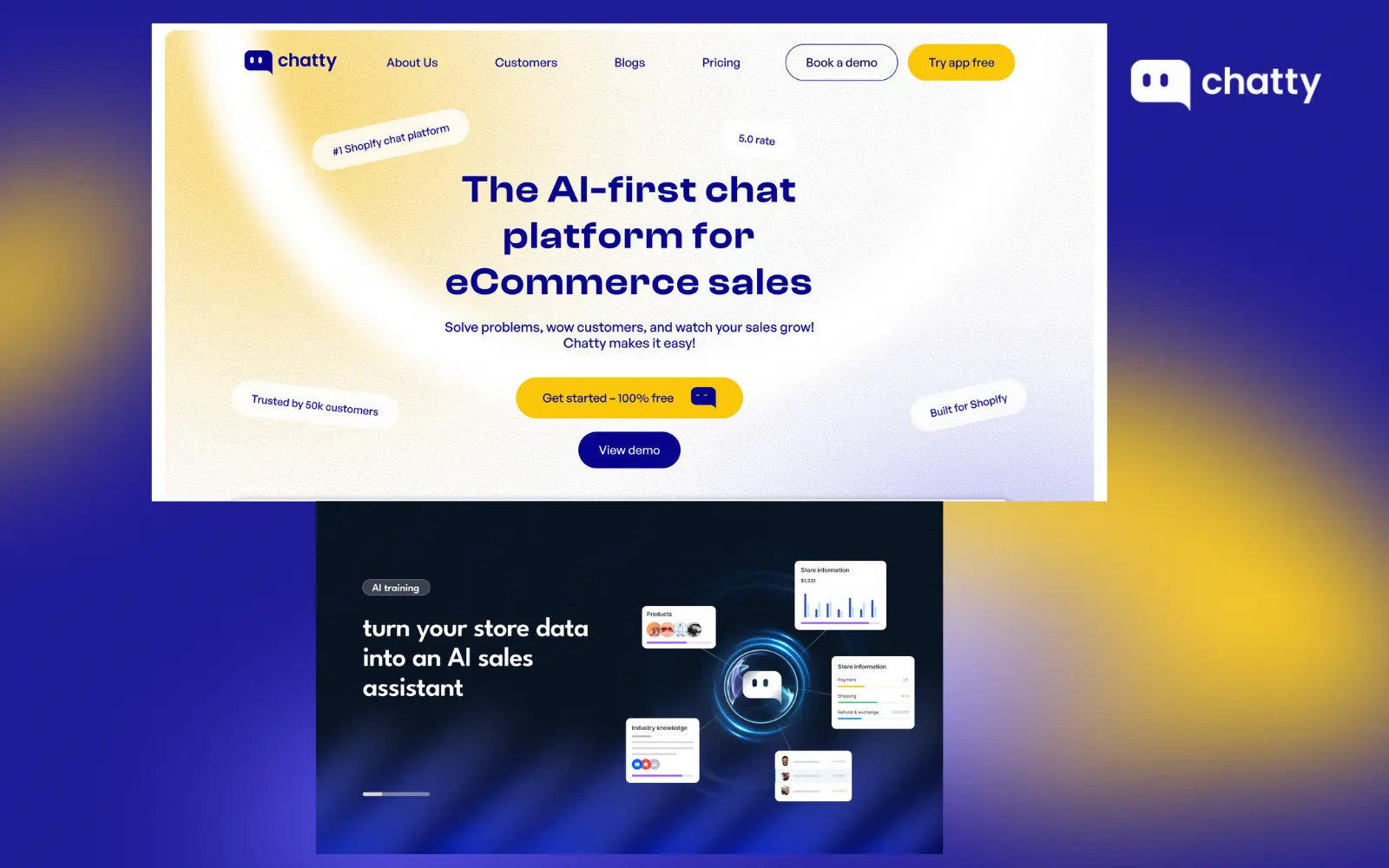
- Chatty solves the disconnected systems with native Shopify integration, automatically syncing product catalogs, order history, and store policies. It allows the AI to respond with accurate, context-rich answers.
- Chatty’s hybrid AI with a live chat model provides a balance of human touch and automation. The AI handles routine questions instantly, while complex cases are transferred to human agents through a unified inbox that connects WhatsApp, Instagram, Messenger, and email.
- AI in retail often stops at reacting, but Chatty goes proactive. Its “Proactive Chat” feature detects when customers linger or hesitate and automatically offers help or product suggestions, turning passive browsing into sales opportunities.
- Chatty’s custom training and multilingual capabilities make it easy for global retailers to maintain brand tone and accuracy, while its GDPR-compliant data privacy keeps customer trust intact.
With affordable, scalable pricing and a 4.9/5 rating on Shopify, Chatty proves that AI doesn’t have to be complex to drive impact. It is the reliable AI partner built for growth.
Closing thought
In retail and e-commerce, AI is now the core engine behind how modern consumers discover, decide, and buy. From personalized recommendations to predictive logistics and conversational shopping, AI is the invisible engine shaping every winning customer experience.
The most successful brands are training AI to think like their best salesperson and act like their most trusted partner.
AI won’t replace retailers, but retailers who understand and use AI will replace those who don’t.
FAQs
Generally, e-commerce uses AI to personalize shopping, predict demand, and automate operations.
- AI powers product recommendations, dynamic pricing, and predictive inventory that keeps stock balanced.
- AI chatbots handle real-time customer support, while visual search and generative AI tools create content and ads at scale.
- Behind the scenes, AI also secures payments, optimizes delivery routes, and turns data into instant insights, making online retail faster, smarter, and more personal than ever.
AI is rapidly transforming retail by making operations smarter, shopping experiences more personal, and decision-making faster. Key shifts include:
- Personalization at scale: AI tailors offers, channels, and messaging to individual shoppers, boosting engagement and loyalty.
- Operational efficiency: Retailers use AI to optimise inventory, pricing, supply chain, and logistics
- New value creation: AI helps turn returns into opportunities, automate formerly manual tasks and enable new business models
According to industry surveys, more than 80% of retail leaders believe AI will significantly change their business in the next 5 years
Not at all. AI can understand many practical shopping needs, such as detecting patterns, predicting intent, and reducing friction. But it doesn’t fully “feel” human needs in the way a person might.
- AI lacks true emotional awareness or the full depth of human contexts (values, mood, culture) and thus might misinterpret nuance or sudden shifts in preference.
- Consumer trust and acceptance are still hurdles. Many shoppers remained uneasy about handing over control to AI.
Relying too heavily on AI can lead to the following consequences:
- Bias and flawed decisions: If AI systems are trained on incomplete or skewed data, they may produce unfair or inaccurate outcomes
- Loss of human touch: Over-automation can reduce human empathy, context awareness, and judgment in customer experiences, making interactions feel cold or disconnected.
- Overdependence and single point of failure: If critical operations shift fully to AI without human oversight, system errors or outages can have large impacts.
- Data privacy, security, and regulatory risk: Using large-scale customer data and AI tools increases vulnerability to data breaches, misuse, compliance failures, or vendor lock-in.
- Decline in human skills and innovation: Relying on AI for decision-making and creativity may erode human critical thinking, skill development, and unique brand differentiation.