










In 2026, successful Shopify stores are built on relevance, not just product variety. Shoppers expect brands to understand their needs and surface the right products instantly. AI product recommendations make this possible by analyzing behavior, preferences, and intent in real time.
When used well, they increase average order value, improve conversion rates, and create more personalized customer experiences across the store. From chat-based suggestions to smart upsells and post-purchase offers, AI recommendations now play a critical role in e-commerce growth.
This guide explains how AI product recommendations work on Shopify and helps you choose the best app based on your goals, store size, and growth stage.
- AI product recommendations increase revenue by up to 300% for businesses that implement personalization at scale. Unlike traditional best-seller lists that show everyone the same items, AI-driven suggestions adapt to each shopper's behavior, making every recommendation more likely to convert.
- Placing AI recommendations on product pages and in the cart can raise average order value by 15–26%. These are the highest-intent moments in the shopping journey, where a shopper is already committed to buying and most likely to add a relevant cross-sell or upsell.
- 40% of consumers have bought more due to personalized product recommendations, with 59% saying they make shopping easier. The dual benefit of personalization is that it both removes friction (helping people find things faster) and creates urgency (surfacing things they didn't know they wanted).
- AI recommendations differ from rule-based systems because they adapt to changing behavior, seasonality, and trends automatically. Where fixed logic requires a merchant to manually update bundling rules, AI continuously learns which suggestions lead to conversions and adjusts future recommendations accordingly.
- For Shopify stores, AI recommendations generate higher conversions without increasing traffic or ad spend. By converting more of the existing visitor base through relevance, stores improve their return on existing traffic costs rather than spending more to acquire new visitors.
What is AI product recommendation on Shopify?
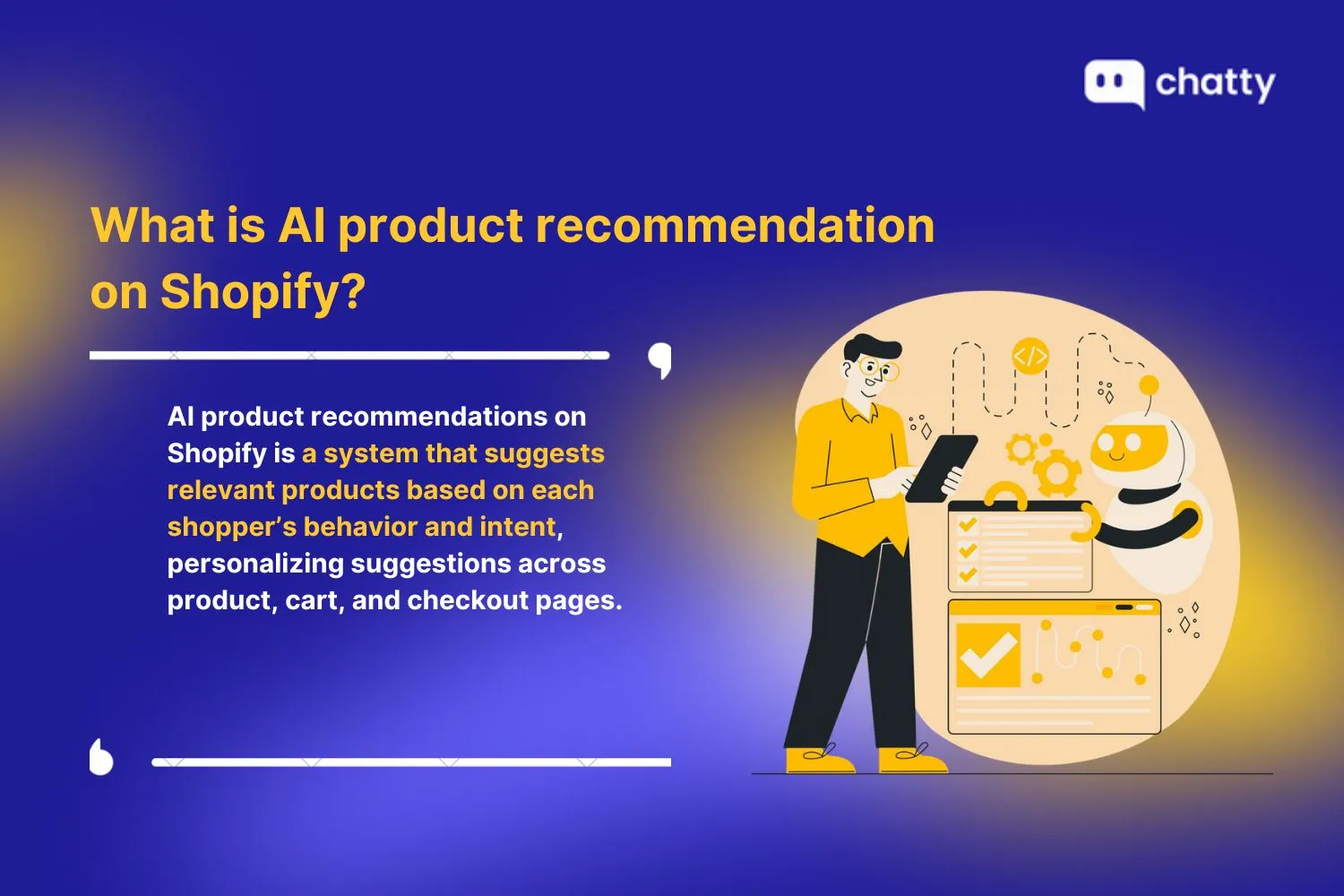
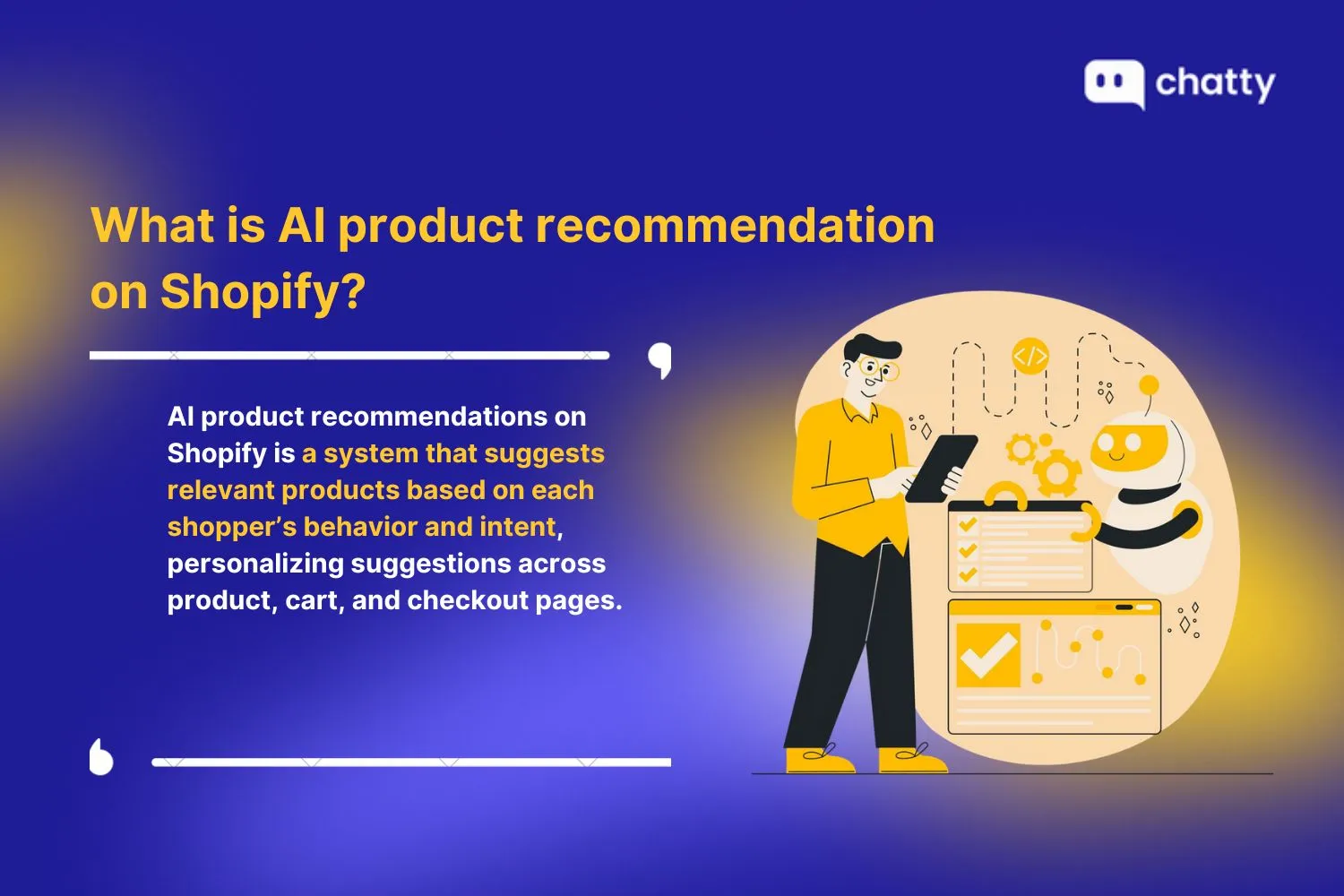
An AI product recommendation on Shopify is a system that automatically suggests the most relevant products to each shopper based on how they browse and shop. Instead of showing the same recommendations to everyone, it personalizes product suggestions so customers see items that actually match their interests, needs, or buying intent. You'll commonly see these recommendations on product pages, homepages, cart pages, and during checkout.
These recommendations work by analyzing real store data, not guesses. AI looks at patterns across your store, such as:
- Products a customer views, clicks, or adds to cart
- Previous purchases and order history
- Product relationships (items often bought or viewed together)
- Real-time behavior during a session
As more shoppers interact with your store, the system continuously learns which suggestions lead to conversions and refines future recommendations automatically.
This is where AI differs from traditional rule-based recommendations. Rule-based systems follow fixed logic you set, like showing products from the same collection or price range. AI-based recommendations go further by adapting to changing customer behavior, seasonality, and trends without manual rules. For Shopify merchants, this means more relevant suggestions, less setup work, and a higher chance of turning browsing into buying.
If you want a deeper breakdown of how personalization drives ecommerce growth, read more in our guide to AI product recommendations for boosting ecommerce sales.
Why AI product recommendations matter for Shopify stores
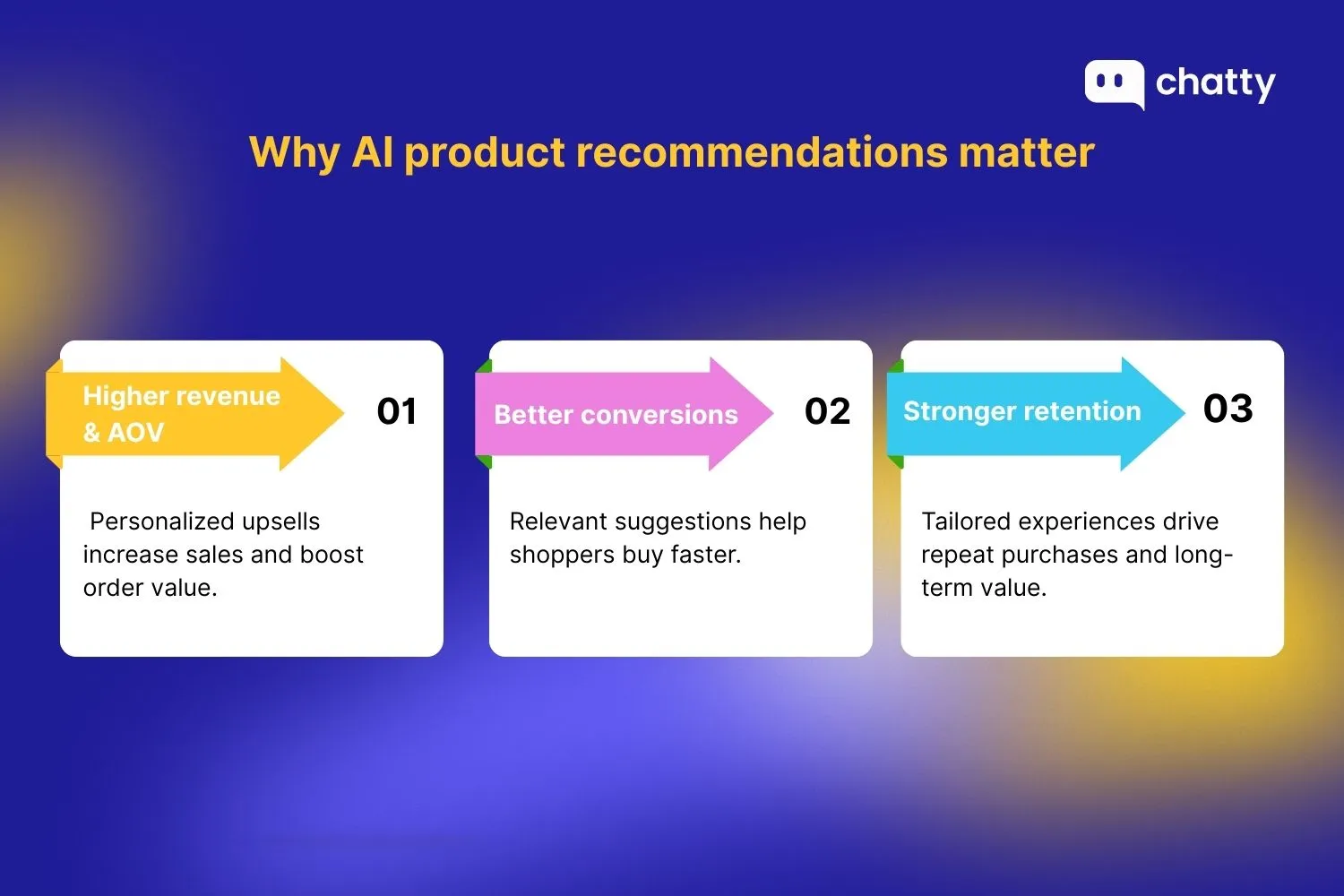
Here are the main reasons AI product recommendations are important for Shopify stores of all sizes.
Higher revenue & average order value
AI engines increase revenue by tailoring product suggestions to what each shopper is most likely to buy. Businesses using AI product recommendations often report strong sales growth, with some seeing up to 300% more revenue directly linked to personalization.
AI also increases average order value because it identifies natural cross-sell and upsell opportunities, such as recommending accessories or complementary items at the right moment. This approach can raise order value by 15 to 26% or more. A practical tip for Shopify stores is to place AI recommendations on product pages and in the cart, where customers are already close to making a decision.
Improved conversion rate
AI product recommendations help shoppers find relevant products faster, which increases the likelihood of completing a purchase. When customers see suggestions that match their interests, they spend less time searching and make decisions more confidently. Research shows that up to 40% of consumers have bought more due to personalized recommendations, and 59% say personalization makes shopping easier.
For Shopify merchants, this means higher conversions without increasing traffic or ad spend. Placing AI-driven sections like "Recommended for you" or "You might also like" on product pages and in the cart can guide shoppers smoothly toward checkout and reduce drop-offs.
Stronger customer retention & lifetime value
Beyond immediate sales, AI recommendations help build long-term customer relationships. Shoppers are more likely to return to stores that understand their preferences, and studies show that 91% of consumers prefer brands that offer personalized experiences.
By consistently showing relevant products, AI encourages repeat purchases and increases customer lifetime value. Shopify merchants can apply this by using AI insights for personalized email follow-ups, homepage recommendations for returning visitors, and tailored offers that turn one-time buyers into loyal customers.
Types of AI product recommendation strategies for Shopify
Shopify stores use different AI recommendation strategies to guide shoppers at key moments, from discovery to checkout, helping customers find the right products faster while increasing sales.
Chat-based recommendations
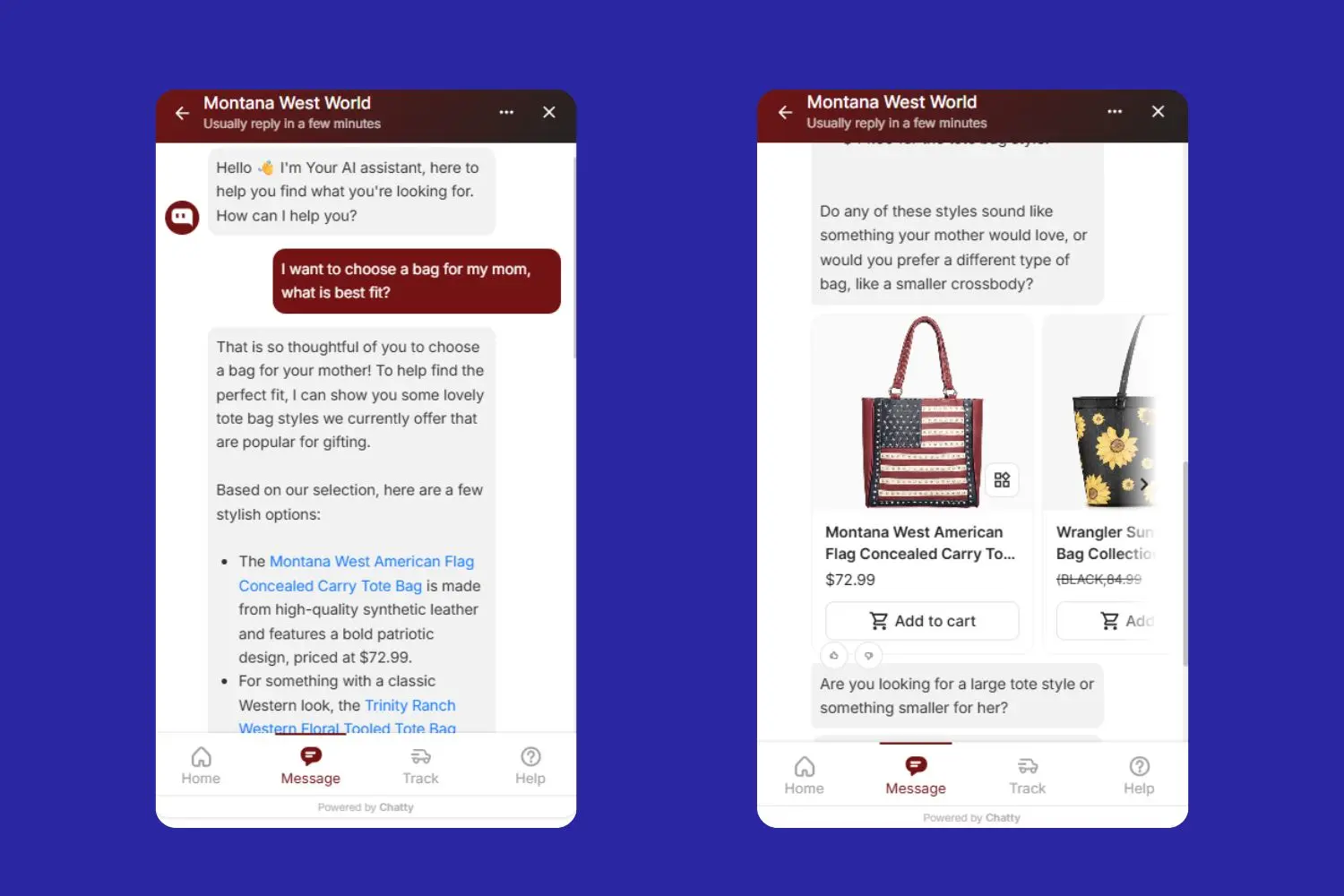
Chat-based recommendations use AI chatbots or live chat assistants to suggest products during real-time conversations. Instead of browsing endlessly, shoppers can ask questions like "What should I buy for sensitive skin?" or "Which size fits me best?" The AI analyzes intent, preferences, and past behavior to suggest relevant products instantly.
This strategy is especially useful for complex products, new visitors, or high-consideration purchases. Because it mimics the experience of an in-store assistant while keeping the interaction fast and convenient.
"Frequently bought together" recommendations
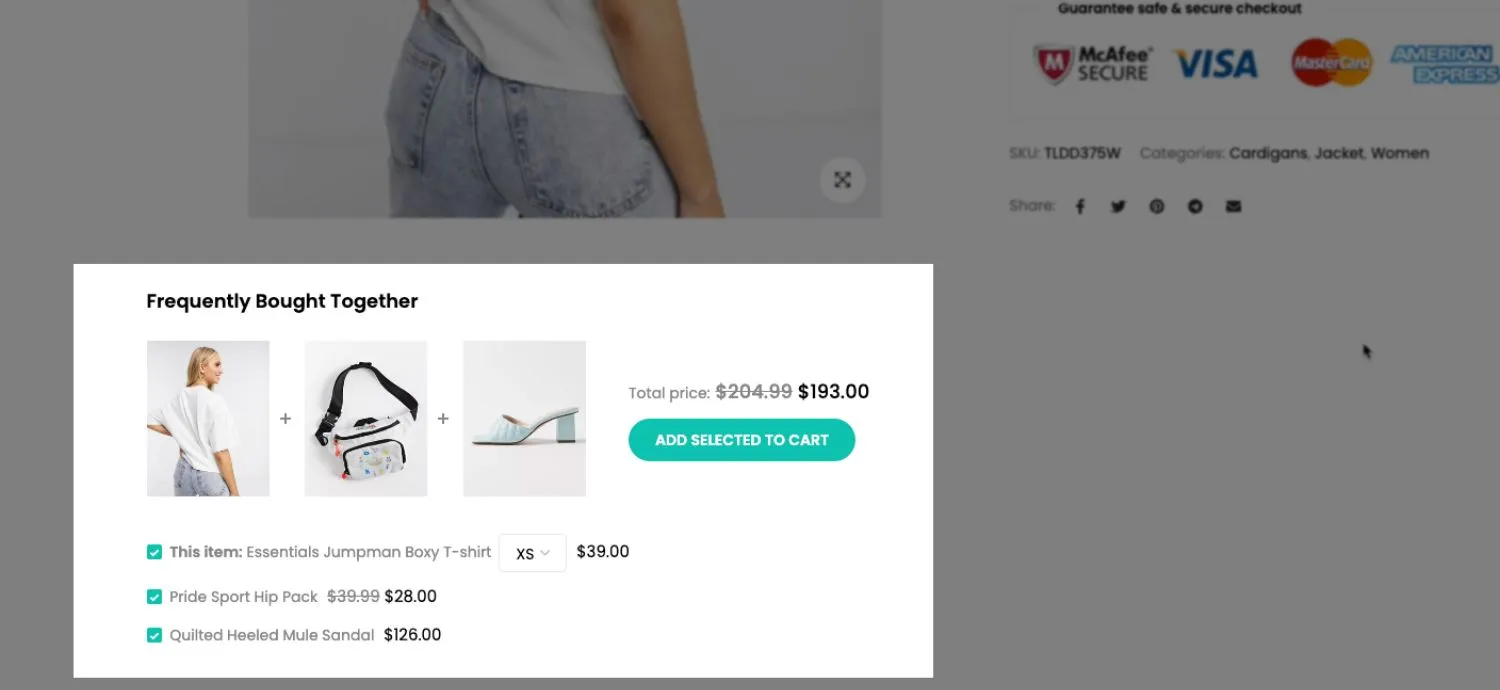
This strategy analyzes historical purchase data to identify products that are commonly purchased in the same order. AI then displays these bundles on product pages or carts, encouraging customers to add complementary items.
For example, a phone case shown with a screen protector or skincare products paired into a routine. These recommendations feel logical and helpful, making it easier for customers to complete their purchase while increasing average order value with minimal effort.
Personalized homepage and collection recommendations
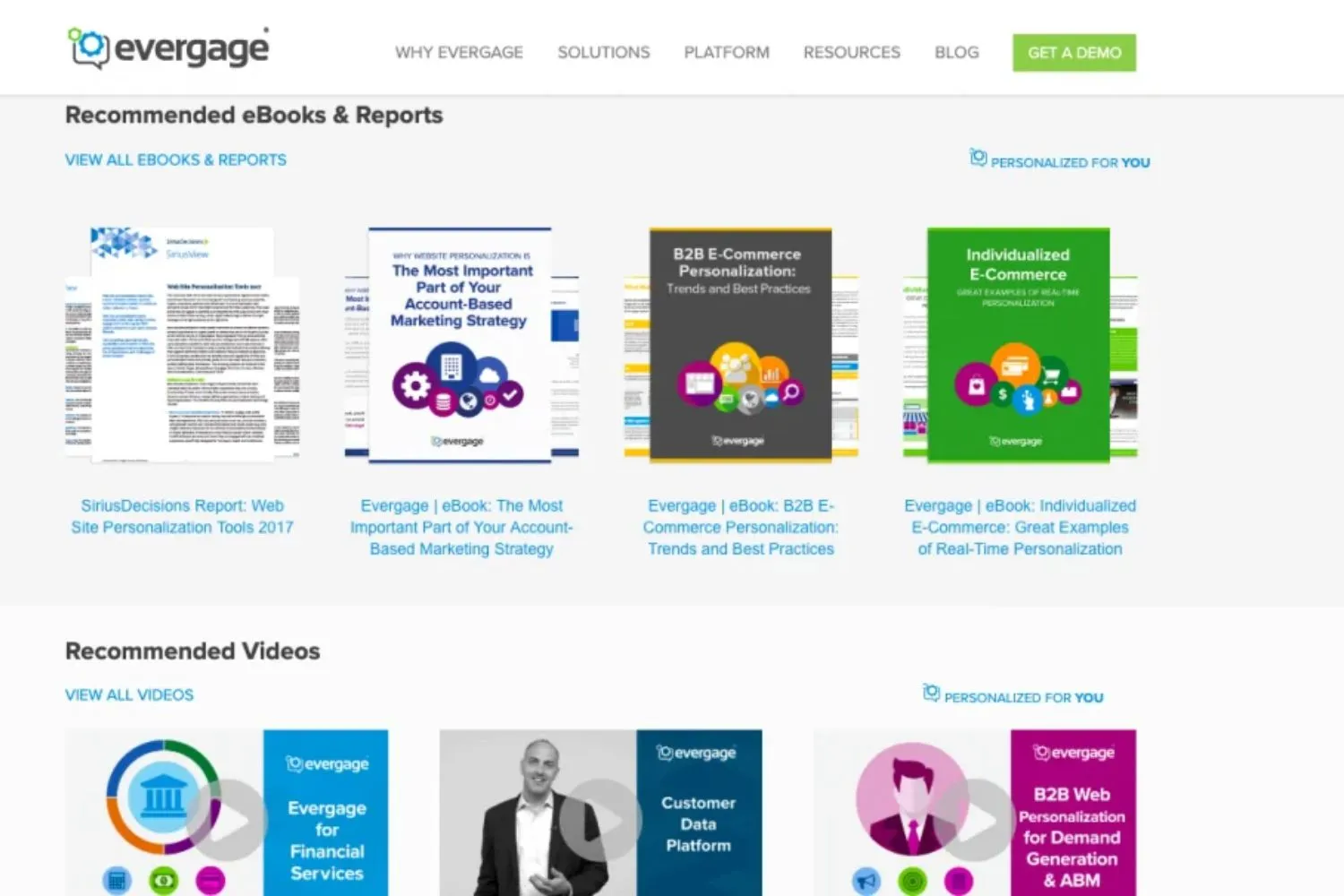
Personalized recommendations tailor the homepage, collection pages, or featured sections based on each shopper's behavior. AI tracks browsing history, previous purchases, location, and engagement patterns to surface products most likely to interest that visitor.
Returning customers may see items similar to past purchases, while new visitors see trending or best-selling products relevant to their segment. This strategy helps stores stay relevant to different audiences without manually creating multiple storefront versions.
Checkout and post-purchase upsells
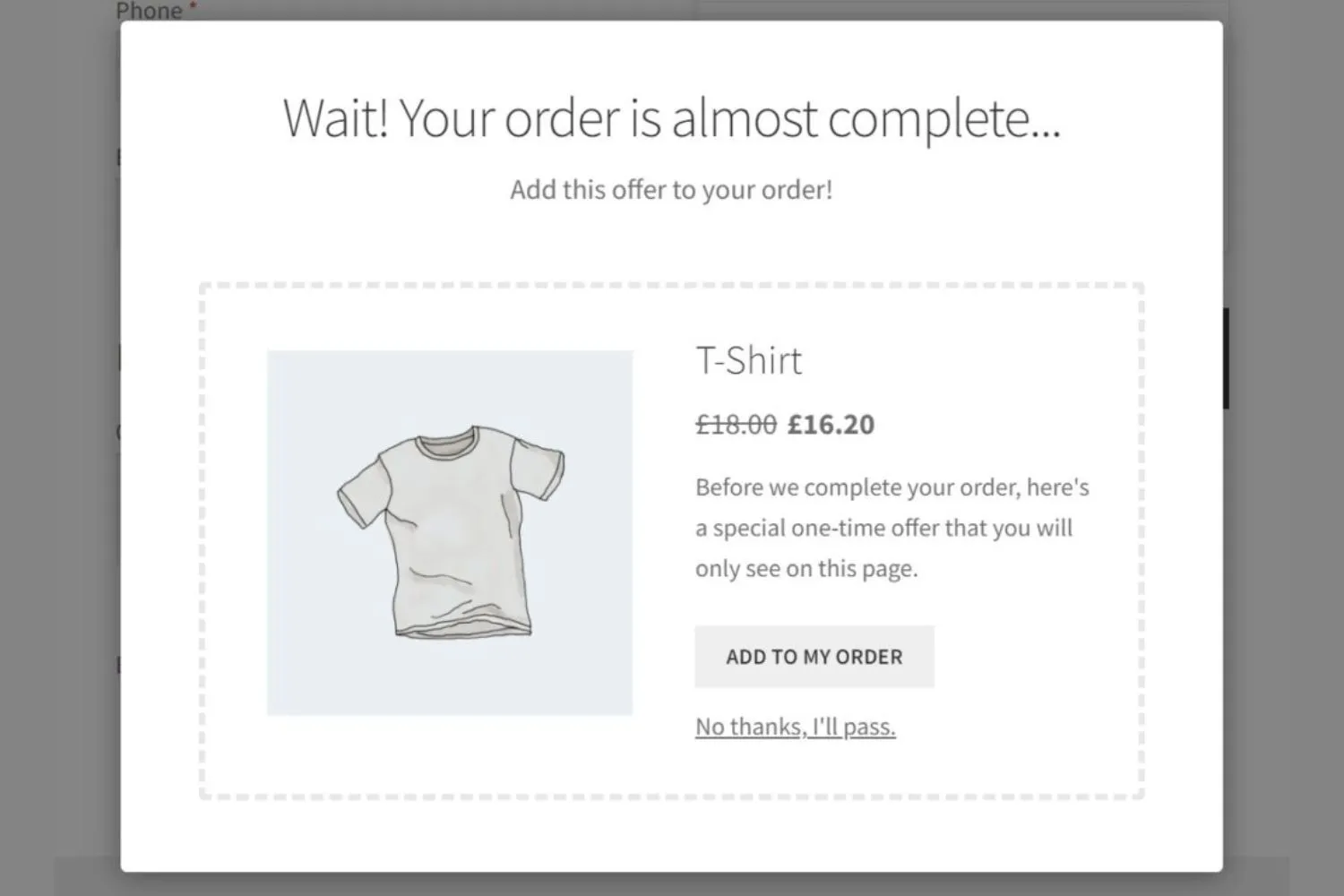
Checkout and post-purchase recommendations focus on maximizing value at the final stages of the journey. AI suggests add-ons, upgrades, or replenishment items that match what's already in the cart or was just purchased. Because intent is high at this point, well-timed recommendations can boost revenue without disrupting the buying experience.
For example, at checkout, a shopper buying a laptop may see a suggested warranty or mouse. After purchase, the store might recommend a compatible bag or software. These timely suggestions increase order value while still feeling helpful and relevant.
9 Best AI product recommendation Shopify apps in 2026
To help you quickly compare the top options, the table below summarizes the best AI product recommendation apps for Shopify in 2026.
| App | Best For | AI Types | Pricing | Ideal Store Size |
|---|---|---|---|---|
| Chatty | AI Chat-based product suggestions | Conversational AI, store-trained chatbot, behavior triggers | Free; $19.99–$199/mo + usage fees | Small–mid stores |
| LimeSpot | Full-funnel personalization | AI recommendations, bundles, segmentation, A/B testing | Free; $6.99+ (Turbo), $50+ (Max tiers) | Growing–enterprise |
| Wiser | Affordable multi-touch upsells | AI FBT, cart & post-purchase upsell | Free; $9–$49/mo (order-based) | Small–mid scaling |
| Glood | Customizable AI + rule control | AI/ML recs, rule-based logic, bundles | Free; $19.99–$299.99/mo (display-based) | Growing stores |
| Aqurate | Advanced behavioral AI | Behavioral AI, smart bundles, merchandising rules | $99–$689/mo (order-based) | Mid–large stores |
| CBB | Proven bundle engine | Long-trained AI FBT + manual bundles | $9.99–$19.99/mo flat | Small–large stores |
| Shopcast | Real-time personalized sliders | ML recs, similar products/customers | $19.99–$149.99/mo | Small–mid brands |
| PersonalizerAI | Google AI personalization | Google Retail AI, FBT, cart & post-purchase | $29.99/mo + 5% revenue | Small–scaling |
| Smartly | Budget AI recommendations | Behavior-based AI, FBT, similar items | Free; $10–$50/mo | New–small stores |
In the sections below, we break down each app in detail, explaining its key features, strengths, and the types of Shopify stores it works best for.
1. Chatty (for Chat-based recommendations)
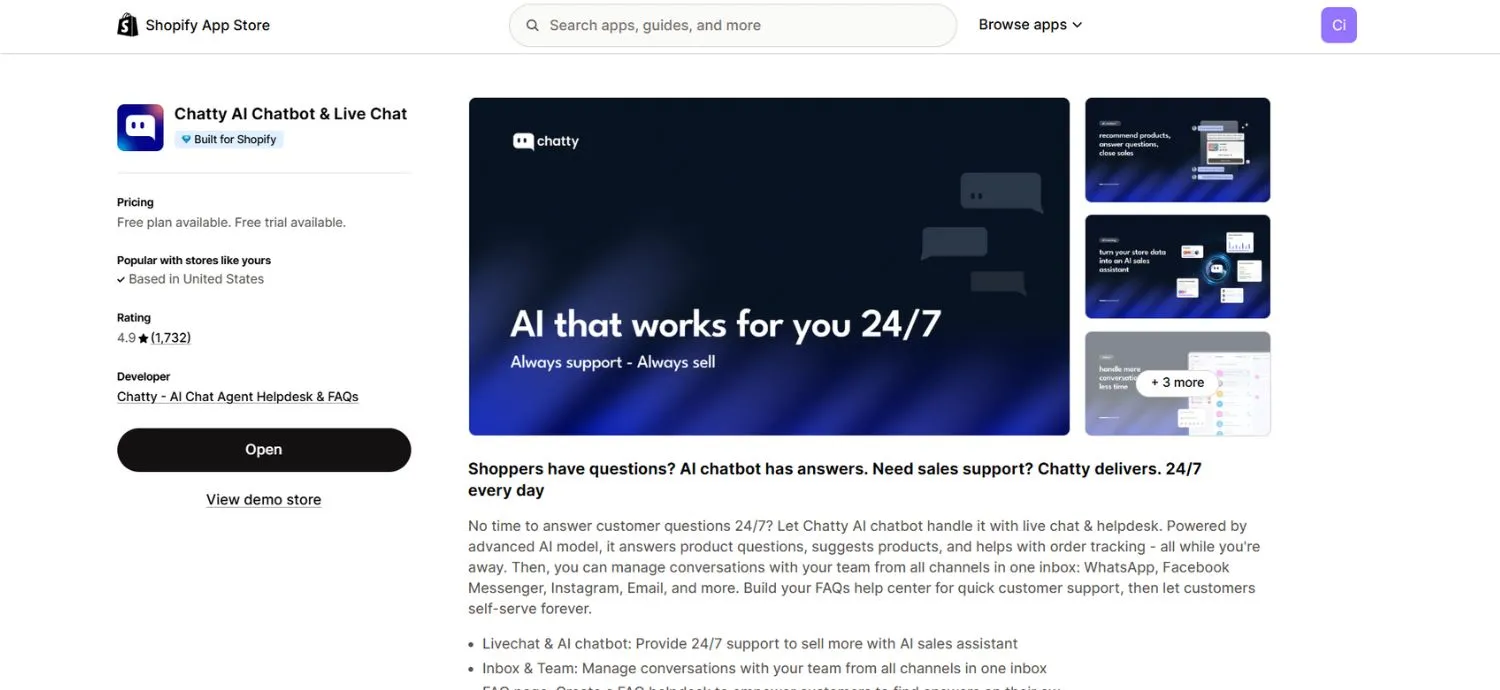
Unlike traditional engines that rely purely on static widgets, Chatty delivers AI product recommendations through real-time conversations. It combines customer support and upselling naturally within the same interaction. It suits small to mid-sized stores that want interactive guidance rather than passive on-page blocks.
Compared to bundle-focused apps like CBB or Wiser, Chatty feels more personalized. It can answer detailed product questions first, then suggest complementary or higher-value items naturally. Its upsell capability is strongest during live engagement moments.
While large catalogs may require higher conversion limits, pricing remains accessible for growing brands. Choose Chatty if you value conversational upsells that feel helpful, not pushy.
2. LimeSpot AI Bundles & Upsell
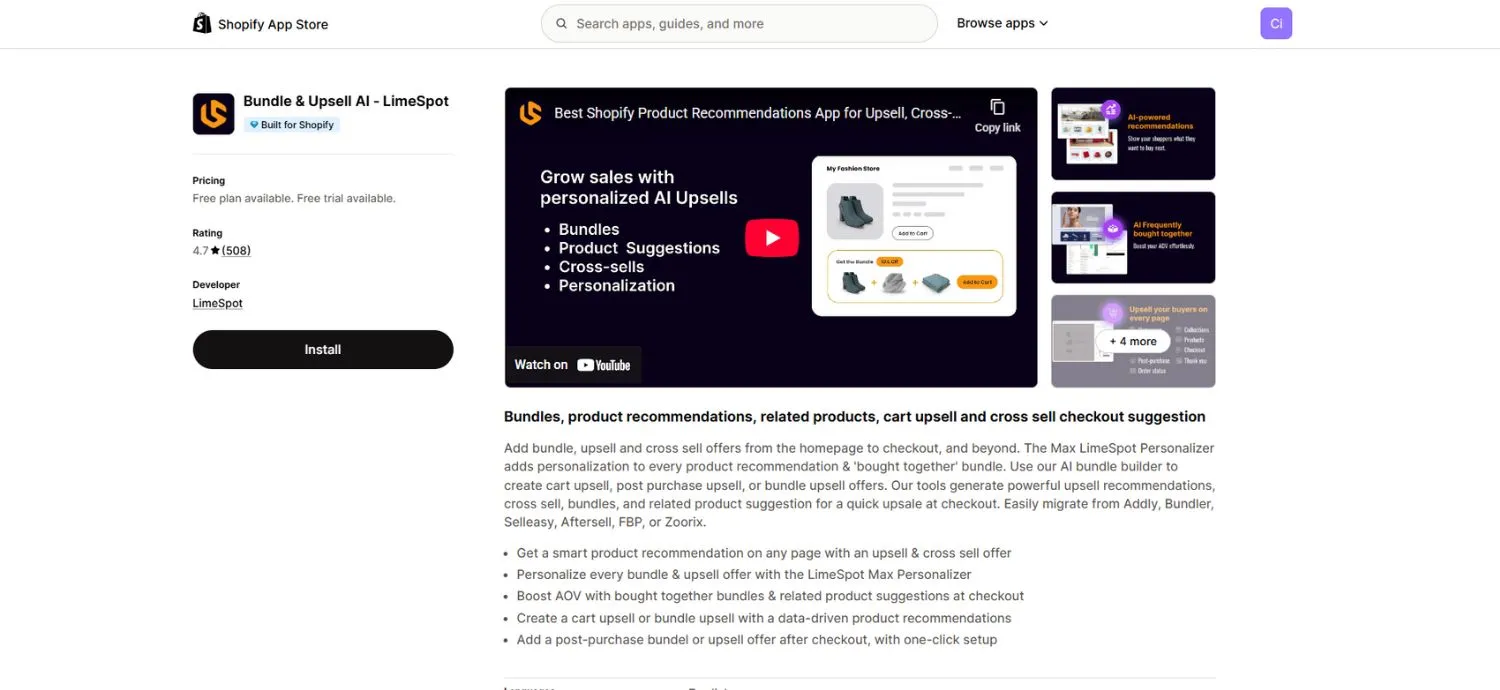
LimeSpot stands out for breadth. Compared to simpler bundle tools like Frequently Bought Together, it delivers full-funnel personalization across homepage, product, cart, checkout, and even post-purchase. Its AI engine feels more mature than newer entrants like Shopcast or Smartly, particularly with segmentation and A/B testing in higher tiers.
However, that sophistication comes with complexity and cost, especially on Max plans. Smaller stores may find Wiser or Glood more budget-friendly for similar core upsell logic. LimeSpot excels when personalization must extend beyond widgets into journey-level targeting.
Choose it if you want enterprise-grade control and analytics; skip it if you only need lightweight "bought together" logic.
3. Wiser: AI Upsell & Cross Sell
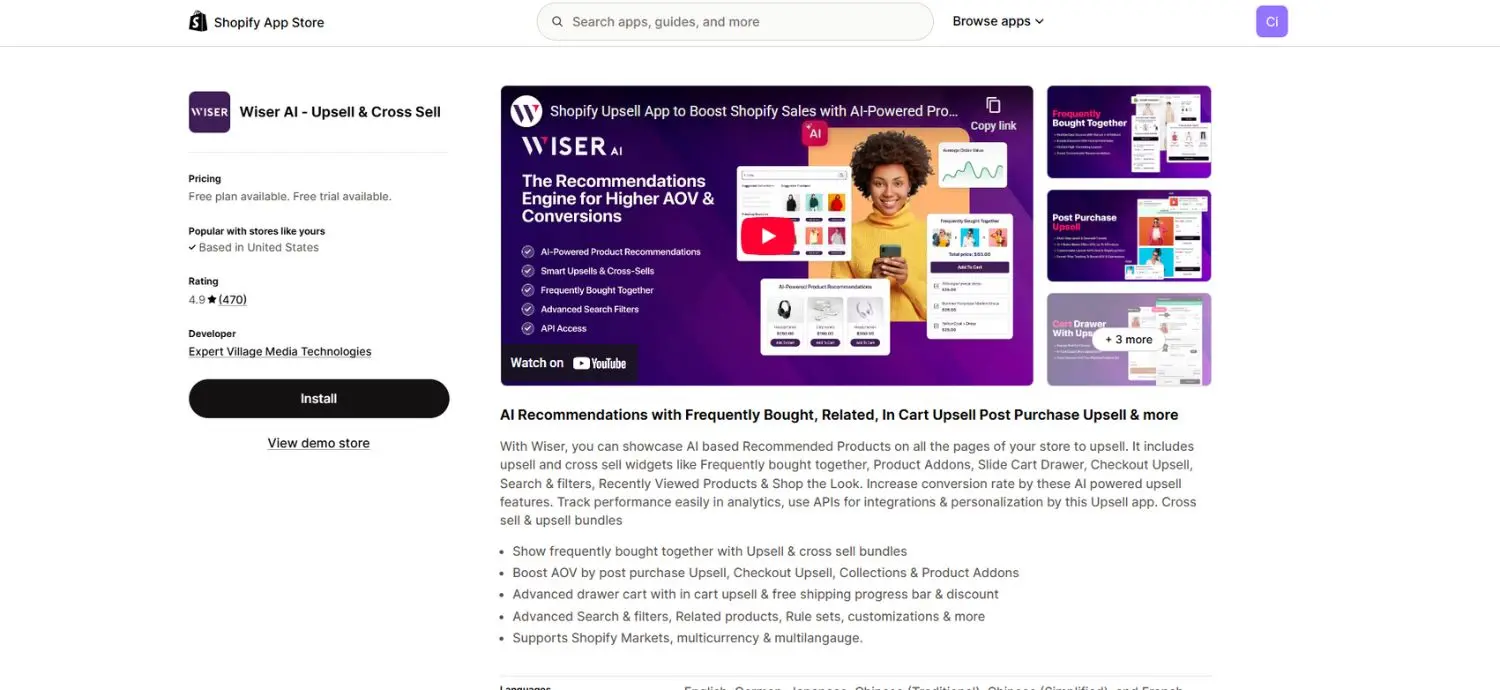
Wiser balances affordability and functionality better than most mid-tier competitors. Compared to LimeSpot, it lacks deep segmentation and journey analytics. However, it delivers similar AI-driven "frequently bought together" and cart upsells at a fraction of the price.
Against CBB, Wiser offers broader placement options, including post-purchase and drawer cart, though its fulfillment delay for upsell orders can disrupt operations. It's more scalable than Smartly but less enterprise-focused than Aqurate. Pricing scales with order volume, making it predictable for growing stores.
Choose Wiser if you want strong AI recommendations across multiple touchpoints without paying enterprise rates or sacrificing flexibility.
4. Glood Product Recommendations
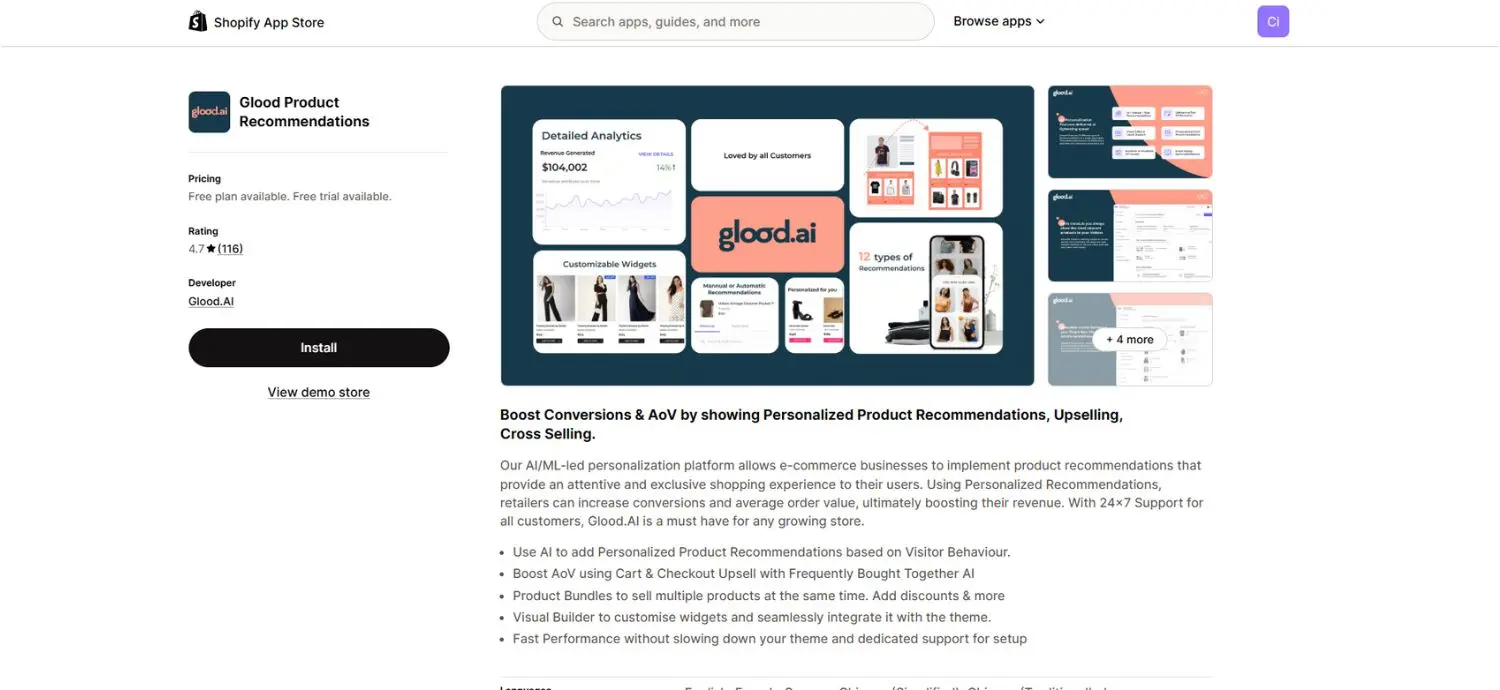
Glood Product Recommendations sits between simplicity and advanced control. Compared to Wiser, it offers stronger rule-based customization and visual editing. This makes it appealing for brands that want design flexibility alongside AI logic.
However, its display-based pricing model can become costly as traffic scales, unlike flat-rate options such as CBB. It lacks the segmentation sophistication of LimeSpot or Aqurate, but it feels more configurable than Smartly. Performance optimization and responsive support are clear strengths. Glood works best for growing stores that want AI personalization plus manual override capability.
Choose it if customization matters as much as automation; avoid it if you need deep enterprise analytics.
5. Aqurate AI Recommendations
Aqurate AI Recommendations positions itself closer to enterprise personalization than typical Shopify upsell apps. Compared to LimeSpot, it focuses less on visual merchandising breadth and more on behavioral depth. It includes automated recommendations that account for stock and lifecycle changes. Its pricing starts significantly higher than Wiser or Glood, signaling its intended audience: scaling stores with consistent order volume.
Unlike revenue-share models such as PersonalizerAI, Aqurate's cost is predictable but substantial. With advanced merchandising rules and email personalization, it competes more with mid-market personalization platforms than bundle apps.
Choose Aqurate when strategic, data-driven personalization matters more than budget sensitivity.
6. Frequently Bought Together (CBB)
Frequently Bought Together (CBB) wins on focus. Unlike broader personalization suites like LimeSpot or Aqurate, it concentrates on perfecting the Amazon-style "frequently bought together" model. Its long-trained AI algorithm and flat pricing make it more predictable than display-based tools like Glood.
However, it lacks the journey-wide personalization depth found in Wiser or LimeSpot, and segmentation is limited. What it does, it does exceptionally well: high-converting bundle recommendations with minimal setup. For stores that primarily want product-page bundling rather than multi-touchpoint AI, CBB often outperforms more complex systems.
Choose it for proven, conversion-focused bundles; look elsewhere for advanced behavioral personalization.
7. Shopcast: Product Recommender
Shopcast: Product Recommender emphasizes real-time personalization through sliders rather than aggressive upsell funnels. Compared to CBB or Wiser, its approach feels more discovery-driven than revenue-maximization focused. The ML engine adapts based on similar customers and products, but training limits per pricing tier may restrict large catalogs.
With far fewer reviews than established competitors, it carries more adoption risk, though early feedback is strong. Pricing sits between entry-level and mid-market tools, making it accessible without being bargain-tier. Shopcast suits brands prioritizing subtle personalization and content integration.
Choose it for engagement-focused recommendations; avoid it if you need mature analytics or enterprise segmentation.
8. PersonalizerAI Recommendations
PersonalizerAI Recommendations differentiates itself through Google AI integration and full-journey placement. Compared to Aqurate, it offers similar behavioral intelligence but shifts pricing risk via a 5% revenue-share model. That can be attractive for smaller stores but expensive at scale, unlike flat-rate competitors like LimeSpot or CBB.
Its personalization depth exceeds Smartly's and rivals Wiser's, yet its limited review base introduces uncertainty. Strength lies in adaptive, high-converting recommendations across product, cart, and post-purchase stages.
Choose PersonalizerAI if you prefer performance-aligned pricing and Google-powered models; reconsider if predictable costs or long-standing market validation matter more.
9. Smartly Product Recommendation
Smartly Product Recommendation targets entry-level merchants seeking affordable AI recommendations. Compared to Wiser or Glood, its feature set appears with behavior-based suggestions across major store pages, but its zero-review status and recent launch make it less proven.
Pricing is competitive, especially with a free tier up to 100 orders, undercutting most alternatives. However, it lacks the documented AI maturity of CBB's long-trained algorithm or LimeSpot's segmentation capabilities.
For small stores testing personalization for the first time, Smartly offers low financial risk. For scaling brands demanding optimization depth and analytics, more established tools remain safer investments.
Best placement strategy for AI product recommendations in Shopify
Choosing the right placement for AI product recommendations helps shoppers discover relevant products without disrupting their buying experience.
Homepage placement
The homepage is the first impression for many visitors. AI recommendations here should focus on discovery, not hard selling. Common placements include hero sections, featured collections, or "Recommended for you" blocks.
For new visitors, show best sellers or trending products. For returning shoppers, highlight recently viewed items or similar products to past purchases. Keep the number of recommendations limited so the homepage stays clean and easy to navigate.
Product page placement
Product pages are ideal for context-based recommendations. At this stage, shoppers are comparing options and looking for reassurance. Place recommendations below the main product details or near the "Add to cart" button. Effective examples include "Similar products," "Frequently bought together," or "Complete the look." These suggestions help shoppers find alternatives or complementary items without leaving the page.
Cart page placement
The cart page is where shoppers review their choices before paying. Recommendations here should be low-risk add-ons that enhance the main purchase. For example, offer accessories, refills, or small upgrades that match items already in the cart. Avoid showing unrelated products or too many options, as this can slow down decision-making and increase cart abandonment.
Checkout placement
Checkout placement requires a careful balance. Shoppers want to complete their purchase quickly, so recommendations must be highly relevant and minimal. One or two small upsells, such as warranties, gift wrapping, or premium shipping options, work best. These should appear in a non-intrusive format that does not interrupt the checkout flow.
Post-purchase and email placement
After checkout, recommendations shift from conversion to retention. Post-purchase pages can suggest related products, subscriptions, or replenishment items. Follow-up emails can include personalized recommendations based on what the customer just bought. This approach encourages repeat purchases while keeping the buying experience smooth and customer-friendly.
Common mistakes to avoid when using AI product recommendations
Before optimizing your setup, it's important to recognize the common mistakes that can limit the effectiveness of AI product recommendations.
- Too many recommendation widgets: A common mistake is placing recommendation widgets everywhere. When shoppers see multiple sliders, pop-ups, or product blocks on the same page, it creates decision fatigue. A better approach is to limit each page to one or two well-defined recommendation areas. For example, use discovery-focused suggestions on the homepage and simple add-ons on the cart page. A clear purpose always performs better than quantity.
- Poor placement strategy: Even strong recommendations can fail if they appear at the wrong time. Showing large bundles or too many options during checkout, for instance, can slow down purchases and increase abandonment. Each page has a different goal, so placements should match shopper intent. Use inspirational suggestions early in the journey, complementary items in the cart, and minimal, high-relevance upsells at checkout to keep the flow smooth.
- Lack of segmentation: Treating all shoppers the same limits personalization. New visitors, repeat buyers, and loyal customers expect different experiences. Without segmentation, stores often rely on generic best sellers for everyone. Using basic data such as browsing behavior, past purchases, or location allows recommendations to feel more tailored and increases engagement without adding complexity.
- No testing: Many stores set up AI recommendations once and never adjust them. Without testing, it's hard to know what actually works. Regularly test placements, layouts, and recommendation types, then track metrics like click-through rate, conversion rate, and average order value. Small data-driven changes often lead to noticeable gains.
- Over-reliance on default rules: Default AI rules are designed to work for most stores, not yours specifically. Relying on them alone can limit results. Customizing rules based on your products, margins, and customer behavior helps combine automation with strategic control for better performance.
Final verdict: Best AI product recommendation strategy for Shopify in 2026
AI product recommendations are essential for Shopify stores aiming to increase conversions, boost average order value, and create personalized shopping experiences. Using the right tools, such as Chatty for chat-based recommendations, LimeSpot for bundles and upsells, and Wiser for automated cross-sell strategies, can transform how customers interact with your store.
By thoughtfully placing recommendations on product pages, at checkout, and in post-purchase emails, and continuously testing what works best, stores can guide shoppers toward relevant products, maximize revenue, and strengthen customer loyalty. Start implementing these strategies today to see measurable growth in 2026.
FAQ
Yes. Small Shopify stores can benefit from AI recommendations by personalizing shopping, suggesting complementary products, and boosting average order value. Even with limited staff, AI automates upsells and cross-sells, improving conversions and repeat purchases while helping small stores compete with larger retailers.
Free AI apps include Frequently Bought Together (CBB) and Lite versions of LimeSpot or Wiser. They offer core features like product bundling, cross-sells, and basic personalization. Free options are ideal for small stores or those testing AI recommendations before upgrading to paid plans with more advanced capabilities.
AI systems increase sales by analyzing customer behavior and suggesting products they are likely to buy. They boost average order value, improve conversions with relevant recommendations, and enhance loyalty through personalization, turning casual visitors into repeat customers while maximizing revenue per session.
Results from AI product recommendations can be seen in as little as a few weeks, depending on store traffic, product catalog size, and placement strategy. Early gains often appear in increased average order value and click-through rates, while measurable improvements in conversion and customer retention may take one to three months. Continuous testing and optimization help accelerate results and maximize long-term benefits.
Most modern AI product recommendation apps are optimized for Shopify and have minimal impact on site speed when implemented correctly. Proper placement, avoiding excessive widgets, and using apps from reputable developers ensure smooth performance. While adding multiple heavy apps can affect load times, well-coded AI tools like Chatty, LimeSpot, or Wiser are designed to integrate seamlessly without slowing down the shopping experience.