










When a B2B account churns, the loss compounds. You lose the contract, the expansion potential, and the referrals that come from a satisfied customer. For teams managing dozens or hundreds of accounts, the challenge is to build a service that scales while still delivering the consistency and context that B2B relationships require.
This B2B customer service guide is written for the people responsible for that outcome: founders, CX leaders, and service managers who need to connect daily operations to retention and revenue. We will walk through how to structure support, align teams, and measure what actually moves the needle.
Everything here is meant to be practical, not theoretical. So let us get into it.
- Losing a single B2B account erases years of compounding renewal and referral value.
B2B contracts run five or six figures annually, meaning one churned account can wipe out expansion revenue, future referrals, and the sales effort already invested in winning that relationship.
- Bain research shows a 5 percent retention increase can lift profits by up to 95 percent.
Because B2B acquisition costs are high and sales cycles are long, retaining existing accounts is more efficient than replacing them — making service quality a direct driver of profit growth.
- B2B customers tolerate longer response times only when accuracy and certainty are guaranteed.
B2B contracts run five or six figures annually, so one churned account wipes out expansion revenue, future referrals, and the sales effort already invested.
- 77 percent of B2B buyers say their last purchase was complex or difficult.
Gartner research shows that when service adds friction on top of an already complex purchase, customers begin evaluating alternatives long before the renewal conversation starts.
- B2B support involves IT, procurement, users, and executives — often all at once.
Gartner shows 77% of B2B buyers say their last purchase was complex — when service adds friction, customers evaluate alternatives long before renewal conversations start.
What is B2B customer service? Why is it important?
Definition
B2B customer service is the ongoing support and relationship management between businesses throughout the customer lifecycle, from onboarding through renewal.
In B2B, customer service looks different because the relationship is longer, more interconnected, and more complex. A few characteristics keep appearing:
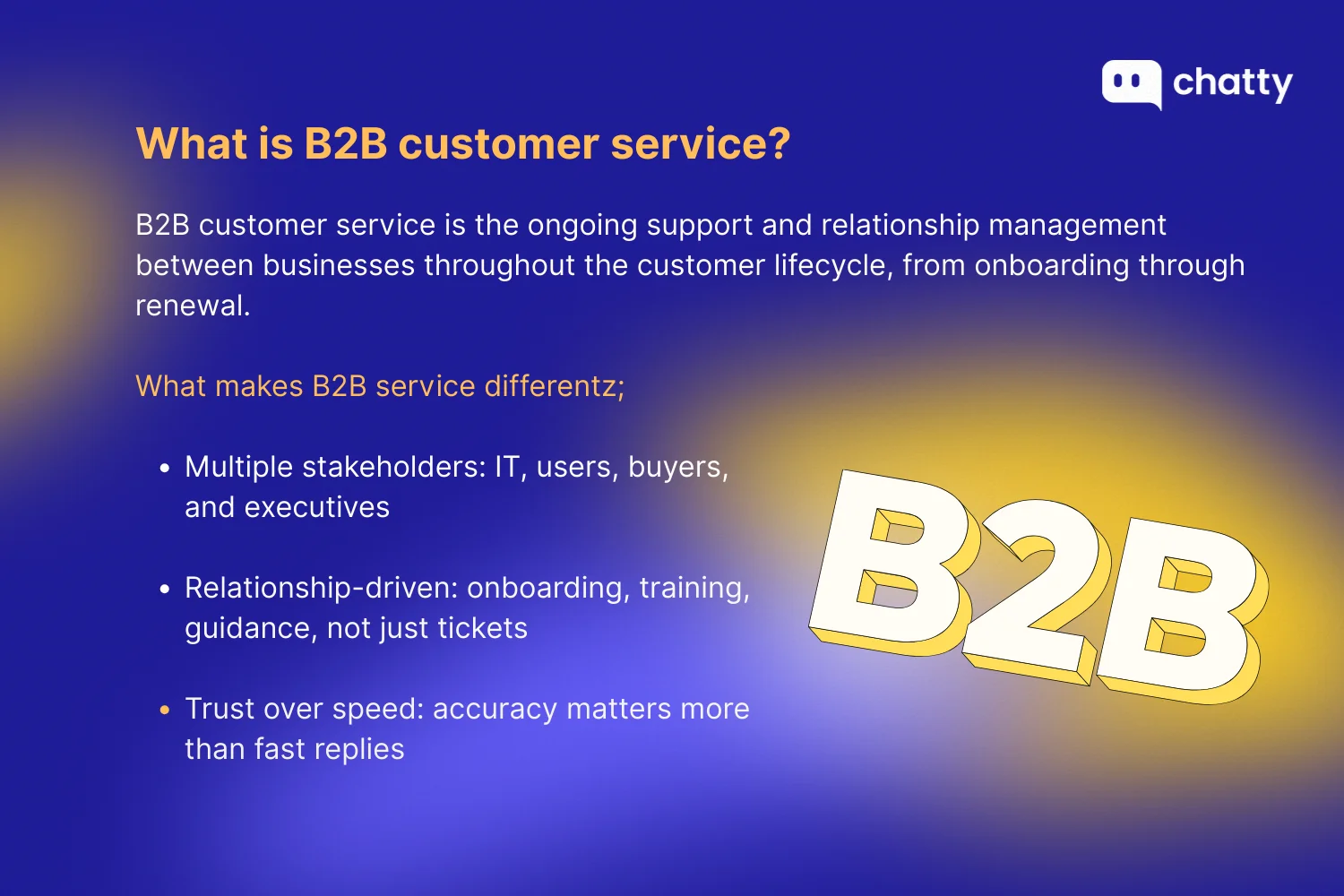
- Multi-stakeholder complexity: Most B2B accounts involve more than one buyer and user. You are working with IT, procurement, day-to-day users, and executives, all with different goals. So even a simple request can require alignment across several groups before it can be fully resolved.
- Relationship-driven, not transactional. The work extends beyond fixing problems. B2B service includes proactive check-ins, implementation support, training, and strategic guidance. The goal is to help customers succeed with what they bought, not just closing tickets.
- Trust over speed: B2B customers tolerate longer response times if the answer is accurate and the outcome is certain. Cutting corners to close tickets faster damages the relationship over time.
Why does B2B service matter?
There are 3 main reasons:
- It protects revenue. B2B contracts run five or six figures annually. Losing one account erases years of renewals, expansions, and referrals. Bain & Company found that a 5% increase in retention can boost profits by 25–95%. In B2B, where customer acquisition costs are high and sales cycles are long, keeping existing accounts is more efficient than replacing them.
- It reduces churn risk. According to Gartner, 77% of B2B buyers say their last purchase was complex or difficult. When service adds friction, customers start evaluating alternatives long before renewal conversations begin. Strong service removes that friction and keeps accounts stable.
- It creates a competitive advantage. In crowded markets, product differences shrink. Service becomes the reason customers stay and recommend you. Teams that treat service as a growth function, rather than a cost center, turn retention into expansion and referrals into a pipeline.
B2B vs B2C customer service: The differences
In practice, the expectations, workflows, and success measures of B2B and B2C support can look very different, like that:
| Factor | B2B | B2C |
|---|---|---|
| Buyer type | Organizations with specific business needs and contractual requirements | Individual consumers making personal purchases |
| Deal size | Five to six figures annually; losing one account impacts quarterly targets | Lower per-transaction value; volume compensates for individual churn |
| Decision makers | Multiple stakeholders (IT, procurement, executives) who must align before decisions | Single buyer who can act immediately |
| Support channels | Dedicated account managers, email, phone; chat for quick queries | Self-service, chat, social media; phone for escalations |
| SLA expectations | Contractual response and resolution times with penalties for non-compliance | General service standards; flexibility based on tier or loyalty |
| Success metrics | Retention rate, expansion revenue, NPS at the account level | CSAT, first response time, ticket volume efficiency |
The biggest difference is what is at risk:
- In B2C, a bad experience might cost you one customer and maybe a negative review.
- In B2B, that same mistake can snowball into contract renegotiation, delayed renewals, or losing a six-figure account altogether.
This changes how teams should operate. B2B services require deeper context for each account (understanding their business goals, tracking open issues across contacts, and coordinating with sales and success teams). Speed still matters, but accuracy and follow-through matter more. A fast response that misses the point damages trust; a slower response that solves the problem builds it.
The metrics shift accordingly:
- B2C teams optimize for efficiency at scale.
- B2B teams optimize for outcomes per account.
Both approaches are valid, but applying B2C playbooks to B2B customers creates friction where relationships should be deepening.
How to improve B2B customer service
Strong B2B service comes down to five things: knowing your customers deeply, delivering consistent experiences, aligning your teams, using data to improve, and communicating before problems escalate. Here's how to build each one.
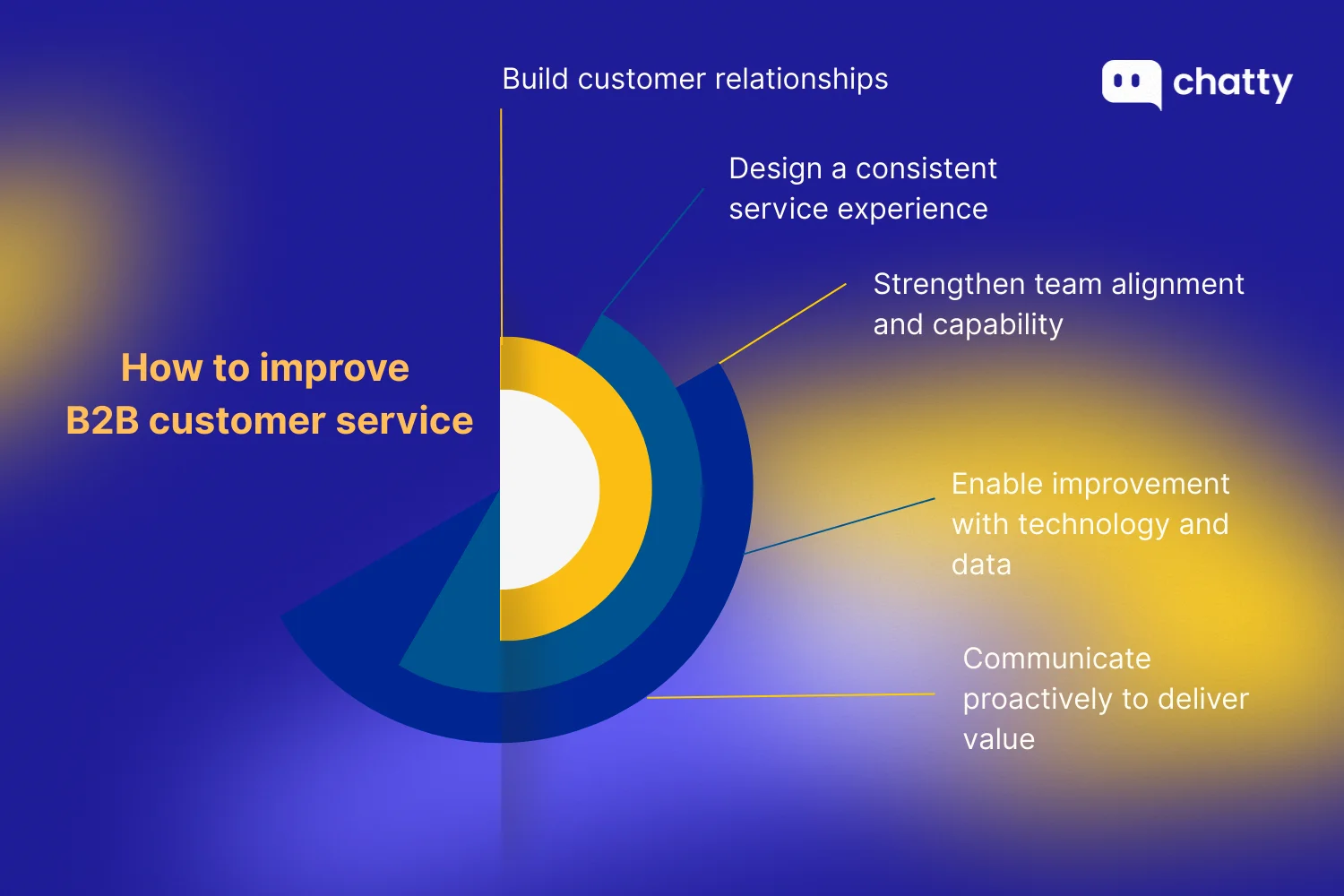
Build customer relationships
The biggest friction in B2B service happens when customers have to repeat themselves. They explain their situation to support, then to their account manager, and again when they call back a week later. Salesforce research found that 66% of customers expect companies to understand their needs, but only 34% feel that actually happens.
The fix is making customer context visible to everyone who touches the account. Here's how:
Create a unified customer record:
- Link your CRM and helpdesk, so support agents see contract tier, deal history, and account manager notes
- Log key account context in a shared space: business goals, stakeholder preferences, past escalations
- Surface conversation history across email, chat, and phone so agents see what's already been discussed
Assign account ownership clearly:
- Designate a primary owner for each account tier (account manager for enterprise, support lead for mid-market)
- Define who handles what: renewals, escalations, day-to-day tickets
- Make ownership visible in your CRM so anyone can see who to loop in
Build customer context into every interaction:
- Add a "customer snapshot" to your ticketing system: contract value, renewal date, open issues, recent interactions
- Train agents to review context before responding, not just the current ticket
- Flag accounts with recent complaints or pending renewals for extra attention
When customers feel known, they escalate less and collaborate more. That's how short-term tickets become long-term relationships.
Design a consistent service experience
Once the customer context is flowing, the next challenge is consistency. Customers lose trust when they hear one answer from support, another from their account manager, and a third from sales. Each interaction feels disconnected, and they start questioning whether your team actually communicates internally.
Here's how to deliver the same quality across every B2B touchpoint:
Map the customer journey and assign ownership.
- Define each stage: onboarding, ongoing support, renewal, expansion
- Assign clear owners for each stage (support, success, account management)
- Document what information transfers between stages and how
Set clear service expectations.
- Publish response time commitments by channel: email within 4 hours, chat within 1 hour, phone immediate
- Define escalation paths: when to escalate, who handles it, and expected resolution time
- Share these expectations with customers at onboarding and in your help center
Ensure channel continuity.
- Use a unified inbox or CRM that syncs conversations across email, chat, and phone
- Require agents to log conversation summaries after every interaction
- Build handoff protocols: when a customer switches channels, the next agent should see the full context
Strengthen team alignment and capability
Consistent experiences require aligned teams. When sales, support, and account management operate in separate workflows, service suffers. Support closes a ticket without knowing the customer is in the middle of a renewal. Sales promises a feature that support can't deliver. Account managers hear complaints they weren't warned about, and lose credibility in the next QBR.
Let's see how to fix the gaps:
Build shared visibility across teams:
- Create a shared dashboard showing open tickets, contract status, and recent interactions for each account
- Run weekly syncs on top 10 accounts: sales, support, and success review open issues and upcoming milestones
- Set up alerts: notify account managers when a ticket is escalated or a customer submits negative feedback
Define handoff protocols:
- Document what sales should share with support after a deal closes: contract terms, key contacts, implementation timeline
- Create a renewal checklist: support flags accounts with open issues 60 days before renewal
- Establish escalation rules: when support should loop in account management or engineering
Train agents for judgment, not just scripts:
- Give agents access to account context: contract tier, renewal date, recent history
- Set guidelines for when agents can make exceptions (refunds, credits, expedited support)
- Review escalated tickets monthly to identify training gaps and update playbooks
Enable improvement with technology and data
With relationships, consistency, and alignment in place, technology becomes the multiplier. The right tools give everyone shared visibility and surface the patterns that drive improvement.
Now, we will guide you on how to use your tools effectively:
Configure your CRM for shared visibility:
- Ensure support, sales, and success all have access to the same customer record
- Add custom fields for account health signals: NPS score, last check-in date, open issues count
- Set up automated alerts for at-risk accounts (missed SLAs, repeat tickets, negative feedback)
- Close the feedback loop.
According to Qualtrics, companies that close the feedback loop see 2x higher customer retention. Here's how:
- Route feedback to specific owners with deadlines (not a shared inbox)
- Track resolution status: open, in progress, resolved, communicated
- Send a follow-up to the customer when their feedback leads to a fix
Use data to identify patterns:
- Review weekly: top 10 ticket categories, accounts with the most tickets, repeat issues
- Flag systemic problems for product or engineering review
- Track resolution time by issue type to identify where processes break down
Communicate proactively to deliver value
The final piece is shifting from reactive to proactive. When customers hear from you before problems escalate, they feel supported, and they contact you less often with urgent requests. Proactive communication reduces inbound volume and builds the kind of trust that keeps accounts stable through renewal.
Let's look at how to build proactive customer service into your B2B workflow, so you can move from "we respond quickly" to "we keep you informed before you ever have to ask.":
- Set up scheduled check-ins by account tier.
- Enterprise accounts: monthly calls reviewing open issues, upcoming needs, and product updates
- Mid-market: quarterly check-ins with account health summary
- Smaller accounts: automated quarterly emails with self-service resources and key updates
- Create triggers for proactive outreach.
- Ticket open for more than 48 hours: send a status update before the customer asks
- Known issue affecting multiple accounts: notify impacted customers within 24 hours
- Pricing, features, or policy changes: send heads-up messages at least 2 weeks in advance
The good news is you do not need to do all of this manually:
- For Shopify stores, you can use tools like Chatty to offer proactive chat that triggers targeted messages based on visitor behavior (welcoming new visitors, recovering abandoned carts, or recommending products at the right moment). This keeps customers engaged without waiting for them to reach out first.

- For other platforms, look for helpdesk or CRM tools with automation workflows that can send status updates, check-in emails, or triggered messages based on ticket age or account activity.
How to track the effectiveness of B2B customer service
The metrics that matter most connect service quality to business outcomes. Here are five to track:
- Customer retention rate. Many B2B teams land between 80 and 95 percent annually. Always segment by tier, because losing one enterprise account can matter more than losing five smaller ones.
- Customer lifetime value. A healthy target is a CLV-to-CAC ratio of at least 3:1. When CLV rises, service usually helps adoption and expansion. When it falls, it often points to friction, poor onboarding, or missed growth moments.
- Net promoter score. Benchmarks vary by industry, with SaaS often around 30-40 and professional services closer to 50-70. Track NPS at the account level and watch for sudden drops, as they often precede churn.
- SLA compliance. Most contracts expect 95 percent or higher compliance on response times. But pair this with resolution quality, because hitting response targets means little if customers still wait too long for a real fix.
- First response time and resolution time. Common targets are under 4 hours for email and under 1 hour for chat or phone. Resolution depends on complexity, but many teams aim for simple issues within 24 hours and complex cases within 3 to 5 business days.
Most importantly, follow trends over time rather than one-off snapshots. And always segment by contract value; your biggest accounts deserve their own tracking and their own standards.
Case studies of successful B2B customer service projects
The principles above work in practice. Here are two companies that improved B2B service by focusing on alignment, consistency, and scalable processes, and the results they achieved:
Breville unified global service teams and achieved a 4.9 CSAT score
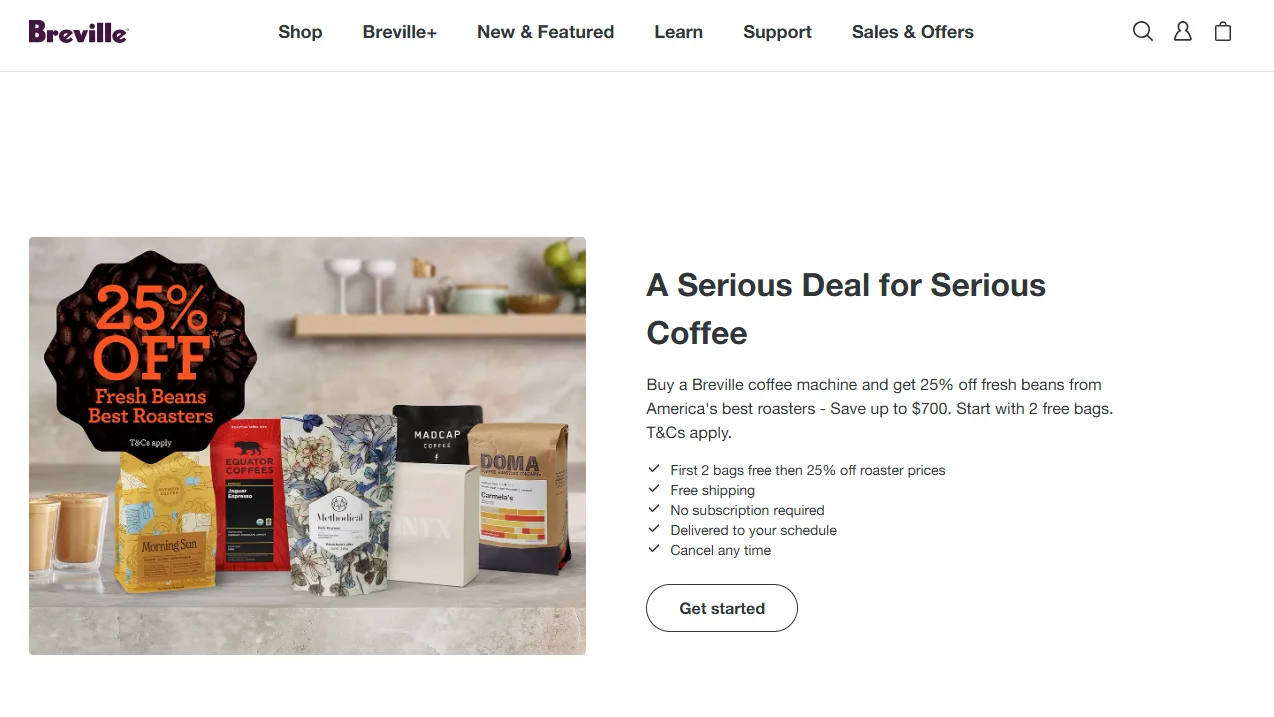
Breville supports business partners worldwide, including distributors, retailers, and service providers. As the company grew, each region built its own processes, tools, and escalation paths.
Over time, the experience became fragmented: no shared view of partner issues, uneven response times across regions, and reporting that could not be compared. For partners working across multiple markets, it often meant repeating the same context and sometimes getting conflicting answers.
What they changed:
- Consolidated regional service desks into one global platform with unified ticket routing
- Standardized workflows, SLAs, and escalation paths across regions
- Introduced a clear single point of contact model
- Built shared reporting so leadership could spot gaps and compare performance
Results
- Handled over 75,000 B2B requests per year with consistent handling
- Reached an average CSAT of 4.9 out of 5
- Reduced duplicate work and handoff confusion
- Improved visibility by region, partner tier, and issue type
Key takeaway: Global B2B service needs more than local responsiveness. It needs consistency. Clear ownership and standardized workflows create the reliability partners expect.
Santillana reduced resolution time by 30 percent during demand spikes
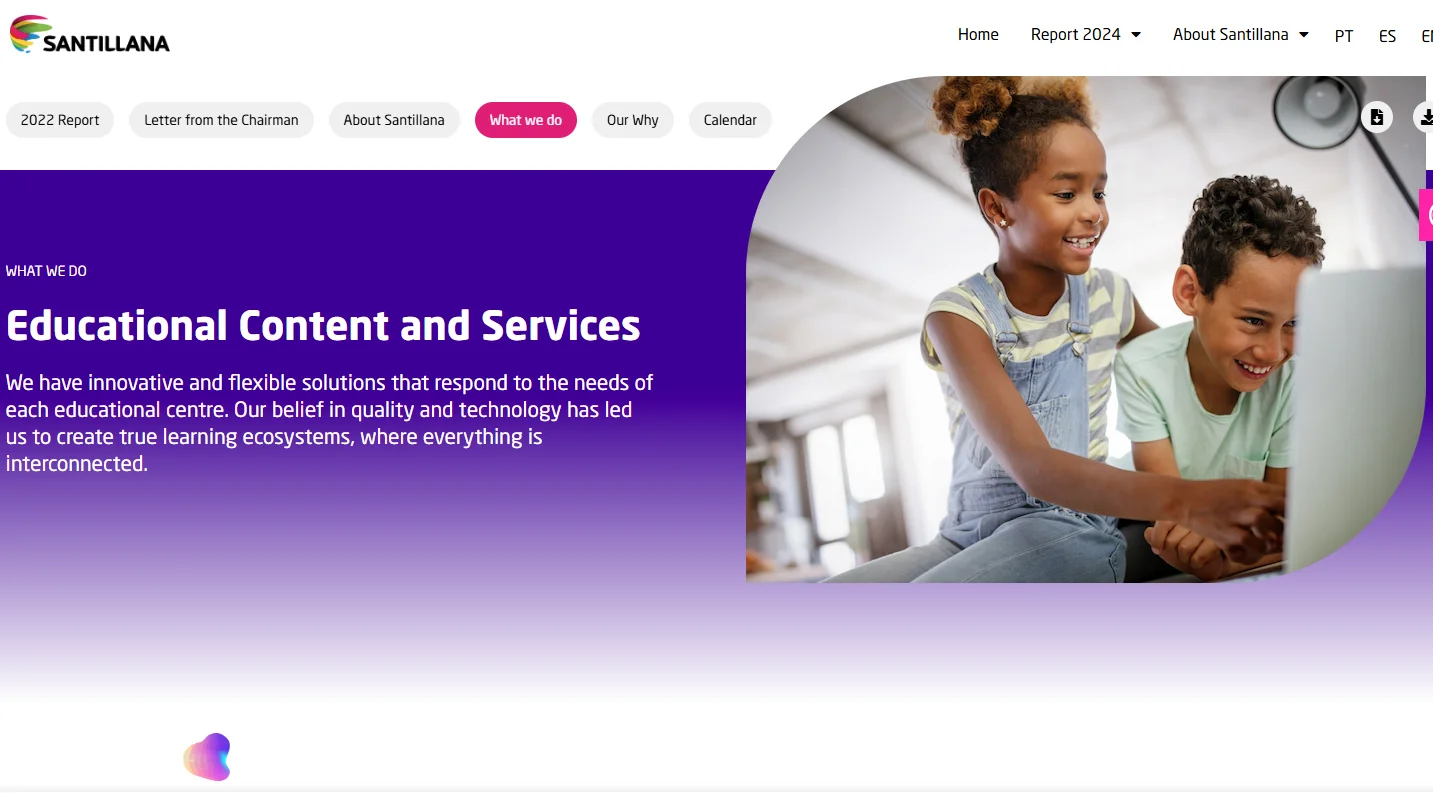
Santillana provides education content and services to schools and institutions across Latin America and Europe. When disruptions forced schools to change operations quickly, support demand exploded. Monthly tickets jumped from 300 to over 3,000 within weeks. The existing setup could not keep up: teams worked in disconnected queues, knowledge was not shared across regions, and there was no clear way to prioritize urgent issues from high-value accounts.
What they changed
- Implemented a unified service management system so agents could see the full queue
- Added prioritization rules based on account tier and issue severity
- Created shared knowledge resources across regions
- Improved coordination between support and product teams to address root causes
Results
- Cut average resolution time by 30 percent despite a 10x volume increase
- Increased collaboration between support and product, speeding up systemic fixes
- Made recurring issues visible, enabling proactive outreach
- Protected service quality for top-tier accounts during peak periods
Key takeaway: Scaling under pressure is not only about adding headcount. Shared visibility, clear prioritization, and cross-team coordination decide whether a surge overwhelms the team or gets absorbed.
The next era of B2B customer service
B2B customer service is evolving fast. Here's what's changing and where service is heading:
- AI-assisted support and automation. AI is shifting from deflection to augmentation. Instead of just handling queries, AI now surfaces context, suggests responses, and automates post-conversation work. According to McKinsey, AI-enabled services can reduce handling time by up to 40% while improving resolution quality. The result is faster handling without sacrificing accuracy, so agents spend less time searching and more time solving.
- Deeper personalization at scale. With proactive service comes the need for deeper context. B2B customers expect the same level of contextual awareness they get in B2C, but across longer relationships and with more stakeholders. Salesforce research found that 73% of customers expect companies to understand their unique needs, yet only 34% say companies generally treat them as individuals. This means unified customer records, conversation history across channels, and service tailored to account tier and business goals. Personalization in B2B isn't marketing, it's operational continuity.
- Tighter integration between service and revenue teams. All of these trends point in one direction: service and revenue are converging. Support interactions increasingly inform renewal forecasts, expansion opportunities, and churn risk. According to Forrester, companies that align service with revenue teams see 15–20% higher customer lifetime value. Teams that share data and coordinate handoffs outperform those that treat service as a silo.
With these shifts, B2B customer service needs a new operating model. To adapt, businesses should focus on two moves:
- Unify customer data so AI and personalization have real context: connect CRM, helpdesk, and product usage into one shared view.
- Align service with revenue teams and metrics, tracking account outcomes like renewal readiness and expansion signals, not just response time.
To recap
B2B customer service is a system – one that touches retention, revenue, and trust. The companies that get it right build shared visibility across teams, design for consistency over speed alone, and treat service as a function that compounds value over time.
The investment pays back. In B2B, where contracts are long and relationships are long-term, service quality determines whether customers renew, expand, and refer. The bar keeps rising, and the teams that treat service as a competitive advantage will be the ones positioned to clear it.
FAQs
It depends on product complexity and account risk. Many teams use two to three tiers: a front line for common issues, a specialist tier for technical or account-specific cases, and a clear escalation path to engineering or account management for high-stakes situations. A good rule is to let your data guide you. If too many tickets bounce between tiers or escalate late, the structure needs adjustment.
Yes, for quick, low-complexity questions like status checks or access issues. For complex issues involving investigation and coordination, email or scheduled calls often work better. The key is expectations and routing. Offer chat as an option, and guide customers to the best channel based on issue type.
SLAs define response and resolution commitments in the contract, sometimes with penalties. Missing them creates risk and can become leverage in renewal discussions. Strong teams treat SLAs as the floor. Meeting them keeps you compliant, exceeding them builds trust.
Yes, with guardrails. AI works well for surfacing context, drafting responses, and automating routine updates. For contract-sensitive or high-impact issues, human oversight is essential. A safe approach is to start with low-risk use cases, measure accuracy, and expand gradually as confidence grows.