









As businesses expand into new regions, the ability to communicate with customers in their native language has become essential for growth and loyalty. Research shows that 76% of global consumers are more likely to repurchase from companies that offer information in their language, and over 70% of customers expect support in their preferred language to feel truly understood. Yet many organizations still rely on English-only chatbots or basic translation tools, creating barriers that lead to slower resolutions and frustrated customers.
In this article, we explore the 7 best multilingual chatbot tools for businesses in 2026 and how they help you deliver a seamless global customer experience, while also evaluating how they compare among the best chatbots for customer service worldwide.
- 76% of consumers are more likely to repurchase when served in their native language.
Language-native support isn't just a courtesy — it's a measurable driver of customer retention and repeat revenue.
- English-only chatbots are quietly costing businesses customers and conversions.
Over 70% of customers expect support in their preferred language, making language gaps a direct source of churn.
- AI-powered chatbots vastly outperform rule-based ones when scaling across multiple languages.
Unlike rigid decision trees, AI chatbots use NLP to handle varied phrasing and informal language dynamically across all supported languages.
- One multilingual chatbot can replace dozens of separate regional support systems.
Centralizing multilingual support into a single chatbot delivers consistent customer experiences while eliminating the overhead of market-by-market infrastructure.
- Multilingual chatbots are now a strategic necessity, not an optional upgrade for global brands.
As businesses expand into new regions, native-language support directly reduces friction, builds trust, and improves CSAT scores at scale.
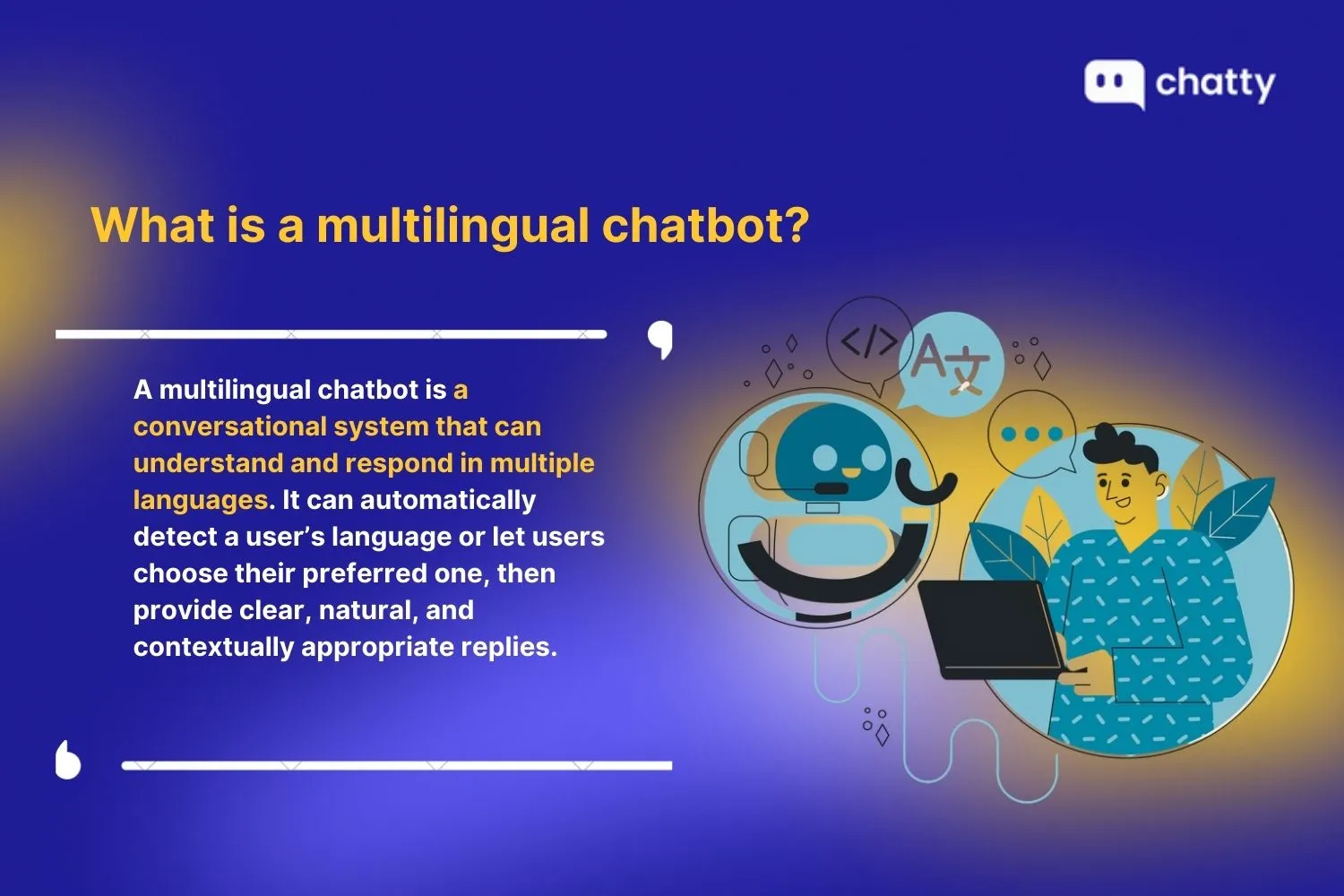
What is a multilingual chatbot?
A multilingual chatbot is a conversational system that can understand and respond to users in multiple languages. It either automatically detects the user's language or allows users to select their preferred one, then delivers responses that are clear, natural, and contextually appropriate. This makes communication more accessible for global and multilingual audiences.
In practice, multilingual chatbots provide multilingual live chat support for businesses serving global audiences. Instead of maintaining separate support systems for each market, companies can rely on one chatbot to deliver consistent experiences in multiple languages.
Multilingual chatbots generally fall into two main types:
- Rule-based chatbots: These chatbots follow predefined scripts and decision trees that are manually translated into each language. They work well for simple, predictable questions, but become harder to manage as the number of languages and scenarios grows.
- AI-powered chatbots: These chatbots use machine learning and natural language processing (NLP) to understand user intent and generate responses dynamically. They can handle varied phrasing, context, and informal language, making them more scalable and accurate across languages.
Several core elements enable a chatbot to function across languages:
- NLP and intent detection to understand what the user wants, regardless of language.
- Machine translation layer to translate inputs and outputs when needed.
- Knowledge base or training data to ensure responses are accurate and localized.
- Integration with business systems such as CRM, helpdesk, or e-commerce platforms for contextual replies.
Multilingual chatbots matter because language is a critical part of customer experience. Providing fast, relevant responses in a user's native language reduces friction, builds trust, and directly improves customer satisfaction (CSAT).
Why multilingual chatbots are a strategic necessity
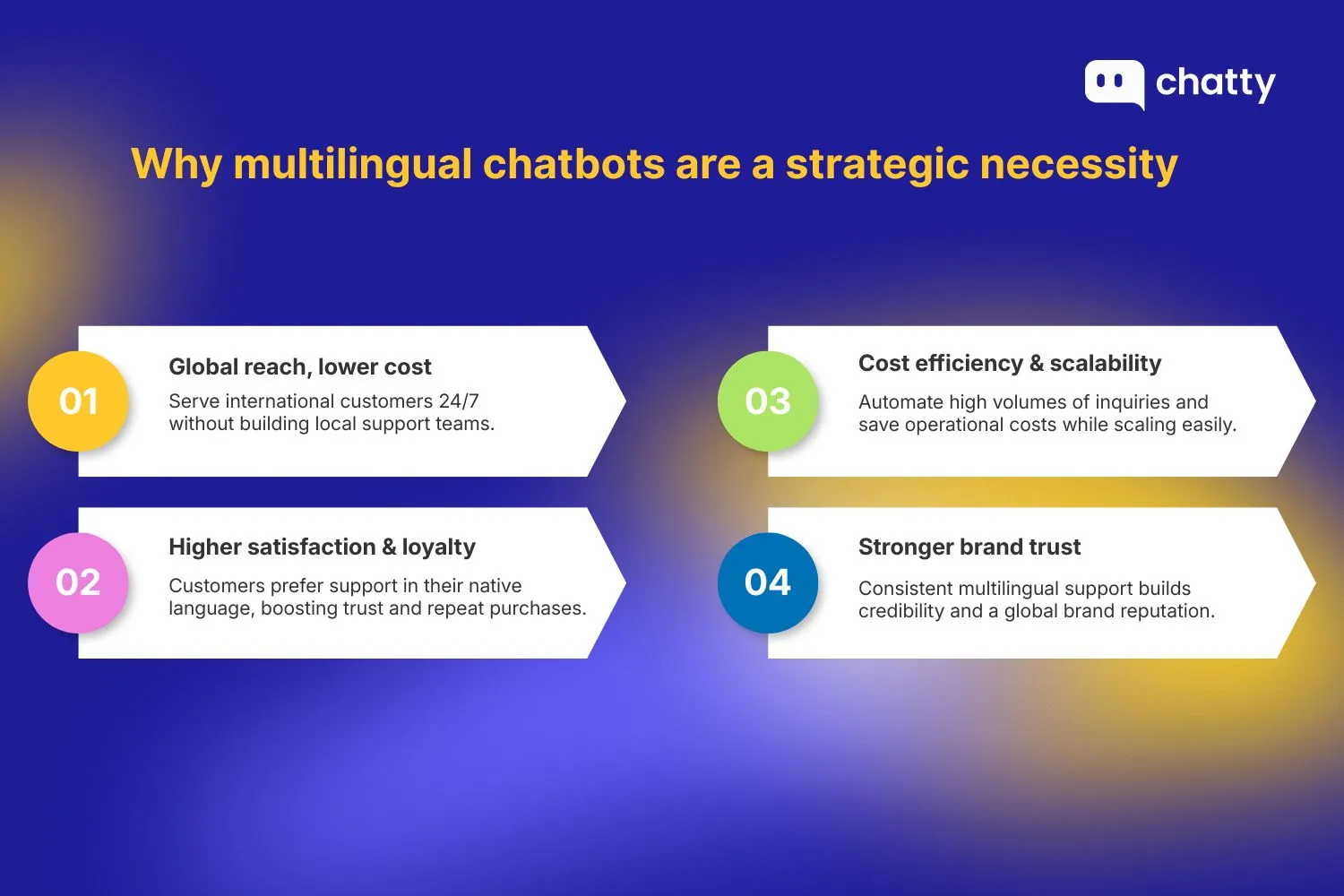
Below are the core business factors driving the shift toward multilingual chatbots as a strategic necessity rather than an optional feature.
Global reach without global payroll
Multilingual chatbots enable companies to serve international customers without building local support teams in every market. Instead of hiring native-speaking agents across regions, businesses can deploy AI chatbots that instantly handle conversations in multiple languages, 24/7.
This matters as global e-commerce continues to surge. According to Statista, global retail e-commerce sales reached $6.3 trillion in 2024 and are projected to exceed $8 trillion by 2027, driven by cross-border shopping and digital adoption.
By automating first-line communication, businesses can test new markets, serve global customers, and scale internationally while keeping payroll and HR complexity low.
Increased customer satisfaction and loyalty
Language has a direct impact on customer experience and retention. Unbabel's Global Multilingual CX Survey found that 68% of consumers would switch brands if support is not available in their native language.
Similarly, CSA Research reported that 76% of consumers prefer to buy products when information is provided in their own language, and 40% will not buy at all from websites in other languages.
Multilingual chatbots reduce friction, speed up responses, and create clearer interactions, which directly improve satisfaction, loyalty, and repeat purchases.
Cost efficiency and operational scalability
Multilingual chatbots also deliver measurable cost savings. Businesses using automated customer support collectively save over $11 billion per year by reducing staffing needs and handling high volumes of inquiries more efficiently. Unlike human teams, a single AI chatbot can scale across multiple languages and channels without proportional cost increases, while still providing 24/7 availability.
Brand trust and international reputation
Consistent communication across languages builds credibility and professionalism. Research shows that 69% of global consumers value native-language support across the entire customer journey.
By supporting multiple touchpoints, including chat, email, voice, and social messaging, multilingual chatbots ensure a unified brand experience. Customers receive the same quality of service no matter where or how they interact.
This consistency strengthens brand trust and improves international reputation, positioning companies as reliable global players.
Must-have features of a multilingual chatbot
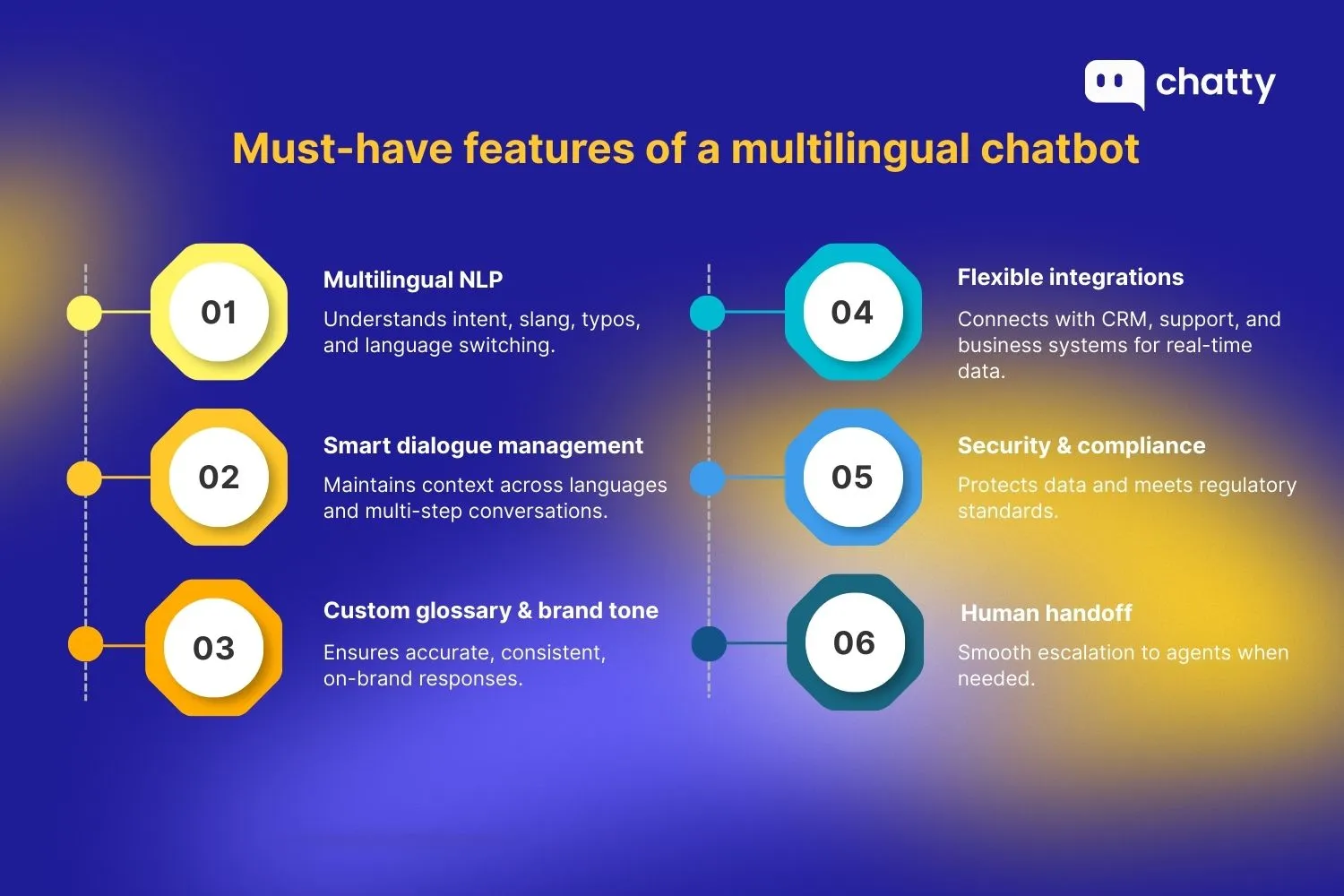
To deliver an exceptional customer experience, a multilingual chatbot must be built on a set of core capabilities that go beyond basic translation.
- Multilingual NLP engine: Accurately understands user intent across multiple languages, including slang, regional expressions, typos, and code switching within the same conversation. This ensures users can communicate naturally without adjusting their language to fit the system.
- Smart dialogue management: Maintains conversation context across turns and languages, allowing users to switch languages mid-interaction without losing progress. This is critical for handling complex journeys such as support cases, bookings, or multi-step inquiries.
- Custom glossary and brand lexicon: Enables businesses to define approved terminology, product names, tone of voice, and promotional phrases for each language. This keeps responses consistent, on brand, and accurate across all markets.
- Flexible integrations: Connects seamlessly with platforms like Salesforce, Zendesk, HubSpot, and custom technology stacks. These integrations allow the chatbot to retrieve real-time data, update customer records, and support end-to-end workflows.
- Compliance and security: Supports regulatory requirements such as GDPR, HIPAA, and PCI, combined with data encryption and secure data handling practices. This protects sensitive customer information and helps meet industry standards.
- Escalation and fallback design: Includes clear rules for handing off conversations to human agents when confidence is low or issues become complex, ensuring smooth transitions and preventing poor user experiences.
Top 8 multilingual chatbots & platforms in 2026
For a clear side-by-side view, the table below outlines the main capabilities of the top multilingual chatbot platforms discussed in this section.
| Platform | Multilingual Support | AI / NLP | Best For | Pricing (Typical) |
|---|---|---|---|---|
| Chatty | 19 languages + built-in translation (free) | AI chatbot + live chat | Shopify stores, SMB ecommerce | $19.99 – $199/month |
| Intercom (Fin) | 45 languages | AI agent trained on a knowledge base | SaaS & scaling tech companies | $29 – $132/month + $0.99 per AI resolution |
| Zendesk AI | 80+ languages | Enterprise AI agents + workflows | Large enterprises, global support teams | $25 – $219 per agent/month |
| ChatBot (by Text) | Nearly unlimited (custom-built language flows) | AI + rule-based hybrid bots | Custom chatbot builders, niche language markets | $65 – $499+/month |
| LiveChat | 48 widget languages + 100+ via translation | Live chat + automation + AI add-ons | Service teams, ecommerce, support desks | $19 – $79+/month |
| Tidio (Lyro) | 45+ languages | Lyro AI Agent | SMBs, ecommerce brands | $29 – $749+/month |
| tawk.to | 49 widget + 25 dashboard languages | Basic AI assist add-on | Startups, SMBs, budget teams | Free core; optional AI add-ons ~$29+/mo |
| Drift | ~30 widget languages (AI mainly English) | Conversational AI (limited multilingual) | B2B sales & marketing teams | Enterprise pricing, ~$2,500+/mo |
With this overview in mind, let's take a closer look at each platform and what sets it apart.
Chatty
Chatty supports 19 core languages and offers built-in automatic translation, even on its free plan, which immediately sets it apart from most e-commerce chatbots. In practice, this makes Chatty feel extremely accessible for small Shopify stores testing international expansion. While 19 languages may seem limited compared to enterprise tools offering 40 or 80+, Chatty compensates with simplicity and control.
Manual translation editing ensures the brand tone remains accurate, which is often lost in automated systems. Compared to larger platforms like Zendesk or Intercom, Chatty prioritizes ease of deployment over scale, making it a strong choice for merchants targeting specific international markets rather than global coverage.
Intercom
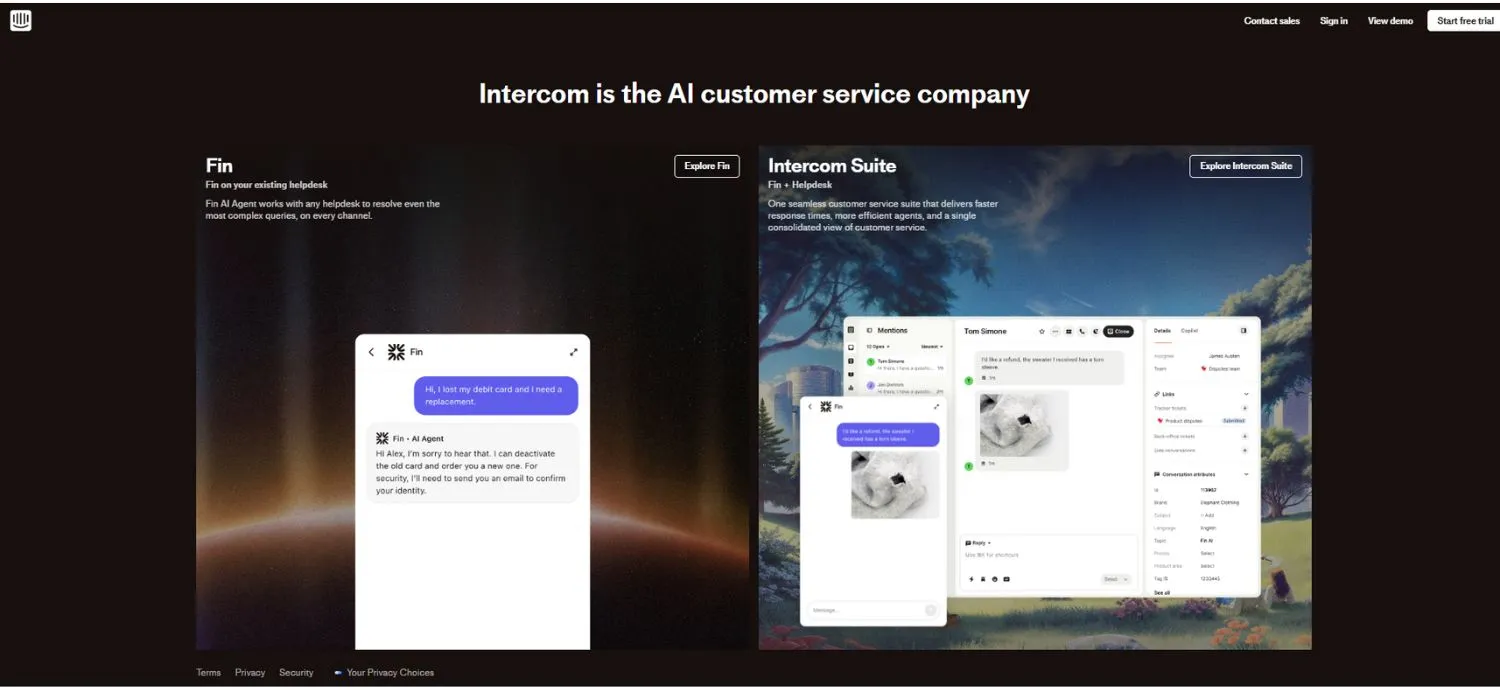
Intercom's Fin supports 45 languages and focuses on language-native automation rather than direct translation. Responses come from localized help center content, which results in clearer and more accurate answers. This reduces awkward phrasing and misunderstandings. In real usage, Fin delivers stronger consistency across markets than many translation-based systems.
Compared to Chatty and LiveChat, Intercom requires more structured documentation. However, this investment pays off in global SaaS environments. Fin works especially well for companies operating across multiple regions where standardized, high-quality support responses are essential for customer satisfaction and operational efficiency.
Zendesk AI
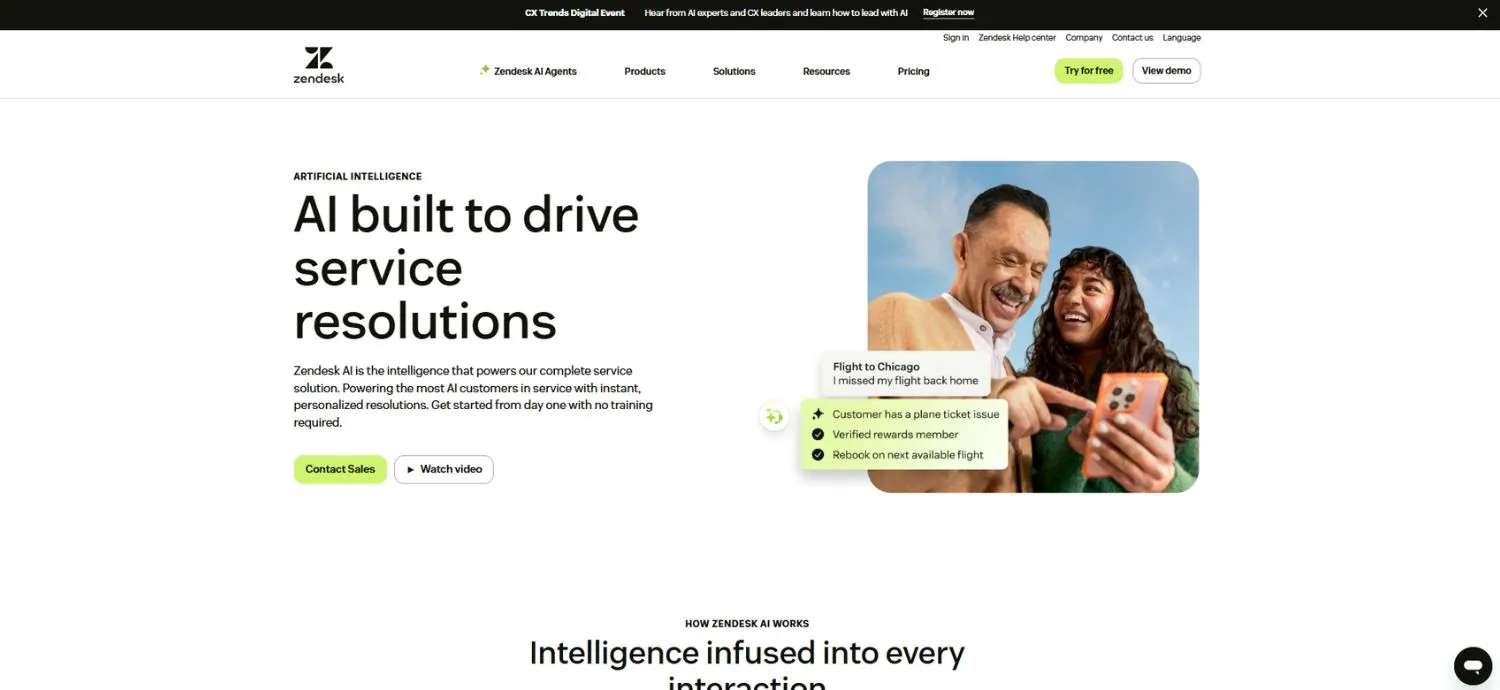
Zendesk supports over 80 languages, offering the broadest multilingual reach on this list. It allows smooth language switching during live conversations. This reflects how many bilingual users actually communicate. In global enterprises, this flexibility becomes critical.
Compared to Intercom, Zendesk delivers wider coverage but demands heavier configuration. Setup can be complex, especially when managing multiple knowledge bases. However, once deployed, the multilingual experience is highly reliable. Zendesk is best suited for large organizations with dedicated support teams. For companies targeting a worldwide scale, its language coverage remains unmatched in 2026.
Chatbot
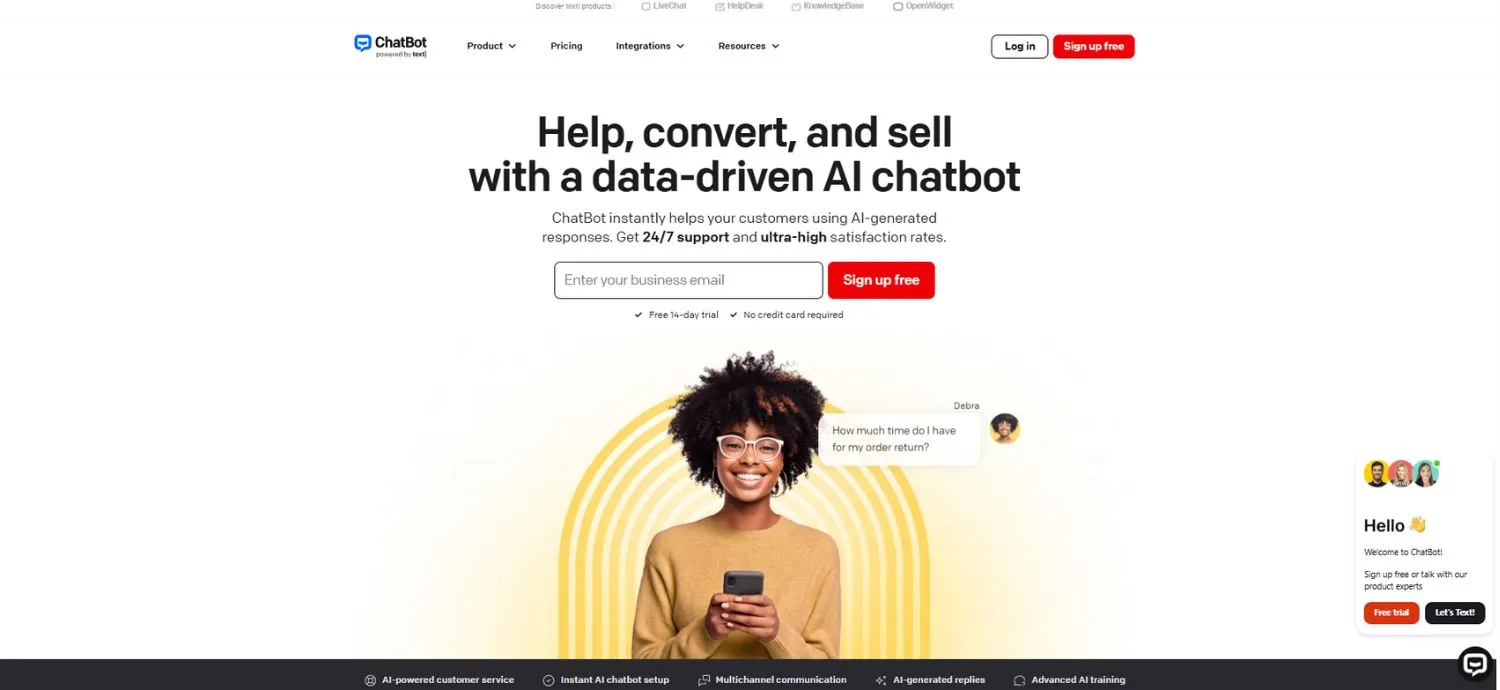
Chatbot allows bots to be created in almost any language, offering near-unlimited flexibility. Instead of predefined language packs, performance depends on how the bot is built and trained. This makes ChatBot highly customizable but also more demanding.
Compared to Zendesk and Intercom, it requires more manual effort. In return, it supports niche and underrepresented languages far better. This is valuable for businesses operating in localized or emerging markets. When well-trained, ChatBot delivers accurate and natural conversations. However, results depend heavily on setup quality rather than built-in intelligence.
Livechat
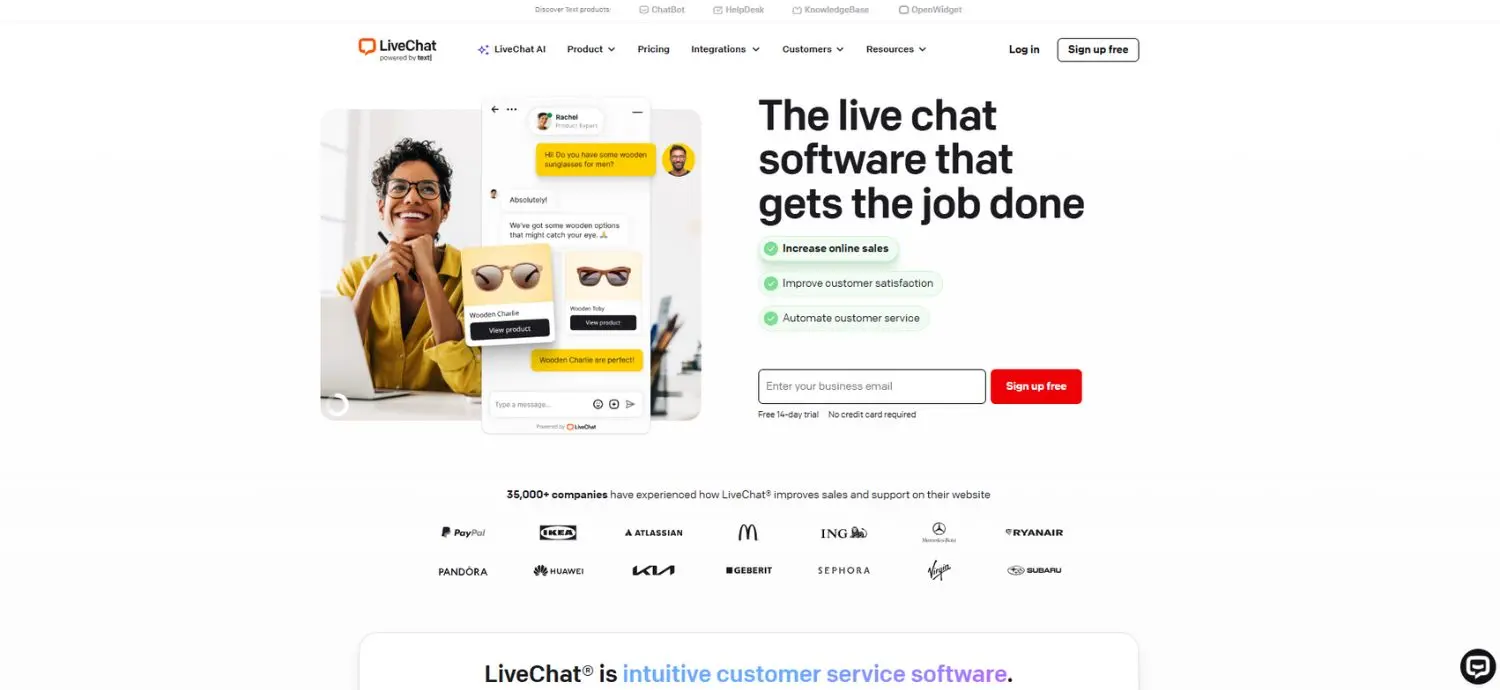
Livechat supports 48 widget languages and offers optional real-time translation for over 100 languages. This makes it extremely flexible for live support teams. The platform prioritizes human interaction rather than deep automation. Compared to AI-driven platforms, LiveChat feels more natural and emotionally responsive. This matters in service-heavy industries like travel, ecommerce, and education.
Its translation layer helps bridge communication gaps, though accuracy varies by language. Compared to tawk.to, LiveChat offers a stronger interface, localization, and agent tools. It is ideal for companies that rely heavily on real-time multilingual conversations.
Tidio
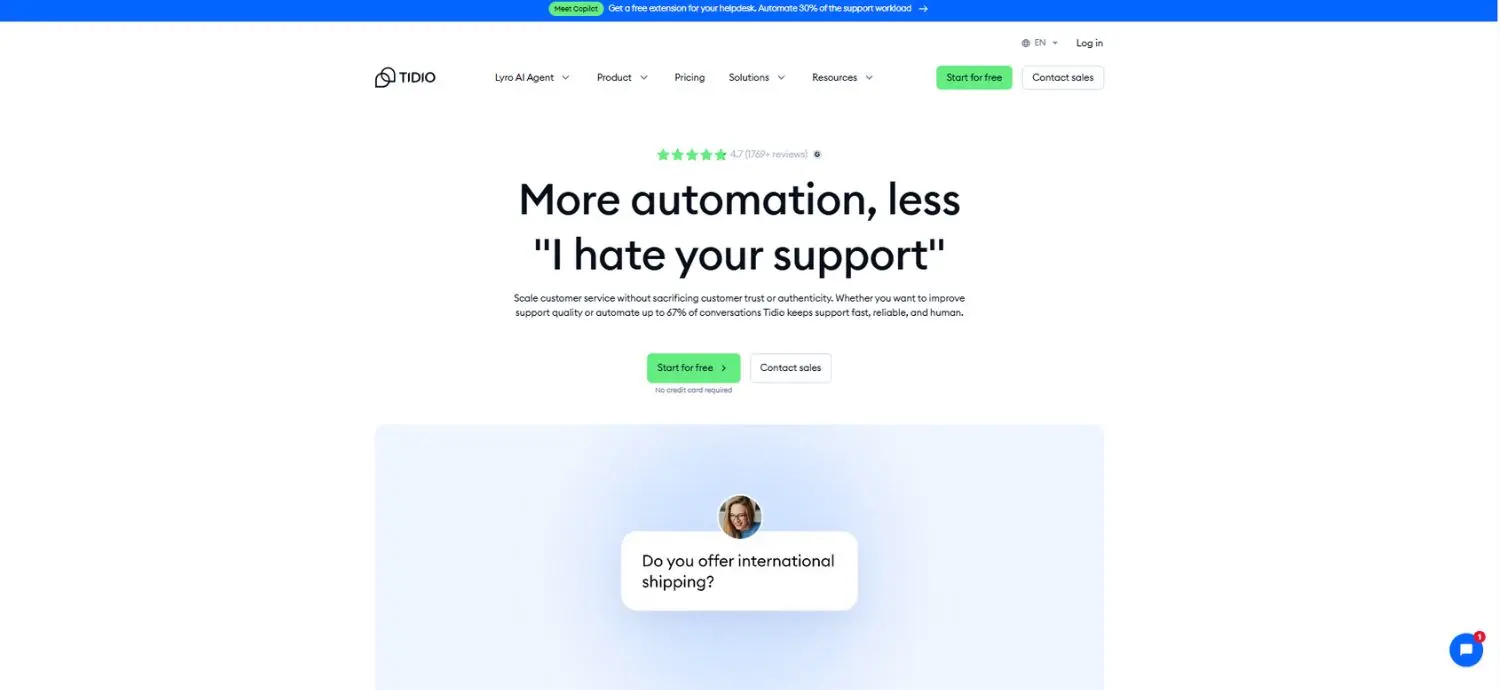
Tidio's Lyro AI Agent supports over 45 languages and delivers impressively natural responses. Instead of simple translation, Lyro adapts tone and phrasing to match each language. This produces smoother conversations and better engagement. Compared to Intercom's Fin, Lyro feels more approachable and conversational. Setup is also simpler, allowing fast multilingual expansion.
For small and mid-sized businesses, this balance is highly appealing. Tidio offers strong automation without enterprise-level complexity. It works particularly well for e-commerce brands and service businesses aiming to scale across European and global markets.
Tawk.to
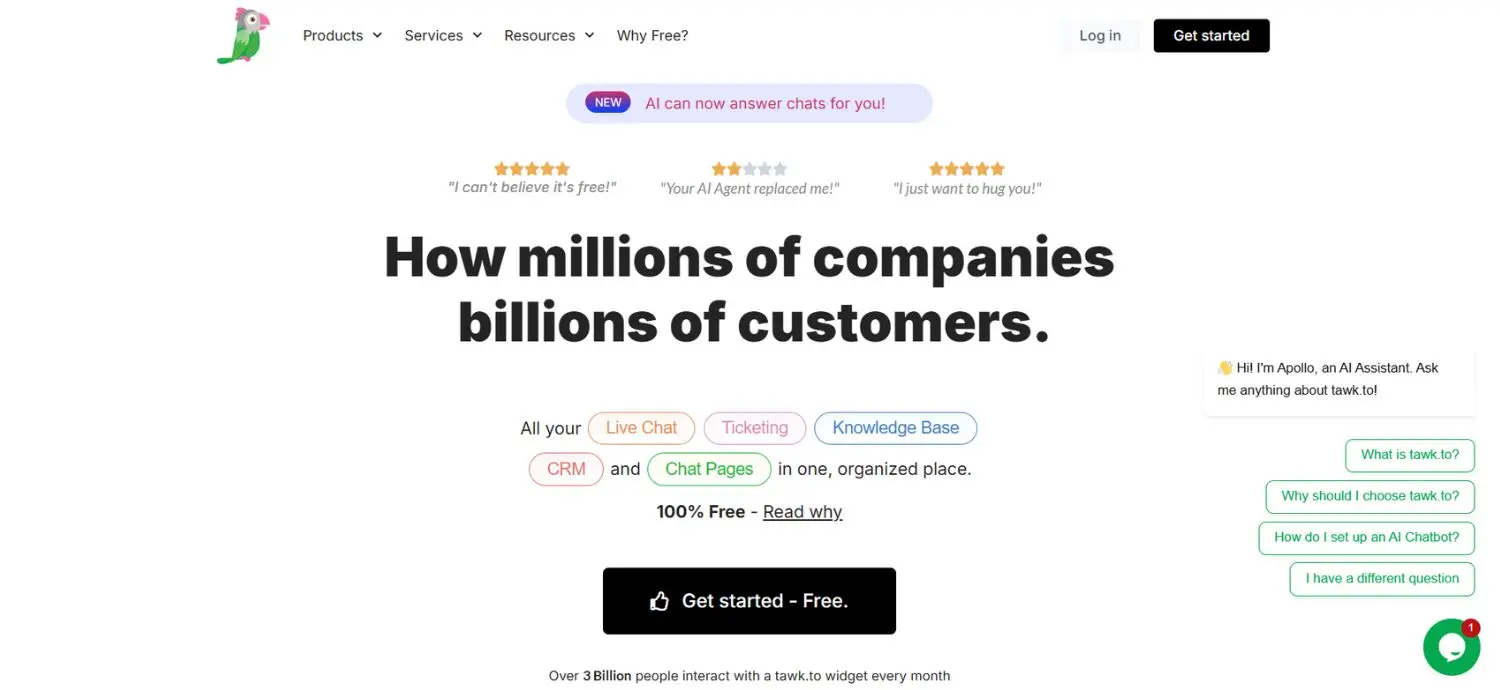
Tawk.to supports 49 widget languages and 25 dashboard languages. This gives it a broad global reach at minimal cost. Setup is fast and straightforward. There is little technical overhead. Compared to LiveChat, tawk.to offer similar language coverage but fewer advanced features.
Automation is limited, but simplicity is its strength. For startups and budget-focused teams, tawk.to provide instant multilingual communication. It is especially useful for businesses entering international markets quickly. While it lacks enterprise sophistication, it excels in accessibility, speed, and ease of deployment.
Drift
Drift supports around 30 widget languages, but most AI and administrative features remain English-only. This limits its effectiveness for global operations. Compared to Zendesk and Intercom, Drift feels less mature in multilingual handling. While international visitors can interact in their native language, internal workflows remain largely English-based. This creates friction for multilingual teams.
Drift works best for English-first companies with growing global traffic. It enables basic localization but lacks deeper language intelligence. In 2026, Drift remains a transitional solution rather than a fully multilingual platform.
Key use cases of multilingual chatbot
Multilingual chatbots are used across customer-facing and internal workflows to help organizations communicate consistently with global audiences while reducing operational friction and response times.
Customer support
Customer support is the most established use case for multilingual chatbots. They handle common issues such as troubleshooting, order status checks, and returns around the clock, allowing customers to receive help in their preferred language regardless of time zone. By automatically triaging tickets and routing complex cases to human agents, chatbots reduce wait times, lower support costs, and improve first-contact resolution.
Sales and conversational commerce
In sales environments, multilingual chatbots act as digital sales assistants that guide users through the buying journey. They qualify leads by asking targeted questions, recommend relevant products or plans, and support upselling or cross-selling in real time. Communicating in the customer's native language builds trust, shortens decision cycles, and helps increase conversion rates and average order value.
HR and internal operations
Within organizations, multilingual chatbots support employee onboarding, benefits inquiries, and access to internal documentation. New hires and distributed teams can quickly find accurate information in their own language, reducing reliance on HR teams and minimizing misunderstandings. This improves efficiency while creating a more inclusive employee experience.
Content creation and localization
Multilingual chatbots also assist with content creation and localization by translating and adapting blog posts, social media content, and help center articles. Beyond direct translation, they help maintain consistent tone and terminology across markets, enabling faster content scaling without sacrificing quality.
Industry-specific applications
Across industries, multilingual chatbots deliver tailored value. E-commerce brands use them for product discovery and post-purchase support, SaaS companies rely on them for onboarding and feature guidance, travel businesses handle bookings and itinerary changes, and healthcare providers use them for scheduling and basic patient inquiries while meeting compliance needs.
How to implement a multilingual chatbot
The step-by-step guide below explains how businesses can plan, build, deploy, and continuously optimize multilingual chatbot experiences across different markets.
Step 1: Define target languages and markets
Start by identifying the primary goals of the chatbot, such as handling customer support requests, generating leads, assisting employees, or supporting product discovery. Once objectives are clear, select target languages based on customer demographics, regional website traffic, support demand, and growth priorities. Focusing on high-impact markets first enables faster deployment and more efficient use of resources.
Step 2: Collect multilingual training data
High-quality training data is essential for chatbot accuracy. Gather internal materials such as FAQs, support tickets, chat transcripts, product documentation, and help center articles. Public datasets may supplement widely spoken languages, but domain-specific data delivers better results. If content exists in a single language, it should be translated and reviewed by humans to preserve meaning, tone, and cultural relevance. Native speakers play a key role in refining critical intents.
Step 3: Select the AI engine and language architecture
Choose an AI engine that aligns with technical capabilities and business requirements. Options include pre-trained multilingual NLP models, large language models accessed via APIs, or commercial chatbot platforms with built-in language support. Factors such as customization needs, data privacy, cost, and scalability should guide this decision. Some architectures rely fully on multilingual models, while others integrate translation services.
Step 4: Design conversations and localize content
Conversation flows should be designed with localization in mind. This includes organizing responses by locale, managing pluralization and formatting rules, and translating all interface elements such as buttons and error messages. Clear fallback strategies help handle unsupported queries or low-confidence responses gracefully.
Step 5: Test accuracy with native speakers
Before launch, test the chatbot in each supported language. Native speakers can evaluate clarity, tone, and cultural appropriateness, while automated testing ensures consistent intent recognition and response accuracy.
Step 6: Deploy across channels
Once validated, deploy the chatbot across websites, mobile apps, messaging platforms, and email. A centralized backend helps maintain consistency while allowing channel-specific adjustments.
Step 7: Monitor performance and improve continuously
After launch, track performance metrics such as resolution rate, fallback frequency, response time, and customer satisfaction. Regular updates to training data and localized content ensure long-term accuracy and relevance.
Common hurdles and how to clear them
While multilingual chatbots enable global engagement, they also introduce operational and linguistic challenges that require deliberate planning. The sections below outline the most common hurdles and practical ways to overcome them.
Scarce data for some languages
Many languages lack enough digital text to train chatbot models effectively, which can reduce accuracy. This can be addressed by using pre-trained multilingual models and transfer learning to reuse knowledge from high-resource languages. Few-shot and active learning techniques further reduce data needs, while community contributions from native speakers help expand and validate training datasets.
Catching slang, idioms, and cultural nuance
Direct translation often fails to capture slang, idioms, or culturally specific meaning, leading to unnatural responses. Involving native speakers in content review ensures linguistic and cultural accuracy. Monitoring live conversations helps identify emerging expressions, while custom glossaries and curated phrase lists maintain consistent interpretation across languages and regions over time.
Slow responses caused by translation lag
Real-time translation can introduce delays that disrupt conversational flow. This issue can be minimized by optimizing backend architecture, caching frequently used translations, and deploying language models closer to users. Selecting translation models designed for faster inference helps maintain responsive interactions without significantly compromising response quality.
Privacy and compliance risks
Using third-party translation services raises concerns around data protection and regulatory compliance. Businesses should anonymize sensitive information before processing, consider self-hosted or private cloud translation options, and establish strong data processing agreements. Clear user consent policies further reduce legal risk and improve transparency.
Keeping multilingual content current
As products and policies evolve, maintaining consistency across languages becomes challenging. Version control systems, centralized terminology management, and automated localization alerts help synchronize updates. Regular audits across all supported languages ensure information remains accurate, aligned, and trustworthy for global users.
Future of multilingual conversational AI
Looking ahead, multilingual conversational AI is becoming a core layer of intelligent, global customer experience.
- Voice-first and multimodal interactions: Multilingual conversational AI will increasingly support voice as a primary interface, alongside text and visual inputs. Users will be able to switch naturally between speaking, typing, and sharing images within the same conversation, creating smoother experiences across devices and channels.
- Emotion, sentiment, and nuance detection: Future systems will better understand user emotions across languages by analyzing tone, phrasing, and context. This allows AI to respond more empathetically, adjust its language style, and escalate complex or sensitive issues when human support is needed.
- Real-time code-switching for multilingual communities: Conversational AI will handle mixed-language inputs in real time, reflecting how bilingual and multilingual users naturally communicate. By recognizing and responding to code-switching seamlessly, AI removes friction and makes interactions feel more natural and inclusive.
- AI-driven localization with consistent brand voice: Instead of simple translation, AI will localize conversations by adapting tone, formality, and cultural references while maintaining a consistent brand voice. This helps businesses communicate effectively in local markets without losing global identity.
- Predictive and proactive customer experience: Multilingual AI will move from reactive support to proactive engagement by anticipating user needs. Using historical data and behavioral patterns, it can surface relevant information, suggest solutions early, and deliver timely, language-appropriate assistance.
Conclusion
The growing adoption of multilingual AI highlights the benefits of chatbots for global businesses. When implemented with the right technology and strategy, they enable businesses to support international audiences efficiently while maintaining consistent service quality. Success depends on more than language coverage alone. It requires accurate intent detection, strong translation layers, and continuous optimization across channels.
By choosing the right tool and deploying it thoughtfully, businesses can improve customer satisfaction, reduce operational costs, and strengthen trust in every market they serve. Now is the time to evaluate these platforms and take a strategic step toward truly global, language-aware customer engagement.
FAQ
Which platforms offer multilingual AI agents for international teams?
Leading platforms with multilingual AI agents include Intercom, Zendesk AI, Drift, Tidio, LiveChat, Tawk.to, and Chatty. These solutions support multiple languages, automated intent detection, and seamless integrations with CRM or helpdesk tools, making them suitable for international support teams and global customer engagement.
How do I choose the right multilingual chatbot for my business?
Evaluate your target languages, supported channels, NLP accuracy, customization capabilities, and integration with existing systems like CRM or helpdesk. Consider scalability, analytics, pricing, and support quality. Run trials or pilots to assess real-world performance and ensure the platform meets your customer experience and operational goals.
Can multilingual chatbots provide 24/7 support?
Yes. Multilingual chatbots can deliver 24/7 customer support by automatically handling queries across languages, resolving common issues, and routing complex cases to human agents. This constant availability improves response times and customer satisfaction while reducing pressure on support teams.
Are multilingual chatbots different from AI agents?
Yes. Multilingual chatbots focus on conversational interactions across languages, while AI agents are broader, often handling complex tasks like workflow automation, predictive insights, and advanced decision-making. Chatbots may be part of an AI agent suite, but not all AI agents are strictly conversational tools.
Leading platforms with multilingual AI agents include Intercom, Zendesk AI, Drift, Tidio, LiveChat, Tawk.to, and Chatty. These solutions support multiple languages, automated intent detection, and seamless integrations with CRM or helpdesk tools, making them suitable for international support teams and global customer engagement.
Evaluate your target languages, supported channels, NLP accuracy, customization capabilities, and integration with existing systems like CRM or helpdesk. Consider scalability, analytics, pricing, and support quality. Run trials or pilots to assess real-world performance and ensure the platform meets your customer experience and operational goals.
Yes. Multilingual chatbots can deliver 24/7 customer support by automatically handling queries across languages, resolving common issues, and routing complex cases to human agents. This constant availability improves response times and customer satisfaction while reducing pressure on support teams.
Yes. Multilingual chatbots focus on conversational interactions across languages, while AI agents are broader, often handling complex tasks like workflow automation, predictive insights, and advanced decision-making. Chatbots may be part of an AI agent suite, but not all AI agents are strictly conversational tools.