








Sales is moving faster than ever, yet most teams are slowing down. The latest Salesforce State of Sales report shows that reps spend only 28% of their time actually selling, with the rest consumed by administrative tasks, data entry, follow-ups, and the use of fragmented tools.
This widening gap between high-value work and high-volume tasks is precisely why sales AI tools are transforming the field. They automate the repetitive, accelerate what matters, and keep deals in motion, even when your team is unavailable.
In this guide, you’ll get a clear look at:
- Where AI creates real leverage across outreach, qualification, forecasting, and follow-up.
- Which 17 tools truly outperform, and the specific scenarios each one is built for.
- How to implement AI without chaos, using practical playbooks and avoiding common pitfalls.
Let’s get into it.
- Sales reps spend only 28% of their time actually selling anything.
The rest is consumed by admin tasks, data entry, follow-ups, and fragmented tools that AI can eliminate.
- Over half of B2B buyers now prefer to avoid talking to a rep entirely.
AI enables the self-serve and asynchronous experiences modern buyers expect, without sacrificing personalization or speed.
- Losing half your SDR team every year is an industry norm, not an exception.
Annual SDR turnover exceeding 50% makes AI-driven prospecting and qualification a strategic necessity, not just a productivity perk.
- Winning a deal today typically requires 6 to 8 meaningful touchpoints minimum.
AI maintains consistent engagement across that cadence without adding workload or burning out your sales team.
- Sales AI adapts to context in ways traditional automation simply cannot match.
Unlike rule-based tools, AI learns from real buyer interactions to improve predictions and surface smarter next-step recommendations.
What are sales AI tools?
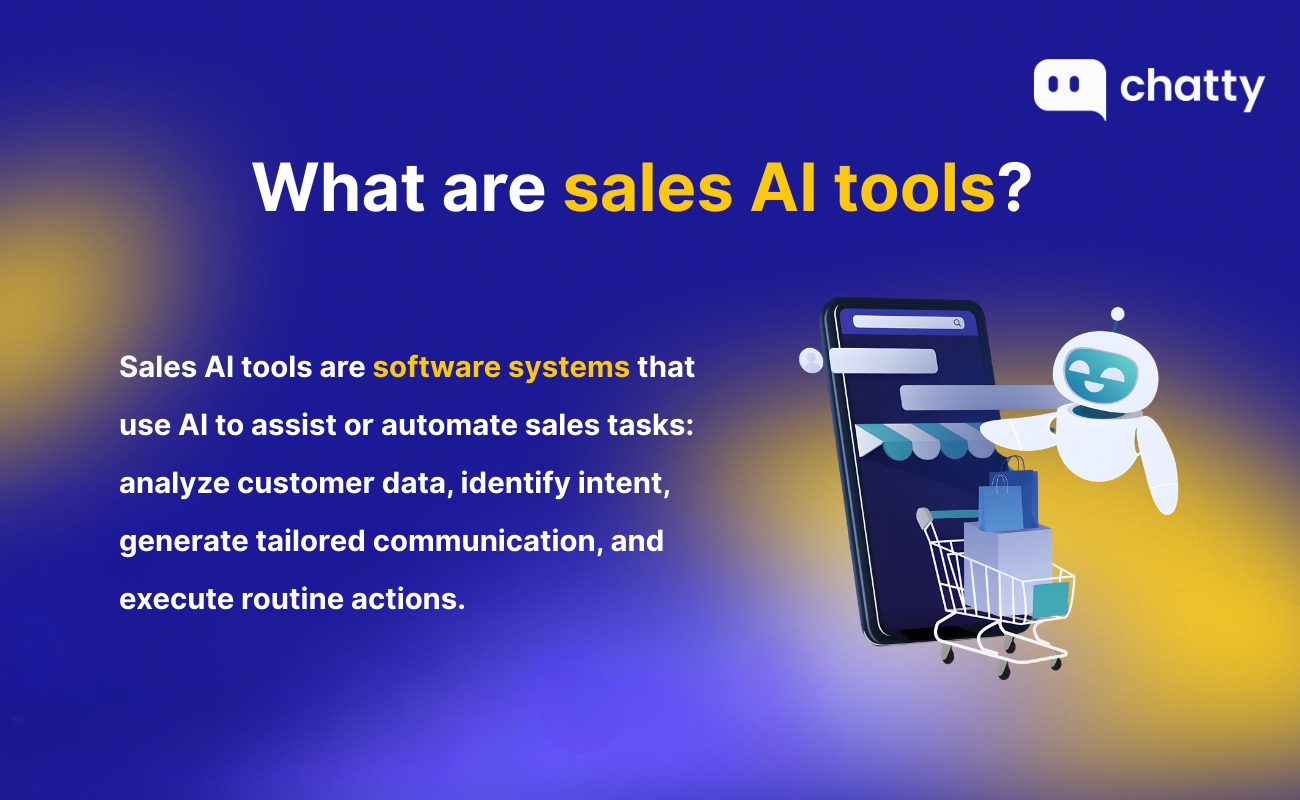
Sales AI tools are software systems that use artificial intelligence to assist or automate specific sales tasks. They analyze customer data, identify intent, generate tailored communication, and execute routine actions that typically require manual effort. The goal is simple: help sales teams move faster with greater accuracy.
In practice, sales AI supports the entire revenue cycle:
- Prospecting: finding, enriching, and prioritizing leads
- Outreach: producing and sending personalized messages
- Qualification: assessing fit and routing prospects intelligently
- Negotiation: recommending next steps based on deal context
- Closing: automating follow-ups and reinforcing buyer momentum
Unlike traditional automation, sales AI adapts to context. It learns from interactions, improves predictions, and delivers recommendations that align with real buyer behavior. This gives teams a practical advantage: fewer repetitive tasks, clearer signals, and a more consistent path to revenue.
Major shifts in the sales landscape are pushing AI adoption
The sales environment has shifted dramatically, and the gap between buyer expectations and team capacity is widening. Below are five structural forces driving the rapid adoption of sales AI tools.
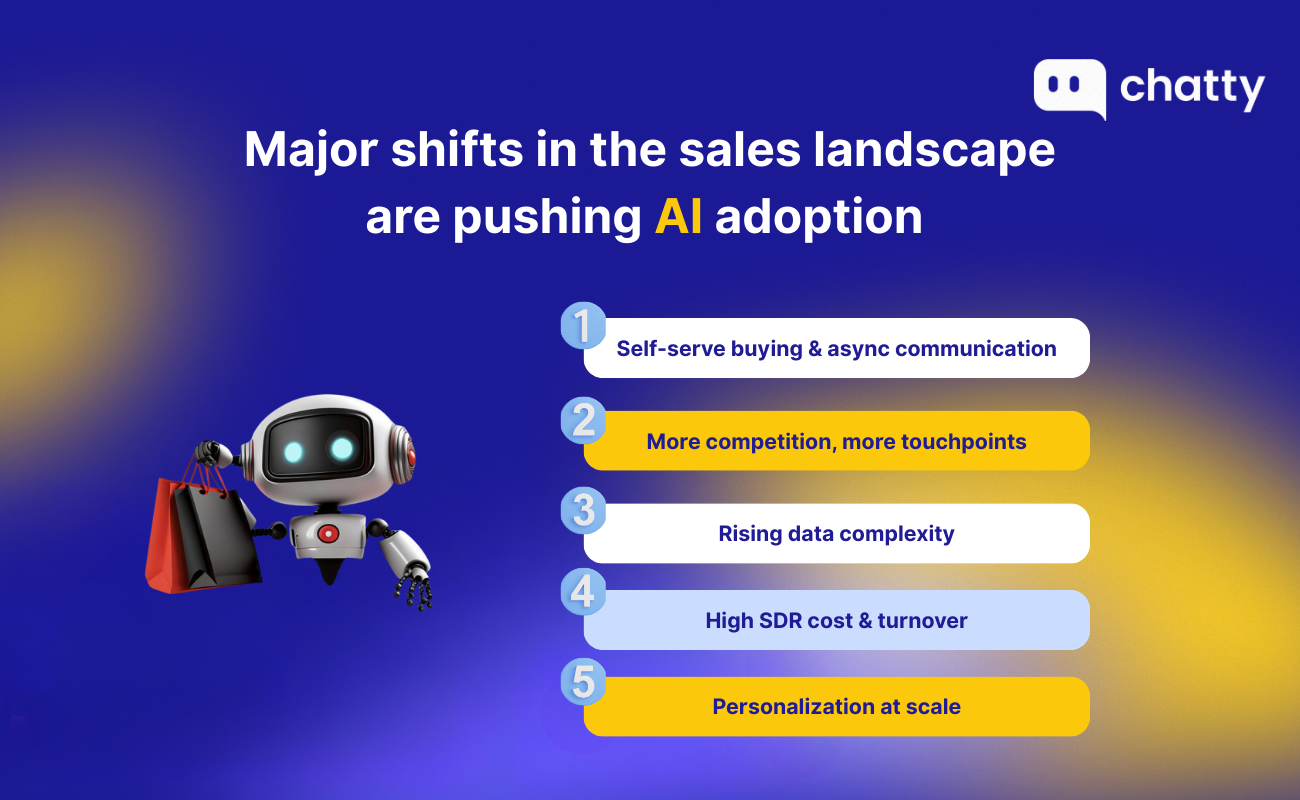
- Buyers increasingly prefer self-serve and asynchronous communication
61% of B2B buyers now prefer a rep-free buying experience. With less direct seller contact, companies must enable self-service channels and faster asynchronous responses, both of which AI can deliver.
- Increased competition means more touchpoints are needed
Crowded markets push prospects to evaluate more vendors and expect more tailored interactions. Most deals now require 6-8 meaningful touchpoints to stay top-of-mind. AI supports this cadence by keeping engagement consistent without overwhelming reps.
- High cost and turnover in SDR teams
Industry analyses show annual SDR turnover often exceeds 50%, creating constant rehiring and retraining cycles. AI reduces dependence on large SDR teams by automating early-stage research, enrichment, and qualification.
- Data complexity from multiple systems (CRM, email, product logs)
Sales teams see only a fraction of the signals buried in CRM data, email threads, product usage logs, and call transcripts. AI consolidates these sources and converts the noise into clear, actionable insights that humans can’t manually process at scale.
- The need for personalization at scale
Buyers ignore generic outreach, yet true personalization across hundreds of accounts is unrealistic manually. AI adapts messaging based on segments, intent signals, past interactions, and behavior, making relevance possible at scale.
Together, these shifts make AI not an optional experiment but the operational foundation of a modern, competitive sales engine.
Benefits of sales AI tools for businesses
Sales AI tools deliver measurable advantages across the entire revenue process. The benefits below show why adoption is accelerating in teams of every size.
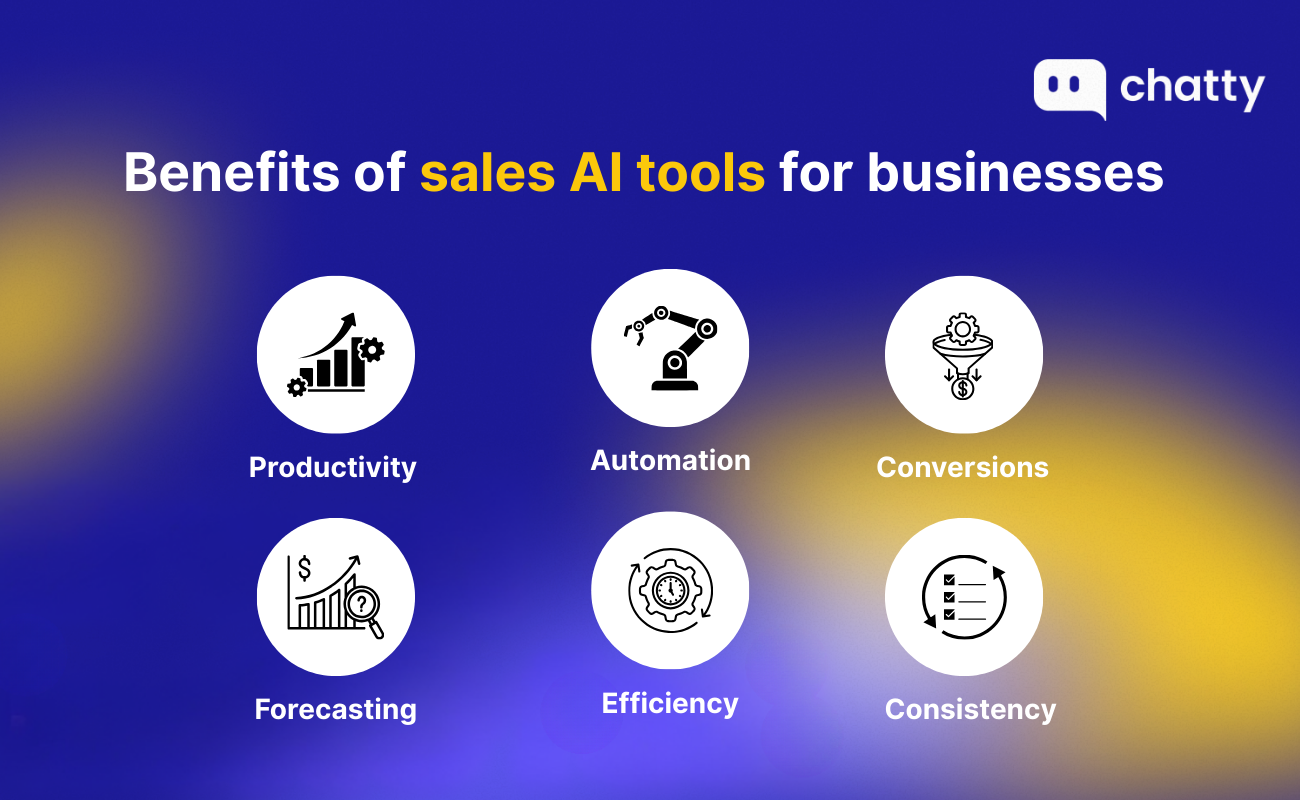
- Increased productivity: AI takes over time-consuming tasks such as logging activity, updating CRM fields, and qualifying basic leads, allowing reps to stay focused on selling rather than administration. This shift frees meaningful hours each week and improves both output and deal momentum.
- 10-35% higher conversion rate: AI scores leads based on intent signals, recommends next-best actions, and personalizes outreach at scale. By directing reps toward the prospects most likely to convert, pipelines lift naturally depending on industry and funnel maturity.
- 24/7 automation across voice, chat, and email: AI agents respond instantly regardless of time zone or team availability. This always-on coverage prevents drop-off, captures demand as it happens, and keeps deals moving even when reps are offline.
- More accurate forecasting: Manual forecasting often relies on subjective judgment and incomplete data. AI evaluates historical performance, deal velocity, and real interaction signals to assign probability scores. The result is clearer pipeline visibility, earlier risk detection, and forecasts that leadership can plan around with confidence.
- Reduced operational cost: AI handles repetitive, predictable SDR-level tasks like initial outreach, enrichment, and qualification, allowing leaner teams to manage larger pipelines. This lowers acquisition costs and reduces the need for continuous rehiring in high-turnover roles.
- Consistency in messaging: Reps naturally vary in communication style, tone, and accuracy; AI does not. It ensures every email, follow-up, and nurture sequence stays on-brand and aligned with current positioning, strengthening buyer trust and eliminating mixed or outdated messaging.
17 leading sales AI tools to boost business performance
Before diving into the full breakdown, here’s a quick snapshot of each tool. Scan this table to shortlist the best-fit options, then jump into the detailed reviews below for deeper insights and real-world recommendations.
| # | Tool | Core USP (What it actually does best) | Best for | Pricing Snapshot* |
| 1 | Chatty | AI chatbot that sells using product-aware logic & upsells for Shopify | E-commerce brands needing 24/7 conversion support | Free; $19.99; $49.99; $199 |
| 2 | HubSpot AI | Unified CRM with AI across email, scoring & guided selling | SMBs wanting one simple AI-powered CRM | $20; $90; $150 per seat |
| 3 | Salesforce Einstein | Enterprise AI for forecasting, scoring, and automation | Large orgs on Salesforce needing deeper analytics | From ~$50/user/mo (add-on) |
| 4 | Outreach.io | AI-enhanced sequencing for multi-touch cadences | Outbound teams using structured outreach | ~$100+/user/mo (custom) |
| 5 | Salesloft | AI cadence optimization via “Conductor” + deal management | Teams with disciplined outbound motions | Custom pricing |
| 6 | Apollo.io | Prospecting + enrichment + outbound in one platform | Teams wanting an all-in-one outbound engine | Free; $49; $79; $119 |
| 7 | ZoomInfo Sales OS | Enterprise B2B data + intent + enrichment | ABM and enterprise sales teams | Custom pricing |
| 8 | Clay | Hyper-personalized prospecting with 75+ data sources | Teams prioritizing deep personalization | Free; $149; $349; $800; custom |
| 9 | Lavender | Real-time cold email coaching in-editor | Reps improving reply rates through better writing | Free; $29; $49; $99 custom |
| 10 | Instantly.ai | High-volume cold email + deliverability automation | Teams running scaled email outbound | $37/inbox; $97/inbox |
| 11 | Retell AI | Human-like AI voice agents for realistic calls | Teams offloading qualification & routine calls | ~$0.02/sec + fees |
| 12 | Vapi.ai | API-first platform for custom AI voice agents | Companies needing bespoke voice automation | From $0.005/sec + usage fees |
| 13 | Air AI | Fully autonomous, long-form AI phone conversations | Orgs replacing large call volumes with AI | $25k–$100k + ~$0.11/min |
| 14 | Gong.io | AI intelligence for calls, deals & pipeline insights | Teams improving call performance & forecasting | Custom pricing |
| 15 | Chorus.ai | Conversation intelligence & multi-channel rep coaching | Managers training reps at scale | ~$8,000/yr (3 seats) + $1,200/user |
| 16 | Clari | AI-driven forecasting + unified revenue visibility | RevOps & CROs needing activity-based forecasting | Custom pricing |
| 17 | PandaDoc AI | AI-assisted proposals, quotes & contract workflows | Teams sending many proposals/quotes | Free; $19; $49; custom |
1. Chatty: Best AI sales tool for e-commerce stores
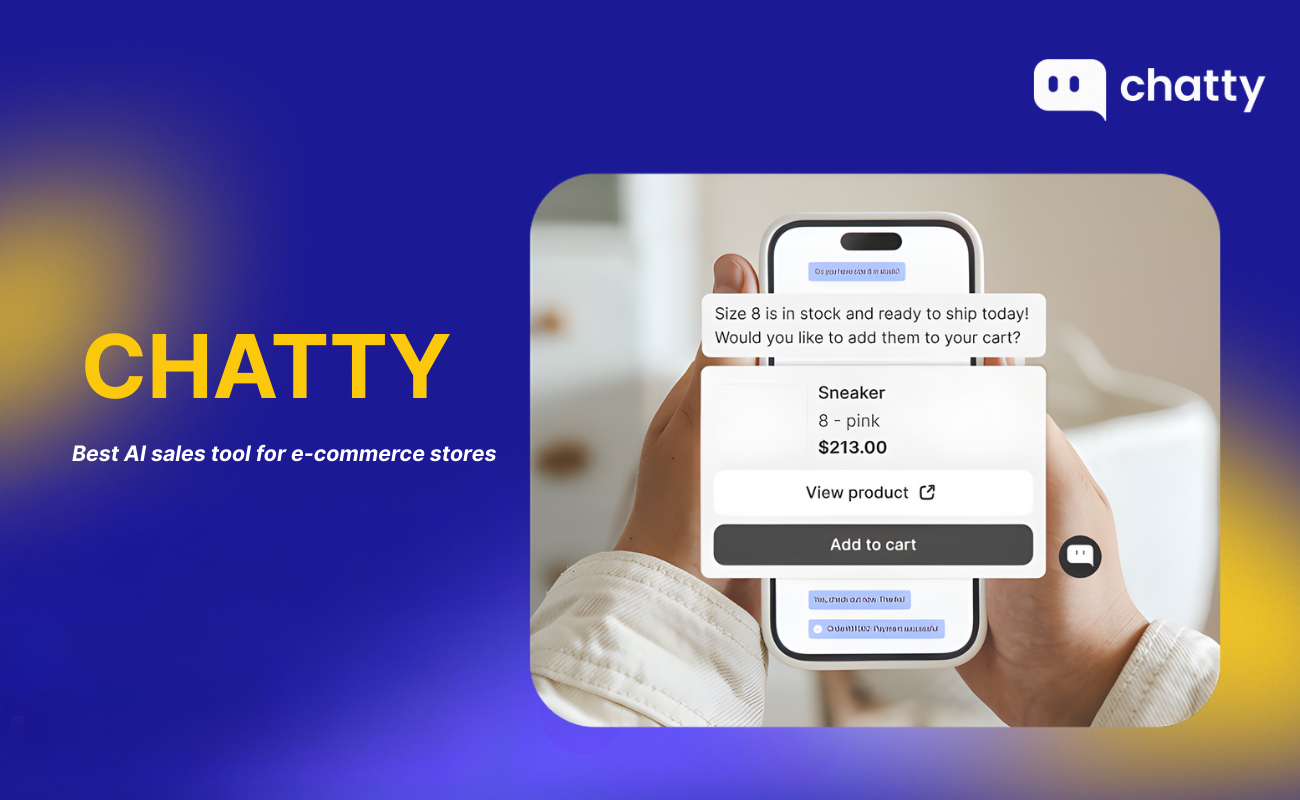
Chatty is one of the few AI chatbots built to sell, not just reply. It reads your entire Shopify catalog, understands variants, materials, sizing logic, and real shopping intent, then uses that context to guide customers, answer objections, and push them toward checkout. It behaves like a trained sales associate that never sleeps.
Best for: E-commerce stores that want an AI assistant built for revenue product guidance, upsells, and 24/7 conversion support.
Key features:
- Product-aware AI: Syncs automatically with Shopify to deliver accurate sizing, compatibility, and product logic without manual rule-building – especially valuable for stores with complex or high-variant catalogs.
- Conversational upsell engine: Suggests bundles, add-ons, or better alternatives naturally, mirroring how an in-store associate nudges a shopper toward a higher-value option.
- Multi-channel automation: Handles chat, email, and social messages consistently so stores capture revenue opportunities even after hours.
Limitations:
- Limited AI replies on lower plans
- Not ideal for service-only or B2B-non-catalog businesses
- Complex catalogs may require fine-tuning
Price:
- Free (100 replies/mo)
- Basic $19.99 (1,000 replies)
- Pro $49.99 (5,000 replies)
- Plus $199.99 (10,000 replies + dedicated AI consultant)
2. HubSpot AI: Best all-in-one AI CRM for SMBs
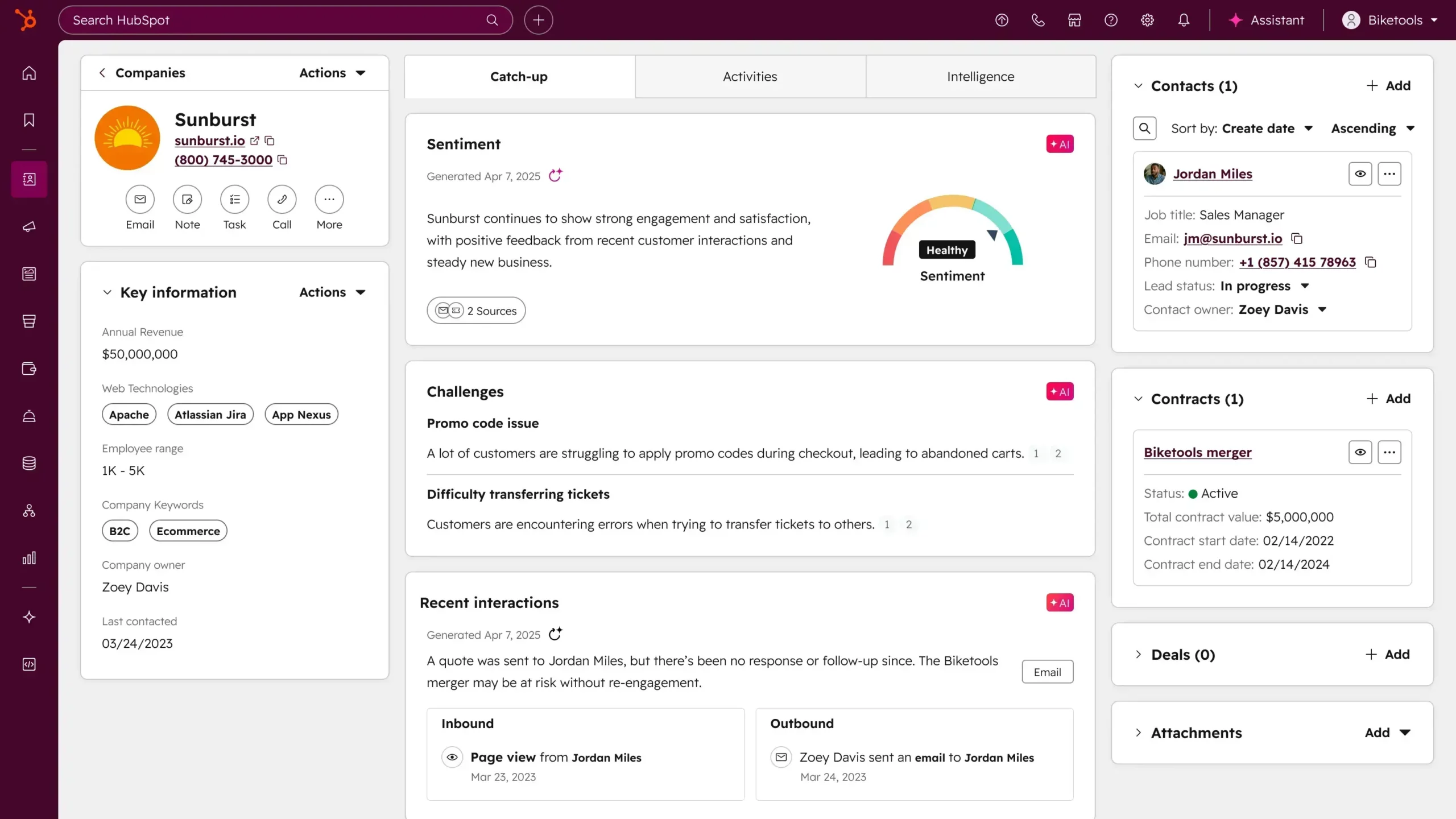
HubSpot AI is a fully unified CRM with AI across email, tasks, reporting, and deal management. Instead of scattered tools, sales teams get one platform where data, communication, and AI insights live together. This creates a smoother workflow and reduces tool-switching.
Best for: SMBs that want a simple, scalable CRM with AI built into everyday tasks.
Key features:
- AI Email Assistant: Generates personalized outreach based on recent activity, saving time on follow-ups.
- Predictive lead & deal scoring: Surfaces the right accounts so reps don’t waste cycles on low-value leads.
- Guided selling: Highlights risks and next steps directly inside the CRM, helping new reps ramp faster.
Limitations:
- Fewer enterprise analytics
- Some AI features are locked to higher tiers
- Works best within the full HubSpot ecosystem
Price:
- Starter $20/seat
- Professional $90/seat
- Enterprise $150/seat
3. Salesforce Einstein: Best enterprise AI for forecasting & analytics
Salesforce Einstein adds an AI layer across the entire Salesforce ecosystem. It analyses activity, predicts deal outcomes, and automates CRM updates, giving large teams clearer visibility and earlier signals than manual reporting can offer.
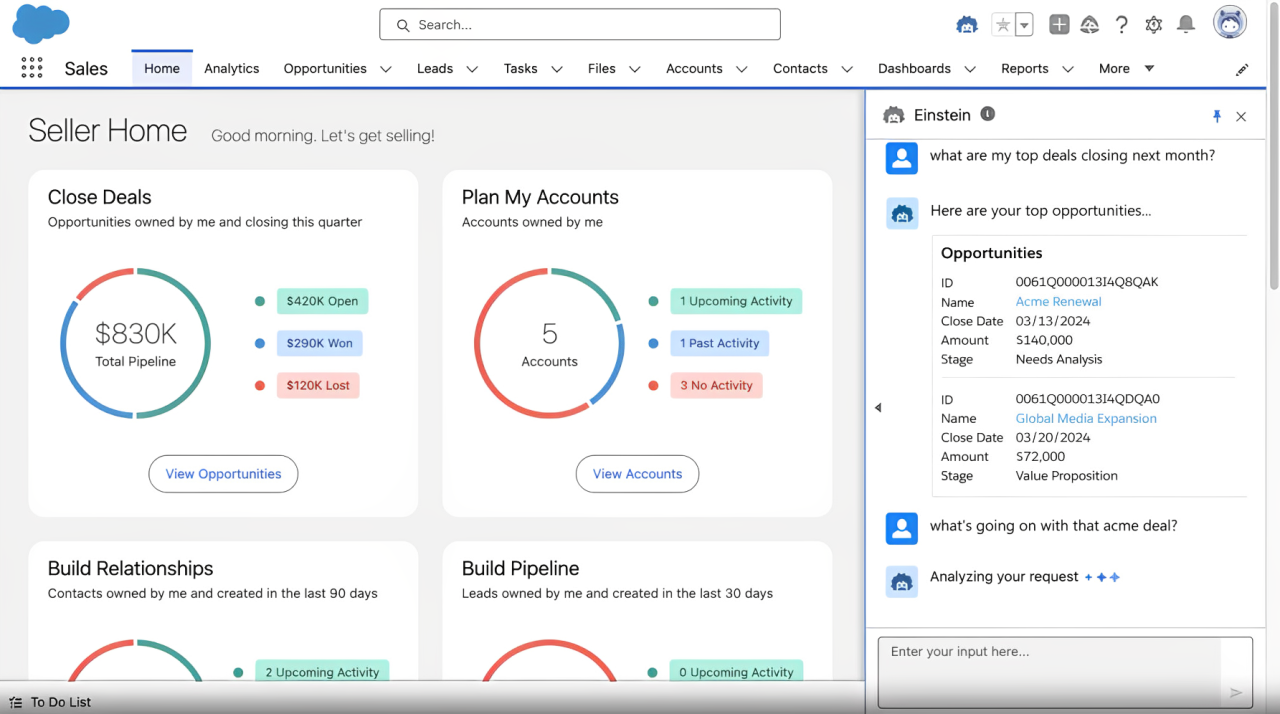
Best for: Enterprises that need advanced forecasting and deep analytics embedded directly in their CRM.
Key features:
- Lead & opportunity scoring: Flags deals at risk and highlights the ones most likely to advance.
- AI-driven forecasting: Uses historical patterns and live engagement signals to strengthen forecast accuracy.
- Automatic activity capture: Logs emails, meetings, and calls so reps don’t waste time on data entry.
Limitations:
- Requires clean Salesforce data
- High implementation effort
- Some features are sold as add-ons
Price: Einstein add-ons start at ~$50/user/month (Salesforce licence required)
4. Outreach.io: Best AI sales engagement & sequencing tool
Outreach.io specialises in AI-powered sales sequences. It uses behaviour data to time emails, calls, and messages so reps don’t lose momentum with prospects. The focus is clear: better engagement across every touchpoint.
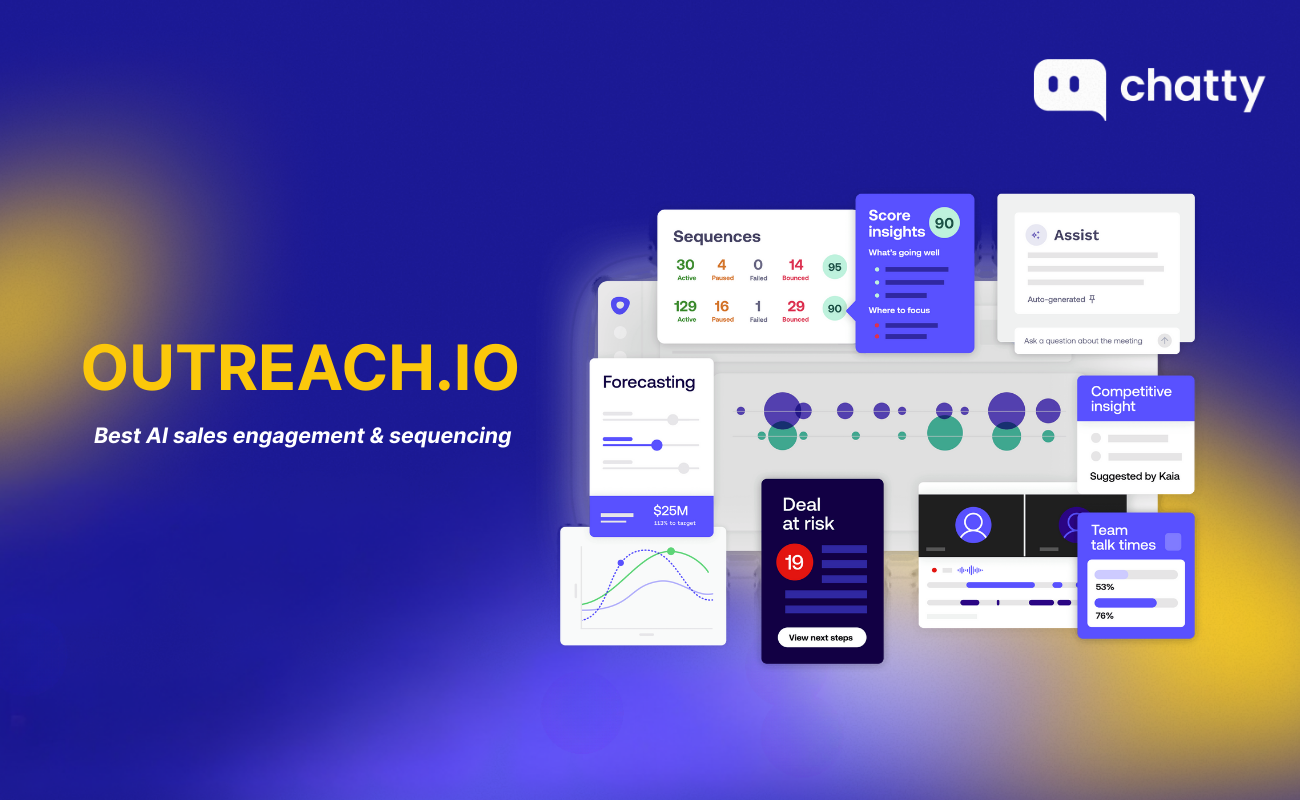
Best for: Outbound-heavy teams that rely on cadences and need AI to optimise timing and prioritisation.
Key features:
- AI-optimised sequences: Adjusts cadence steps based on engagement, helping reps avoid stalled outreach.
- Deal & account assist: Surfaces risks, next steps, and key signals from complex account activity.
- Deep CRM sync: Keeps data aligned so sellers always act on the latest account insights.
Limitations:
- Higher cost per seat
- Learning curve for new teams
- Best for structured outbound motion
Price: Starts around $100+/user/month (custom quote required)
5. Salesloft: Best for cadence optimization & deal management
Salesloft combines AI guidance with real sequencing workflows, helping reps run high-quality cadences without losing rhythm. Its AI (“Conductor”) learns from past buyer behavior to suggest timing, messaging, and next steps, making every sequence feel more intentional.
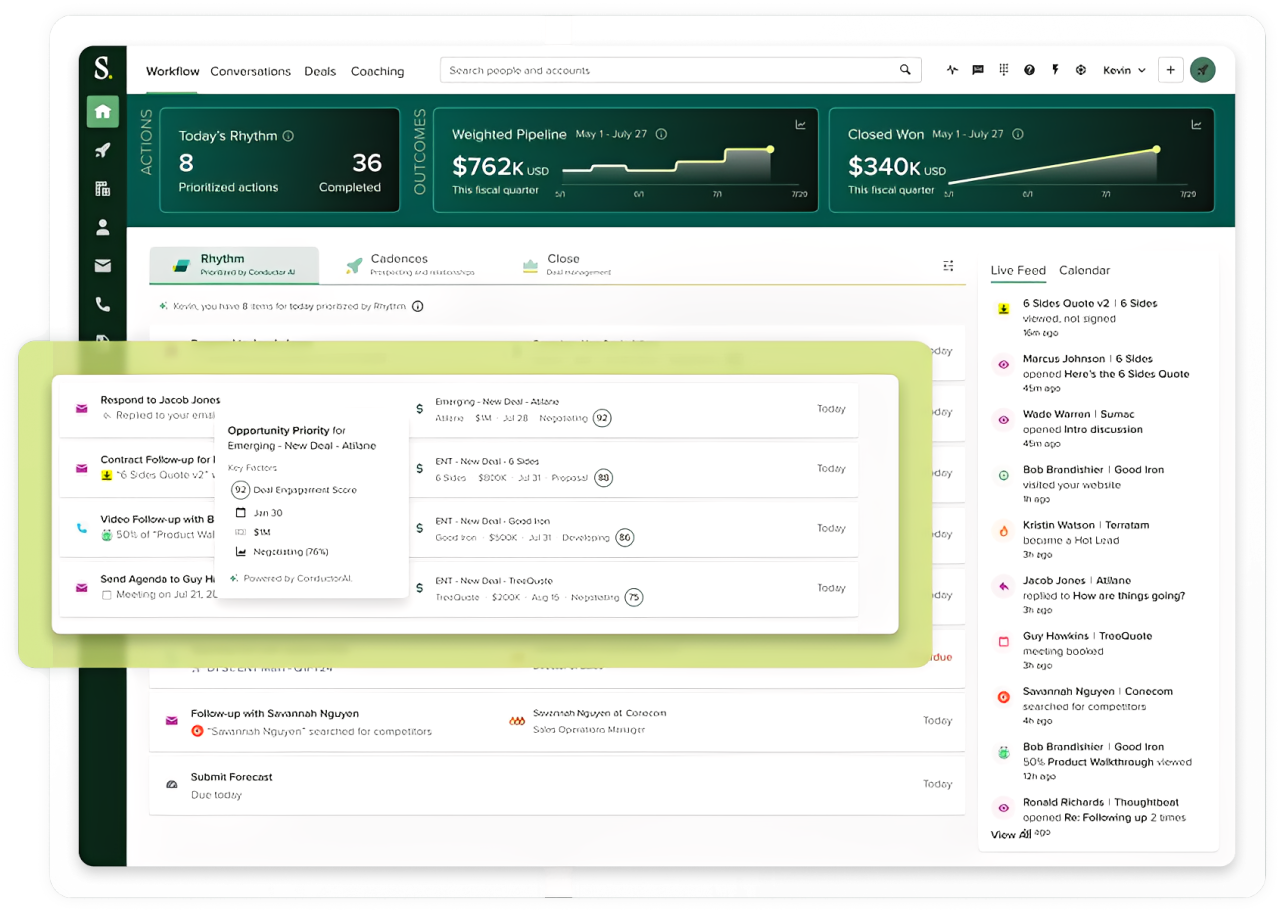
Best for: Outbound teams that rely on structured cadences across email, calls, and social.
Key features:
- AI-optimized cadences: Conductor adjusts timing and channels based on engagement so reps don’t waste touches.
- Deal health scoring: Flags slowing deals early, giving managers a clear sense of where to intervene.
- Conversation intelligence: Surfaces key call moments for coaching, helping teams improve message quality quickly.
Limitations:
- Higher pricing
- Complex interface
- Best for teams with existing process discipline
Price: Custom pricing only (Salesloft does not publicly list plans)
6. Apollo.io: Best AI prospecting + enrichment + outbound in one
Apollo.io blends a massive B2B database with AI scoring, enrichment, and automated outbound, removing the need to combine multiple tools. It’s one of the few platforms where prospecting, enrichment, and sequencing live natively together.
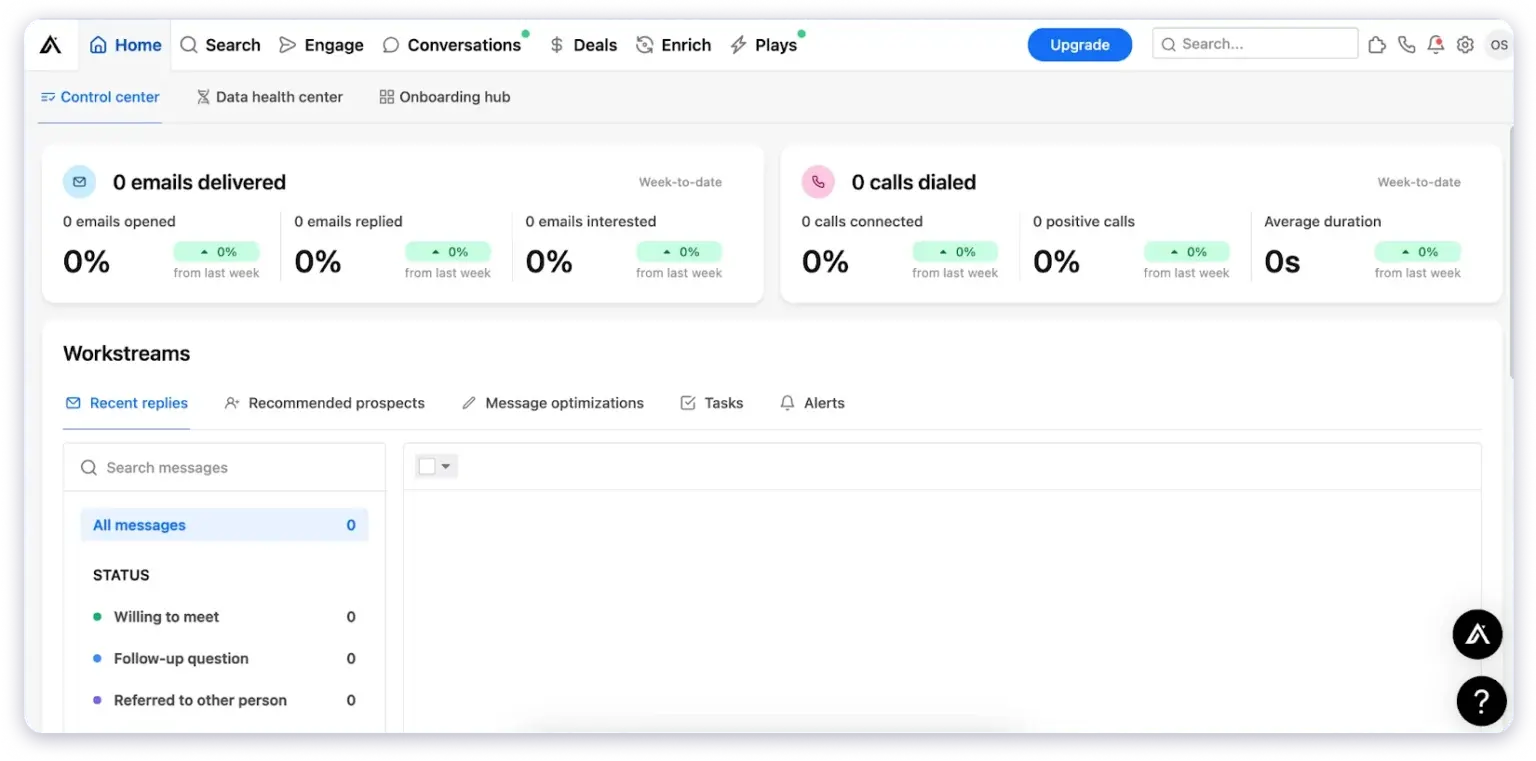
Best for: Teams that want an all-in-one outbound engine without juggling several platforms.
Key features:
- AI lead scoring: Prioritizes prospects based on engagement and similarity to past converters, very helpful for lean teams.
- Intent & behavioral filtering: Cuts through Apollo’s huge database by surfacing accounts actively researching your category.
- Outbound Copilot: Builds lists, drafts messages, and launches multi-channel outreach, reducing manual setup work.
Limitations:
- Limited free plan
- Occasional data inconsistencies
- Can feel overwhelming for beginners
Price:
- Free plan
- Basic $49/user/mo
- Professional $79/user/mo
- Organization $119/user/mo (annual billing)
7. ZoomInfo Sales OS: Best enterprise prospecting & intent insights
ZoomInfo combines one of the deepest B2B datasets with intent signals and AI-assisted workflows. It’s designed for teams that need precision: accurate contacts, enriched company intel, and early buying triggers all in one system.
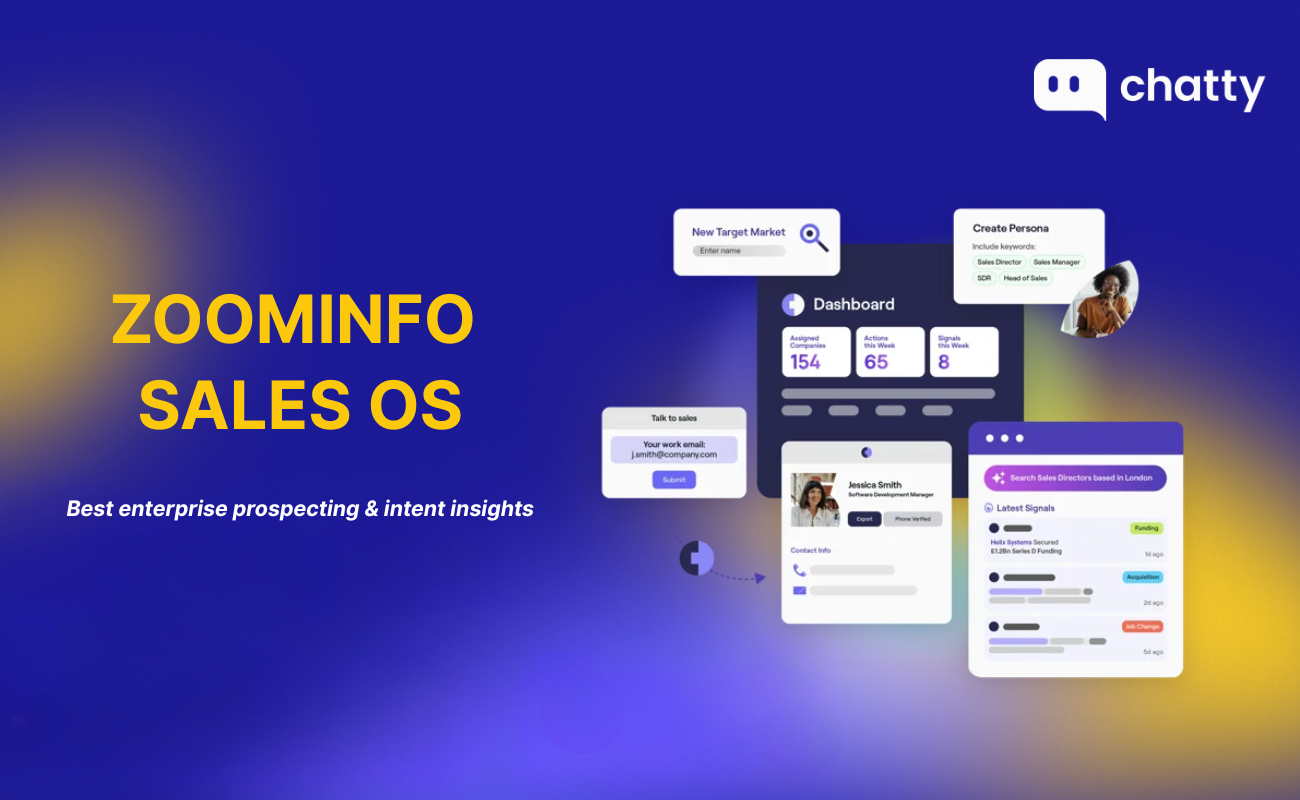
Best for: Enterprise sales teams running ABM or large-scale outbound motions.
Key features:
- Real-time intent insights: Identifies accounts actively researching relevant topics so sellers can engage early.
- Multi-layer enrichment: Pulls firmographic, technographic, and contact data into CRM with minimal cleanup.
- AI-guided workflows: Suggests actions based on buying signals and past success patterns.
Limitations:
- Expensive for SMBs
- Steep learning curve
- Requires strong data governance
Price: Custom pricing (ZoomInfo does not publicly list plan rates)
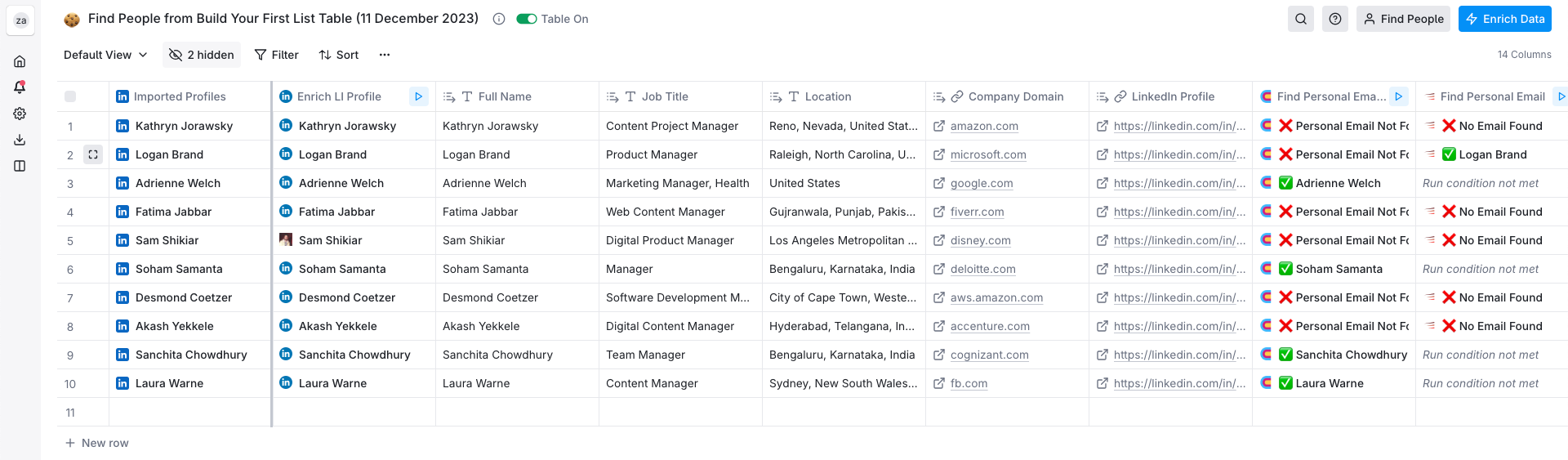
8. Clay: Best for hyper-personalized AI prospecting automation
Clay stands out by combining 100+ data sources with AI enrichment and ultra-personalized outreach automation. Instead of manual research, reps generate tailored messages using real insights at a scale impossible to achieve manually.
Best for: Teams running targeted outbound that depend on rich personalization and fresh signals.
Key features:
- Multi-source enrichment: Pulls data from 75+ providers to build rich, accurate profiles before outreach.
- AI-crafted personalization: Generates message snippets based on each prospect’s public data, making outbound feel human.
- Trigger-based workflows: Launch actions when job changes, funding rounds, or product signals appear.
Limitations:
- High cost at scale
- Requires setup to unlock full value
- Best suited for advanced outbound teams
Price:
- Free (100 credits)
- Starter $149/mo
- Explorer $349/mo
- Pro $800/mo
- Enterprise (custom)
9. Lavender: Best AI tool for cold email coaching
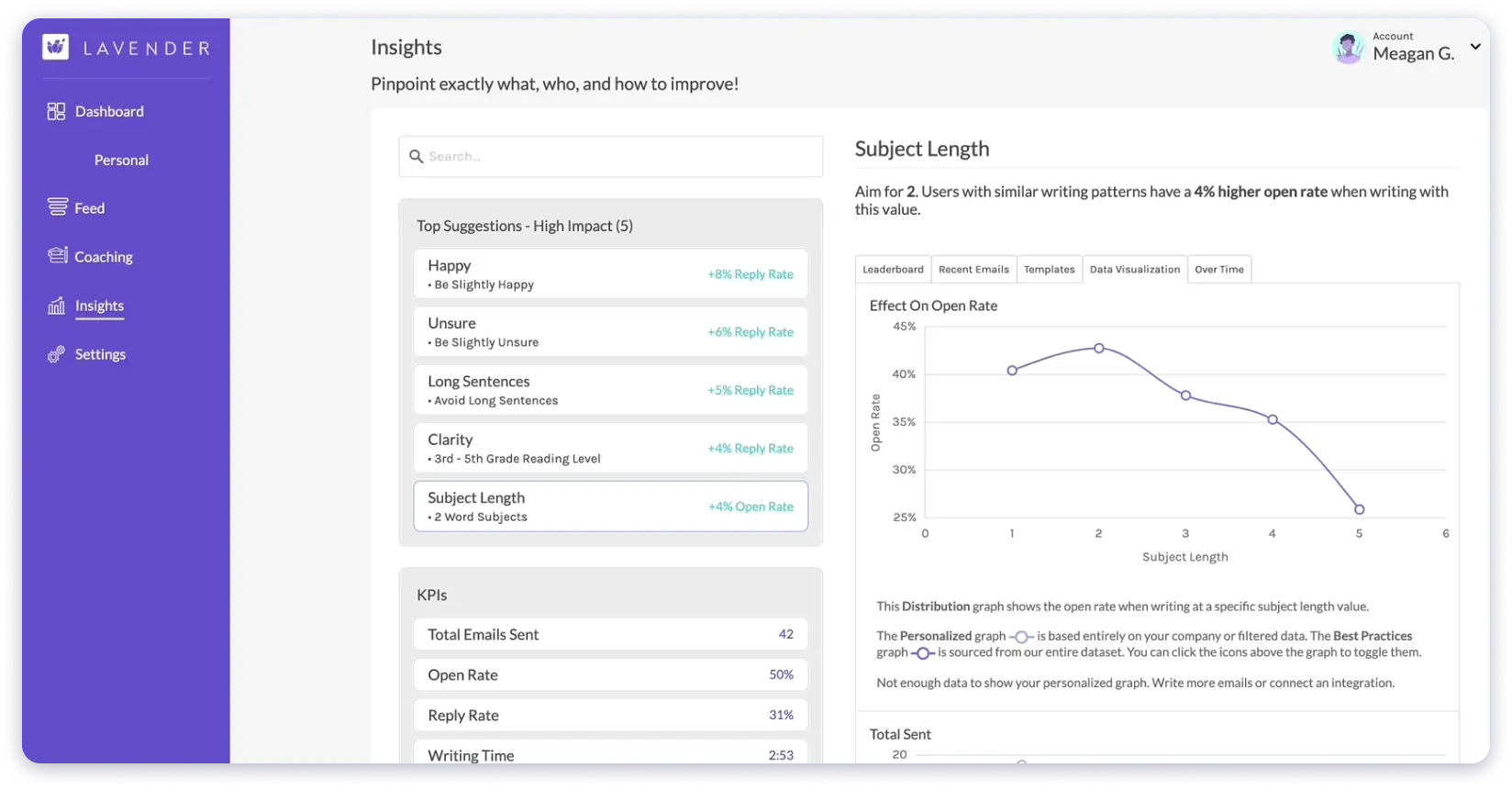
Lavender acts like a writing coach sitting beside you. It evaluates your email line-by-line, flags anything that reduces clarity or reply potential, and suggests concise, higher-impact wording based on real behavioral data.
Best for: Reps who want coaching embedded directly in their email editor to improve reply rates quickly.
Key features:
- Real-time email scoring: Gives instant feedback, making revisions feel like a coaching session, not guesswork.
- Prospect intelligence panel: Shows recent posts, role, and context so your opener feels researched, not generic.
- AI rewrite assistant: Provides alternative lines or full rewrites when a sentence needs more punch.
Limitations:
- Email-only focus
- Light reporting depth
- Limited analytics on lower tiers
Price:
- Free (5 emails/mo)
- Starter $29/mo
- Pro $49/mo
- Team (custom)
10. Instantly.ai: Best AI tool for mass cold outreach
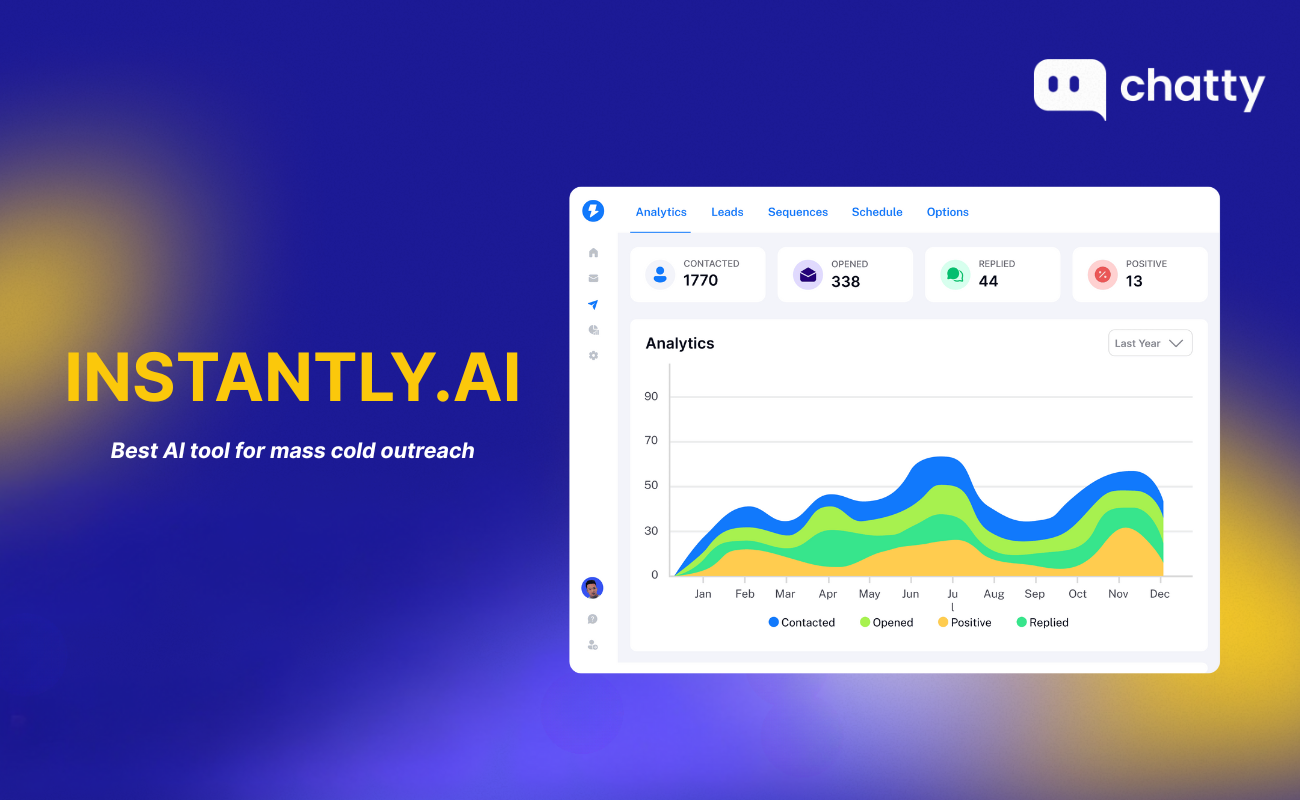
Instantly.ai is built for scale. Its core strength is sending high-volume cold emails across many accounts while protecting deliverability. The platform warms inboxes automatically, rotates sending profiles, and uses AI to personalise at scale, letting teams run campaigns that normally require an entire SDR pod.
Best for: Outbound teams that manage multiple inboxes and need fast, high-volume sending without compromising deliverability.
Key features:
- AI warmup engine: Protects sender reputation so campaigns stay deliverable, even at scale.
- Bulk personalisation: Creates natural intros for large lists so messages feel handcrafted.
- Multi-inbox control: Lets teams orchestrate dozens of inboxes without losing oversight.
Limitations:
- No calling or social channels
- Works best for email-heavy motions
- Can ramp cost with many inboxes
Price:
- Growth $37/mo
- Hypergrowth $97/mo (pricing per linked inbox; annual discounts available)
- Light Speed $358/mo
11. Retell AI: Best human-like AI voice agent for sales calls
Retell AI creates sales agents that sound strikingly human: tone, pacing, hesitation, interruptions, all natural. Unlike rigid IVR-style bots, Retell agents adapt mid-conversation, handle objections, and recover from interruptions, making calls feel more like talking to a real rep.
Key features:
- Human-like speech engine: Handles overlaps, pauses, and emotional tone, improving caller comfort.
- Behavior-aware responses: Adjusts answers based on objections or confusion, similar to a trained SDR.
- End-to-end call flows: Supports complex flows like appointment booking or lead qualification without manual scripting.
Limitations:
- Requires call flow planning
- Not suited for regulated industries
- May need tuning for niche vocabulary
Price: Pay-as-you-go starting ~$0.02 per second + platform fees (per Retell pricing)
12. Vapi.ai: Best platform for building custom AI voice agents
Vapi.ai is the infrastructure layer for building fully custom AI voice agents. Instead of a pre-built chatbot, it gives developers tools to design bespoke behaviour, routing, and dialogue, ideal for teams needing granular control.
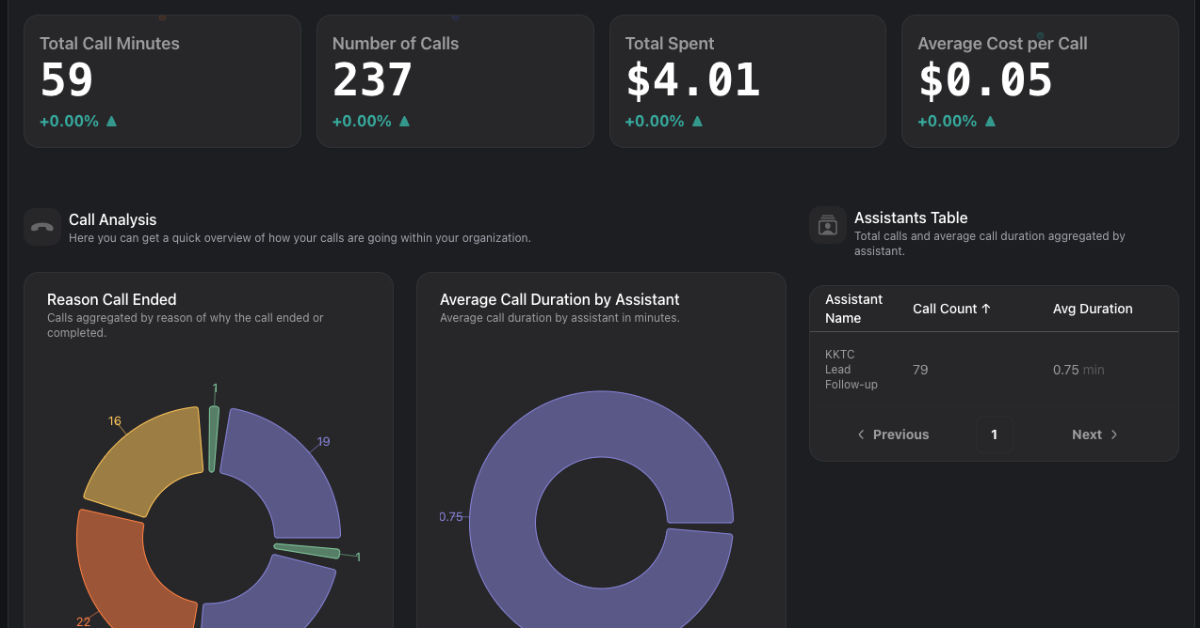
Best for: Companies wanting tailor-made voice agents integrated deeply into their own systems, logic, and workflows.
Key features:
- Flexible API architecture: Lets teams design unique voice agents without being trapped in a preset UI.
- Multi-provider voice models: Choose different voices, latencies, and personalities depending on use case.
- Native telephony tools: Offers call routing, recording, Whisper-style instructions, and real-time handoff.
Limitations:
- Developer dependency
- Requires integration effort
- More technical than plug-and-play tools
Price: Starts at $0.005 per second + usage-based telephony fees (pricing varies by model & provider)
13. Air AI: Best autonomous AI phone agent
Air AI is built for fully autonomous, human-level phone conversations. Unlike standard voicebots that follow rigid scripts, Air AI can run hour-long calls, adjust tone mid-sentence, handle interruptions naturally, and progress through complex sales or support workflows without handholding.
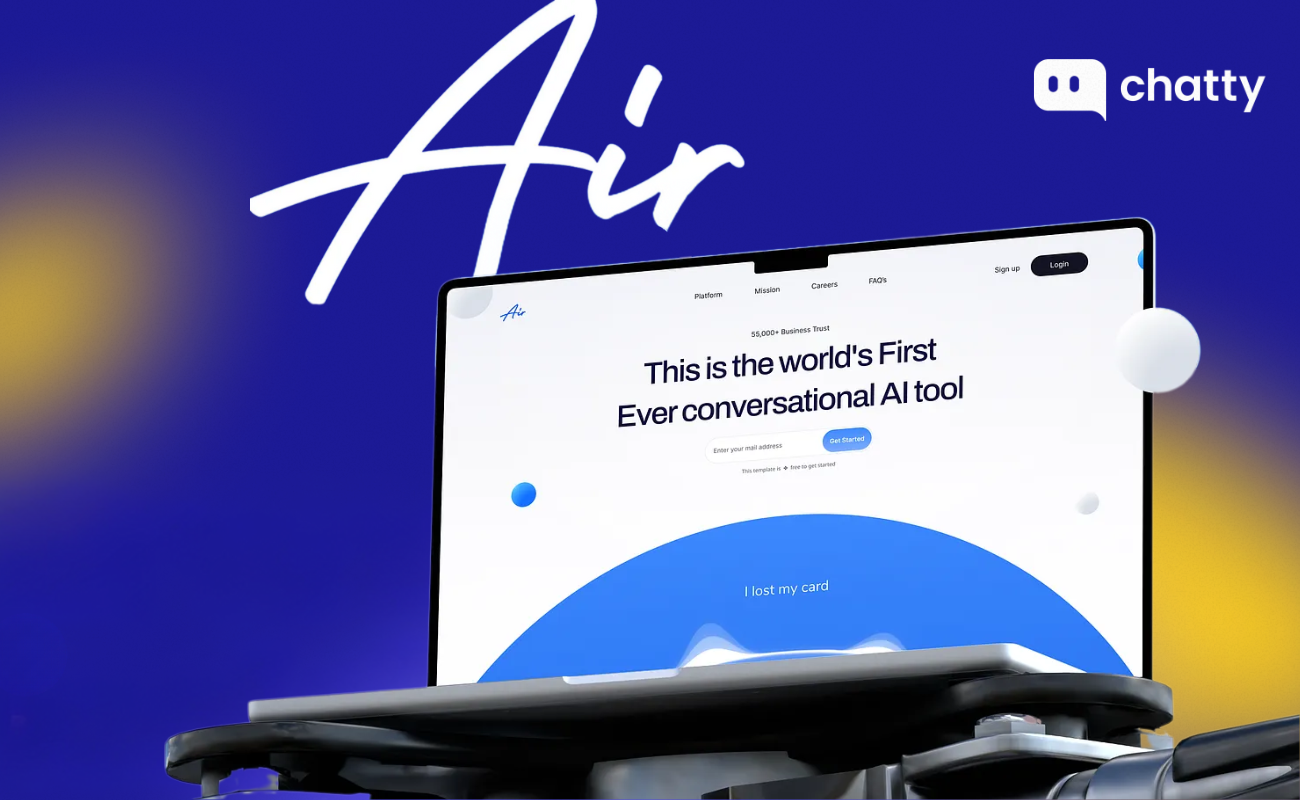
Best for: Teams that want AI to handle live qualification calls, follow-ups, or inbound inquiries at scale, without sounding like automation.
Key features:
- Human-like speech patterns: Pauses, overlaps, hesitations, and tonal shifts make conversations feel natural instead of synthetic.
- Autonomous call progression: Moves through discovery, objections, and scheduling with minimal configuration, useful when you’ve run dozens of similar calls.
- Deep CRM integration: Logs notes, updates fields, and books meetings automatically, reducing post-call admin load.
Limitations:
- High upfront cost
- Technical setup
- Voice-only channel
Price:
- Upfront license $25,000–$100,000
- Outbound ~$0.11/min
- Inbound ~$0.32/min (usage-based)
14. Gong.io: Best AI call intelligence & deal insights
Gong turns customer conversations into measurable insights. Instead of relying on anecdotal coaching, it analyzes patterns used by top performers, such as word choice, talk ratios, objection handling, and translates them into specific improvements reps can apply immediately.
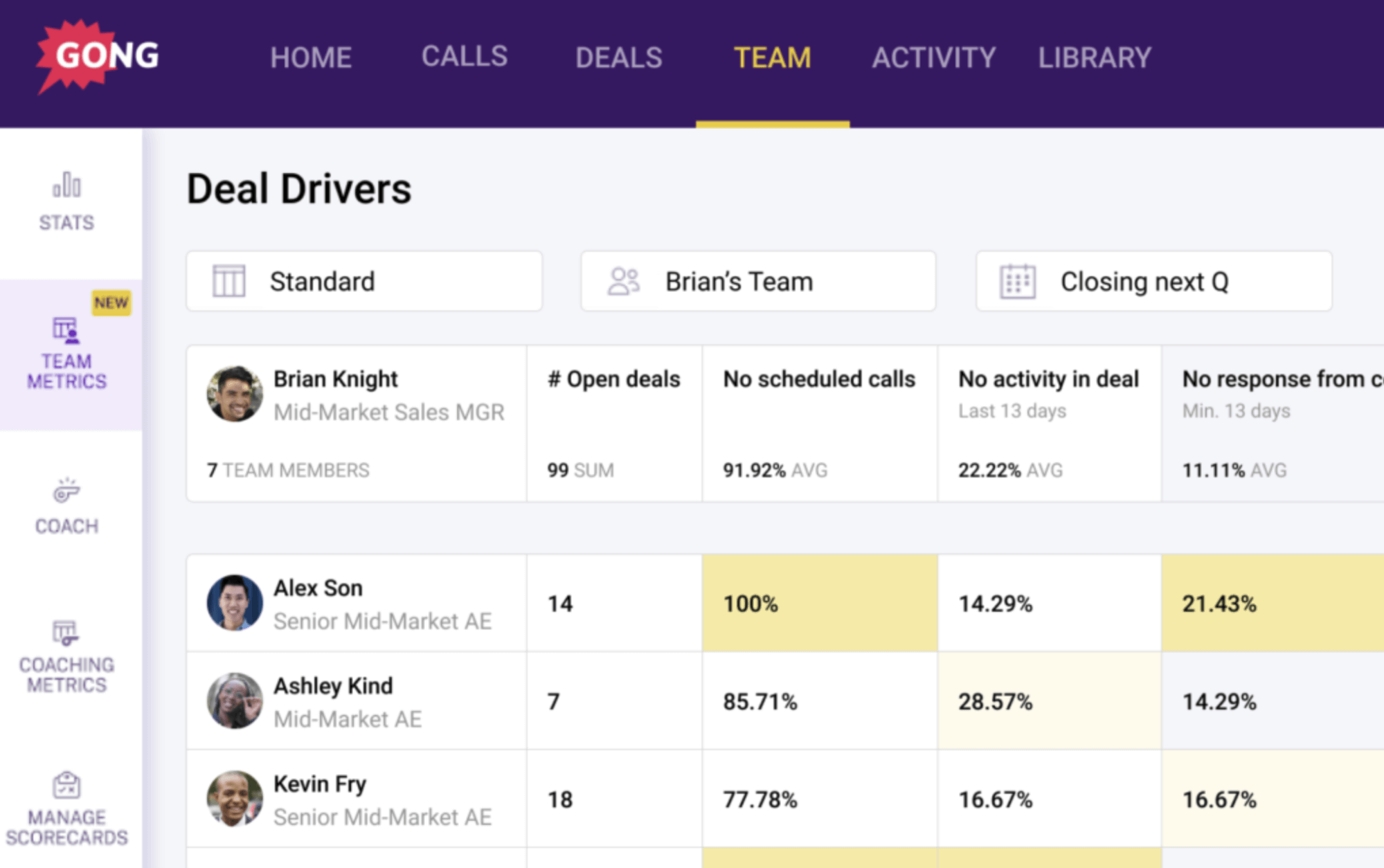
Best for: Sales teams focused on improving call quality, forecasting accuracy, and rep consistency across the pipeline.
Key features:
- AI conversation intelligence: Surfaces key phrases, objections, and risk signals, saving managers hours of manual review.
- Deal and pipeline signals: Shows which deals are strengthening or weakening, so teams focus attention where it moves revenue.
- Performance benchmarking: Compares reps to top sellers, offering practical, behavior-level coaching rather than generic advice.
Limitations:
- Requires sufficient call volume
- Insights depend on clean CRM data
- Pricing not public
Price: Custom quote only (Gong does not publish pricing)
15. Chorus.ai: Best for rep coaching & call improvement
Chorus.ai captures conversations across calls, video, and screen shares, then uses AI to summarize meetings and highlight coachable moments. It’s built for teams that want structured coaching without sifting through long recordings.
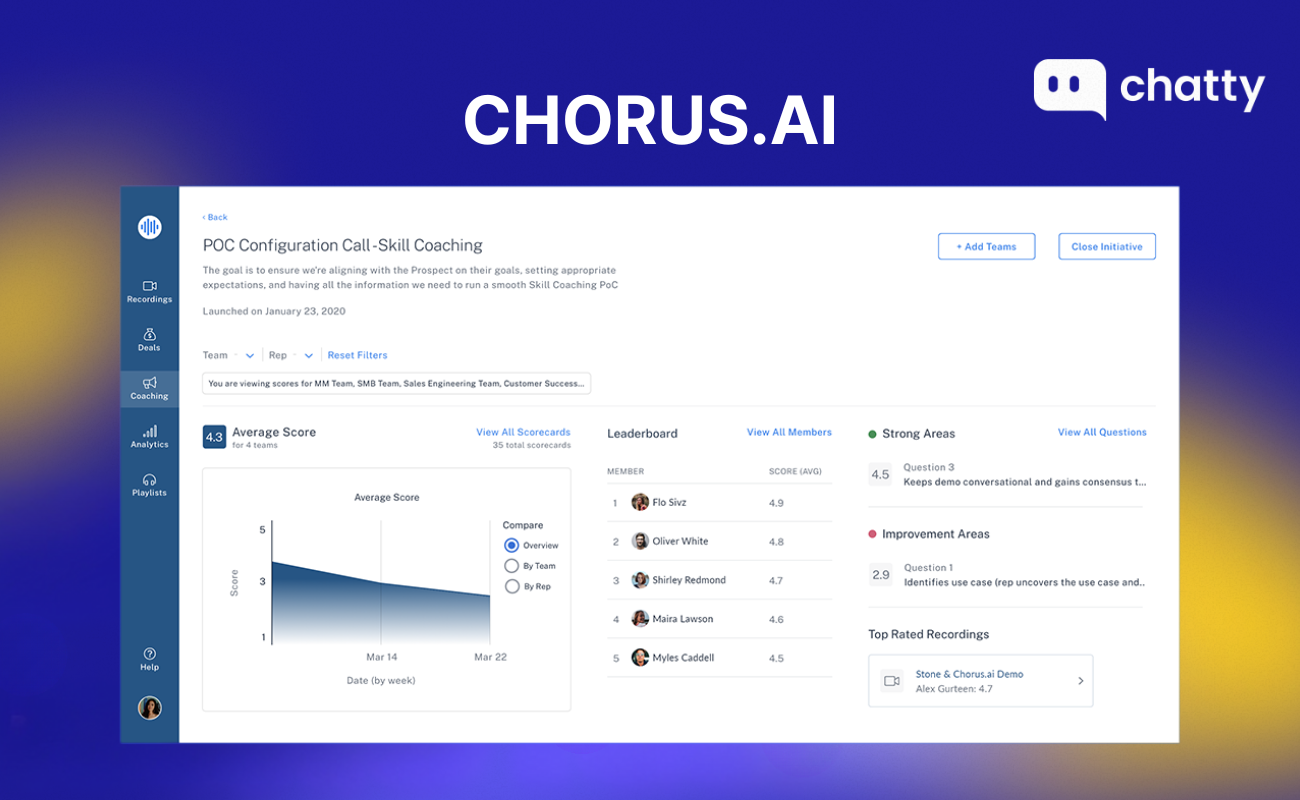
Best for: Sales leaders who need scalable coaching workflows and visibility into how reps communicate across channels.
Key features:
- AI meeting summaries: Quickly distills long calls into actionable notes, ideal for busy managers.
- Action-item extraction: Tracks commitments automatically, so no follow-up gets lost.
- Sentiment & trend insights: Reveals shifts in prospect tone or competitive mentions, which helps refine messaging.
Limitations:
- Higher price point
- Requires onboarding effort
- Focused on coaching, not outreach
Price: From ~$8,000/year for 3 seats + ~$1,200/user/year for additional seats
16. Clari: Best AI forecasting & pipeline visibility suite
Clari consolidates sales activity across email, calls, meetings, and CRM changes into a single “revenue truth” view. Its forecasting engine analyzes real engagement signals, making predictions noticeably more reliable.
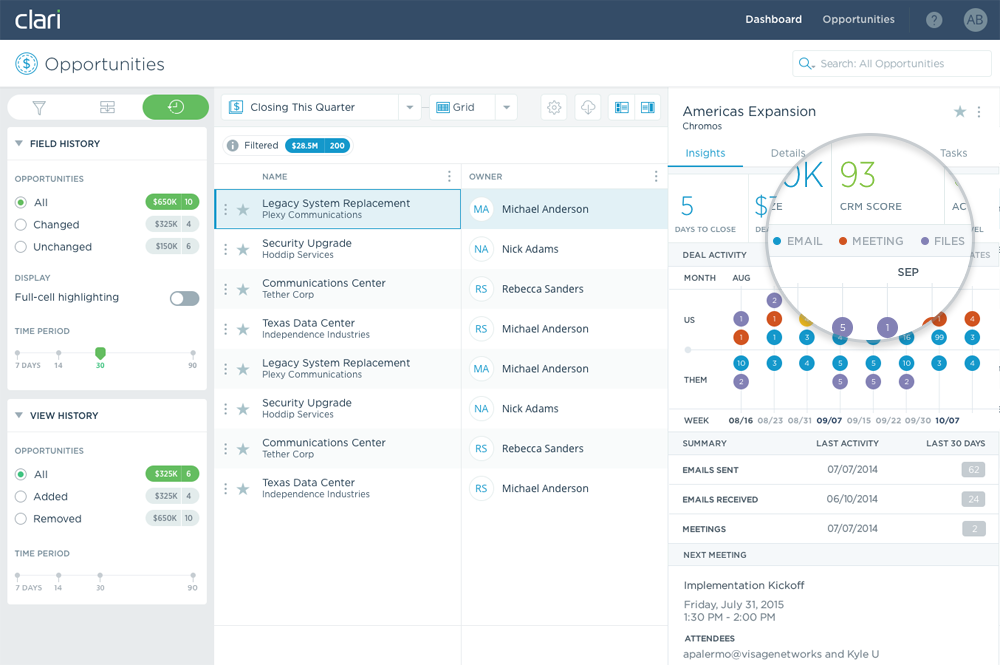
Best for: Revenue operations, forecasting leaders, and CROs who need real-time visibility into pipeline health and deal risk.
Key features:
- Activity-based forecasting: Uses real interactions, not manual updates, helpful when teams struggle with CRM hygiene.
- Risk and momentum tracking: Flags deals losing traction early so managers can intervene with precision.
- Cross-team pipeline view: Gives Sales, CS, and Marketing a shared intelligence layer, reducing misalignment.
Limitations:
- Premium enterprise pricing
- Requires proper data architecture
- Longer implementation cycles
Price: Custom quote (Clari does not publish pricing)
17. PandaDoc AI: Best AI for proposals, quotes & contracts
PandaDoc AI accelerates quote and proposal creation by generating content, inserting pricing rules, and adjusting sections based on deal context. It removes the “blank page” problem and cuts document prep from hours to minutes.
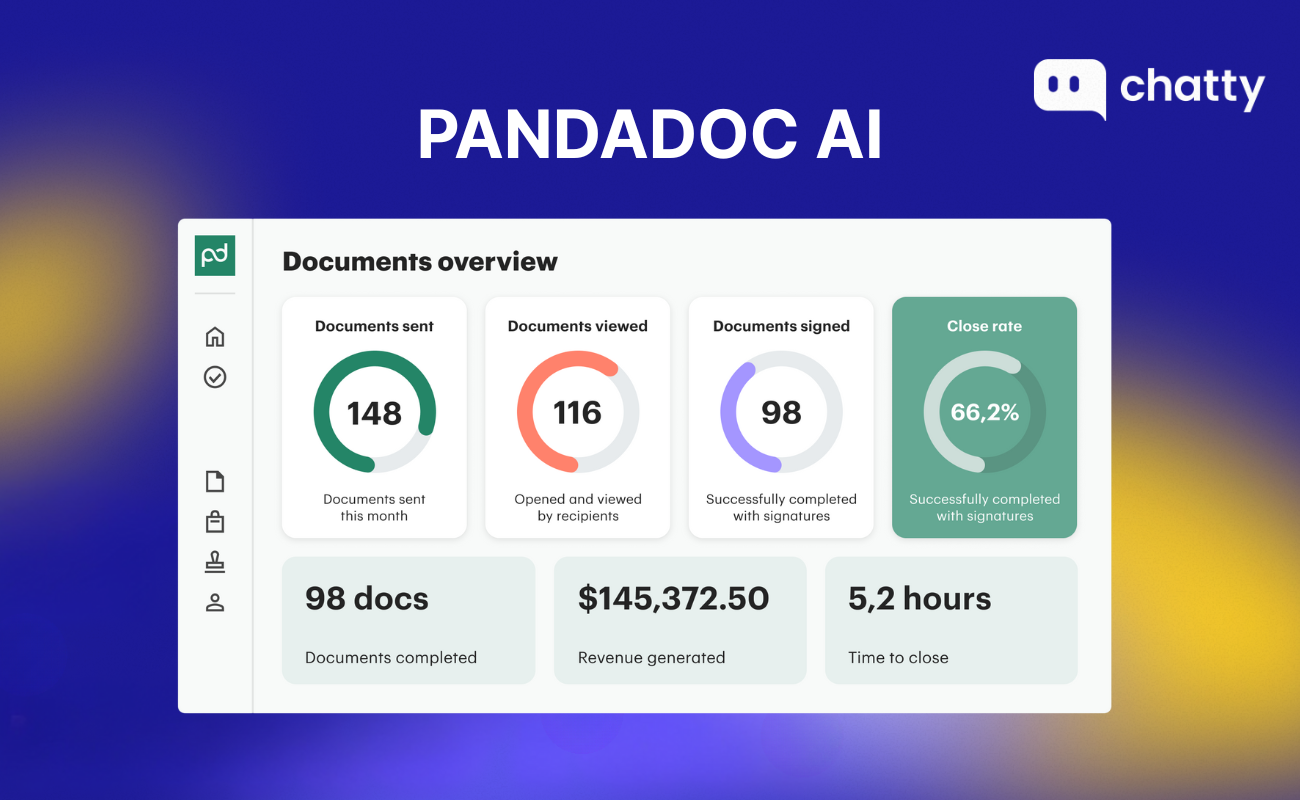
Best for: Sales teams that issue many proposals, quotes, or contracts and want to reduce manual generation, errors, and cycle time.
Key features:
- AI-assisted document drafting: Edits, inserts line-items, and adjusts content based on deal context, making each doc tailored without starting from scratch.
- Smart pricing tables: Updates line-items and totals automatically, reducing human error in quotes.
- Engagement analytics: Shows when prospects open, scroll, or stall so reps can time follow-ups strategically.
Limitations:
- Seat-based cost for large teams
- Complex documents may need setup
- Automation varies by plan
Price:
- Free tier
- Essentials $19/user/mo
- Business $49/user/mo
- Enterprise (custom)
Best practices for implementing sales AI tools successfully
To make sales AI actually move numbers, you need the right foundations. The practices below help teams stay aligned, measure the right KPIs, and keep humans involved where it matters.
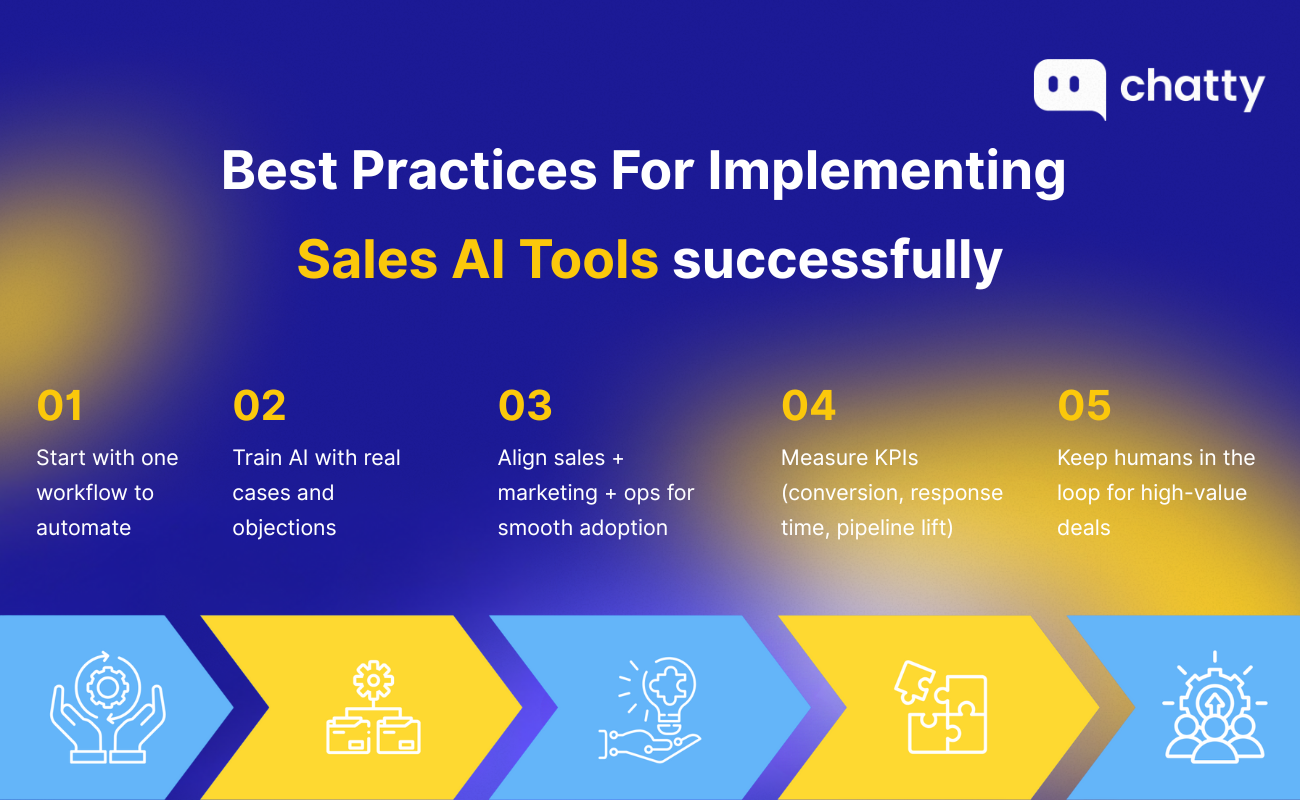
Start with one workflow to automate
The fastest wins come from focusing on one repeatable workflow instead of trying to “AI-transform” everything at once. Choose a high-volume, predictable process such as inbound lead triage, follow-ups, or meeting scheduling.
Then:
- Map the current steps your reps take.
- Let AI replicate that exact flow first.
This phased approach prevents tech overload, builds trust with your team, and gives you a clean before/after benchmark.
Train your AI with real cases and objections
AI performs only as well as the examples you feed it. Use real call transcripts, objection patterns, winning replies, lost-deal notes, and email threads so the model learns how your customers actually speak.
Focus on the moments where reps typically hesitate: pricing pushback, timeline pressure, unclear requirements, and competitor mentions.
Run short tuning cycles:
- Let AI generate responses.
- Review tone and accuracy.
- Adjust rules and retry.
This ensures the AI speaks in your brand voice, handles objections with credibility, and behaves like your best rep.
Align sales + marketing + ops for smooth adoption
Sales AI works best when the teams around it move in sync. Sales defines the real workflows; marketing supplies messaging, personas, and objection language; operations ensures data quality and system stability.
A quick alignment checklist:
- Agree on which workflow AI will support first.
- Standardize messaging so AI isn’t learning three different versions of the same pitch.
- Ensure CRM fields, lead statuses, and routing rules are clean.
When all three teams share the same definitions and success metrics, AI adoption feels natural instead of disruptive.
Measure KPIs (conversion, response time, pipeline lift)
AI should prove its value quickly, so track a few KPIs that signal real movement:
- Response time: Are prospects hearing back instantly?
- Conversion rate: Are replies, qualified leads, or booked meetings increasing?
- Pipeline lift: Are more deals entering or advancing through stages?
Monitor results weekly, not yearly. Small improvements compound fast and reveal when a workflow needs tuning or when it’s time to scale AI to another process.
Keep humans in the loop for high-value deals
AI handles speed, volume, and consistency, but humans handle nuance. For complex pricing, multi-stakeholder accounts, or strategic renewals, route conversations to reps early.
A simple rule: AI opens, humans close.
Let AI qualify, schedule, and handle routine objections, but ensure reps step in when judgment, negotiation, or relationship-building matters. This balance protects deal quality while still giving you the efficiency gains of automation.
Common mistakes when using sales AI tools
Many teams adopt AI with good intentions but fall into predictable traps. Here are the ones that matter and how to avoid them.
- Relying too heavily on automation for complex deals: AI handles qualification and routine follow-ups well, but multi-threaded, political, or high-value opportunities still demand human judgment. The fix is to let AI manage admin steps while reps retain ownership of strategy, alignment, and stakeholder mapping.
- Poor data quality leading to weak predictions: Forecasting, lead scoring, and intent detection collapse when CRM data is outdated or incomplete. Prevent this by automating activity capture, enforcing required fields, and running monthly data audits, so AI learns from actual behavior.
- Using generic prompts or scripts: When AI outputs canned language, buyer trust drops. Train your model with real transcripts, objection patterns, and top-performer language, so responses reflect your tone, value prop, and competitive reality.
- Adopting too many tools and creating tech bloat: Layering multiple AI apps fragments workflows and confuses reps. Consolidate around one core platform, expand intentionally, and ensure all tools funnel back into a single source of truth (your CRM).
- Forgetting buyer experience and personalization: High-volume AI outreach can quickly turn into noise. Use behavioral triggers, limit daily sends, and personalise with context (role, intent, recency) to keep interactions relevant and human.
To recap
Sales AI delivers its highest ROI when it’s deployed with intention: one workflow at a time, trained on real customer scenarios, and supported by aligned sales/marketing/ops teams.
Across the landscape, different tools solve different problems:
- Chatty for e-commerce conversions
- HubSpot/Salesforce/Clari for CRM intelligence
- Outreach/Salesloft/Apollo for outbound
- ZoomInfo/Clay for data and enrichment
- Lavender/Instantly for email
- Gong/Chorus/Air AI/Retell/Vapi for call intelligence and automation
- PandaDoc AI for proposals and contracts
When implemented intentionally, sales AI tools cut manual work, improve forecasting, lift conversions, and let reps spend time where it matters: real conversations. Start small, scale deliberately, and let AI elevate the work humans do best.
FAQ
Chatty. It reads your full catalog, understands variants, and acts like a 24/7 sales associate designed to convert, not just answer questions.
Most range from $20 to $150 per user/month, while advanced enterprise platforms or AI voice agents can run custom or usage-based pricing.
You’re ready if you have repeatable workflows, consistent lead volume, and basic CRM hygiene. If reps spend too much time on admin tasks, AI will deliver quick wins.
Yes. SMBs benefit the most from AI because it fills resource gaps, automates routine work, and keeps follow-ups consistent without hiring a full SDR team.
Start with inbound lead triage, follow-ups, meeting scheduling, basic qualification, and high-volume workflows where speed and consistency matter most.