











You know that feeling when you’re shopping online and get stuck in an endless loop of tabs, comparing specs and prices? Now, imagine a voice suddenly pops up, asks you a few thoughtful questions, and bam! You’ve got the perfect suggestion, tailored just for you.
No, it’s not magic. It’s a voice AI sales agent, and it’s already transforming how we shop. From answering questions to closing sales, voice AI is stepping in to help customers and businesses.
In this article, we’re diving into how these digital sales pros are making shopping faster, easier, and a little less overwhelming. For broader coverage across chat, voice, and email channels, see our expert guide to AI sales assistants.
- Voice AI agents respond within seconds, capturing buyer intent before it fades. High-intent customers who wait too long drop off, making real-time voice response a direct revenue driver.
- Spoken queries give AI far richer context than typed searches ever could. Complete sentences reveal customer pain points and needs, enabling voice agents to make far more precise product suggestions.
- Vocal tone is a hidden persuasion engine that text-based AI simply cannot replicate. Research shows well-modulated voice responses make AI feel significantly more trustworthy and emotionally credible to customers.
- Voice AI sales agents work 24/7, turning off-hours into a competitive sales advantage. Continuous availability means businesses can make and receive calls at any hour without staffing costs or coverage gaps.
- Deep CRM integration transforms voice AI from a talker into a full sales operator. Voice agents can log call outcomes, sync customer data, and automatically trigger follow-up workflows without any human intervention.
What is a voice AI sales agent?
A voice AI sales agent is an AI-powered system that communicates with leads or customers through spoken conversation over the phone.
Rather than relying on simple recorded scripts or rigid menus, it uses speech recognition (ASR), natural-language understanding, and real-time decision logic to understand what a person says, respond naturally, and carry out sales tasks in a CRM.
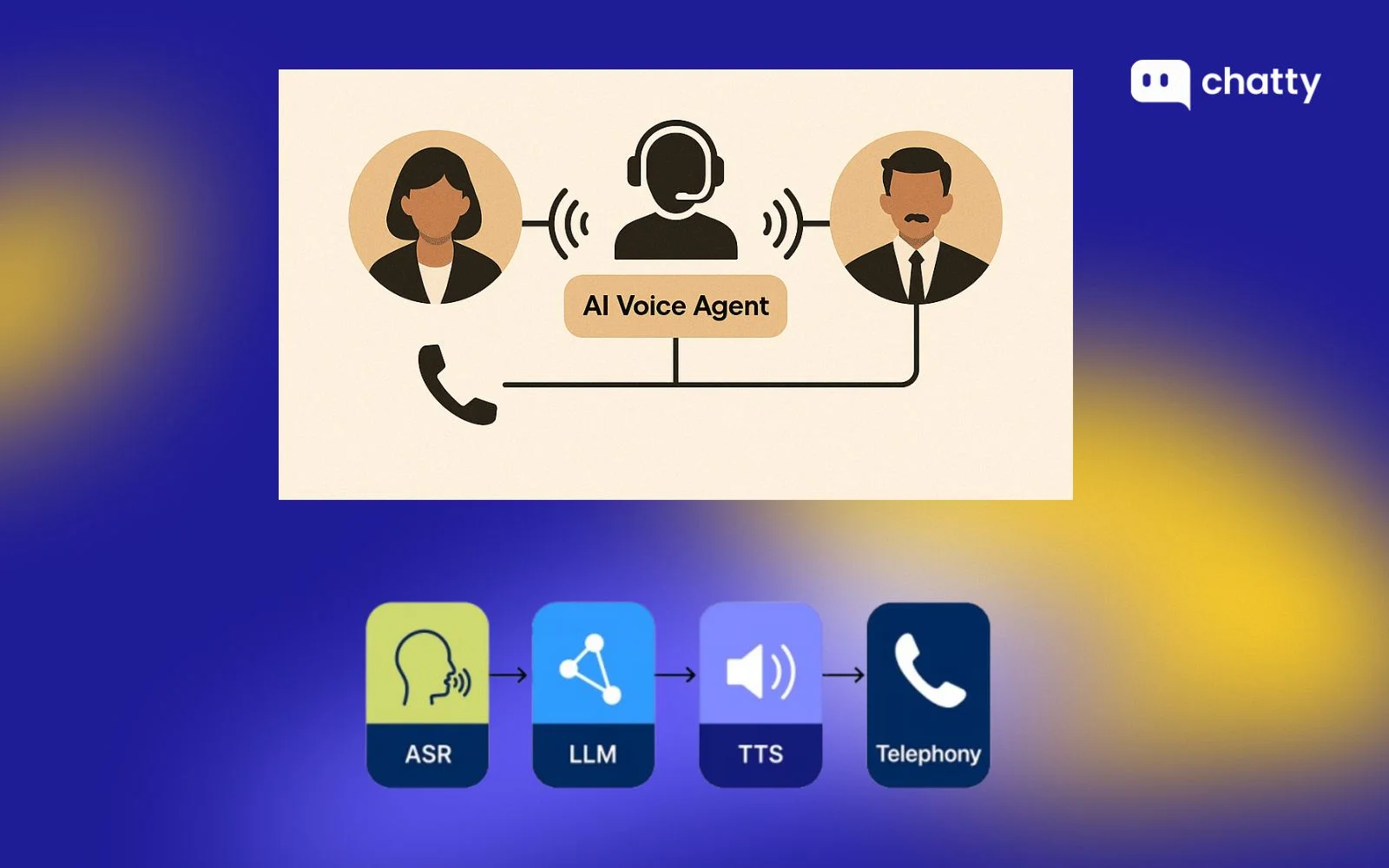
What makes a voice AI sales agent different from traditional chat-based agents is:
- Voice AI agents bring tone, timing, and personality into the interaction. They can modulate their voice to match a brand’s style, use conversational pauses, and even escalate to a human smoothly when needed.
- Its continuous availability enables calls to be made or received 24/7 without breaks, dramatically increasing reach and speed.
- They can log call outcomes, sync with CRM data, and automatically trigger follow-up workflows by integrating deeply with business systems.
How do AI voice sales agents change the buying experience?
With a clear sense of what voice AI sales agents are and how they work, it becomes easier to see how they reshape the buying experience itself.
Once real conversation enters the sales journey, the way customers search, decide, and purchase starts to look very different.
Voice signals higher urgency
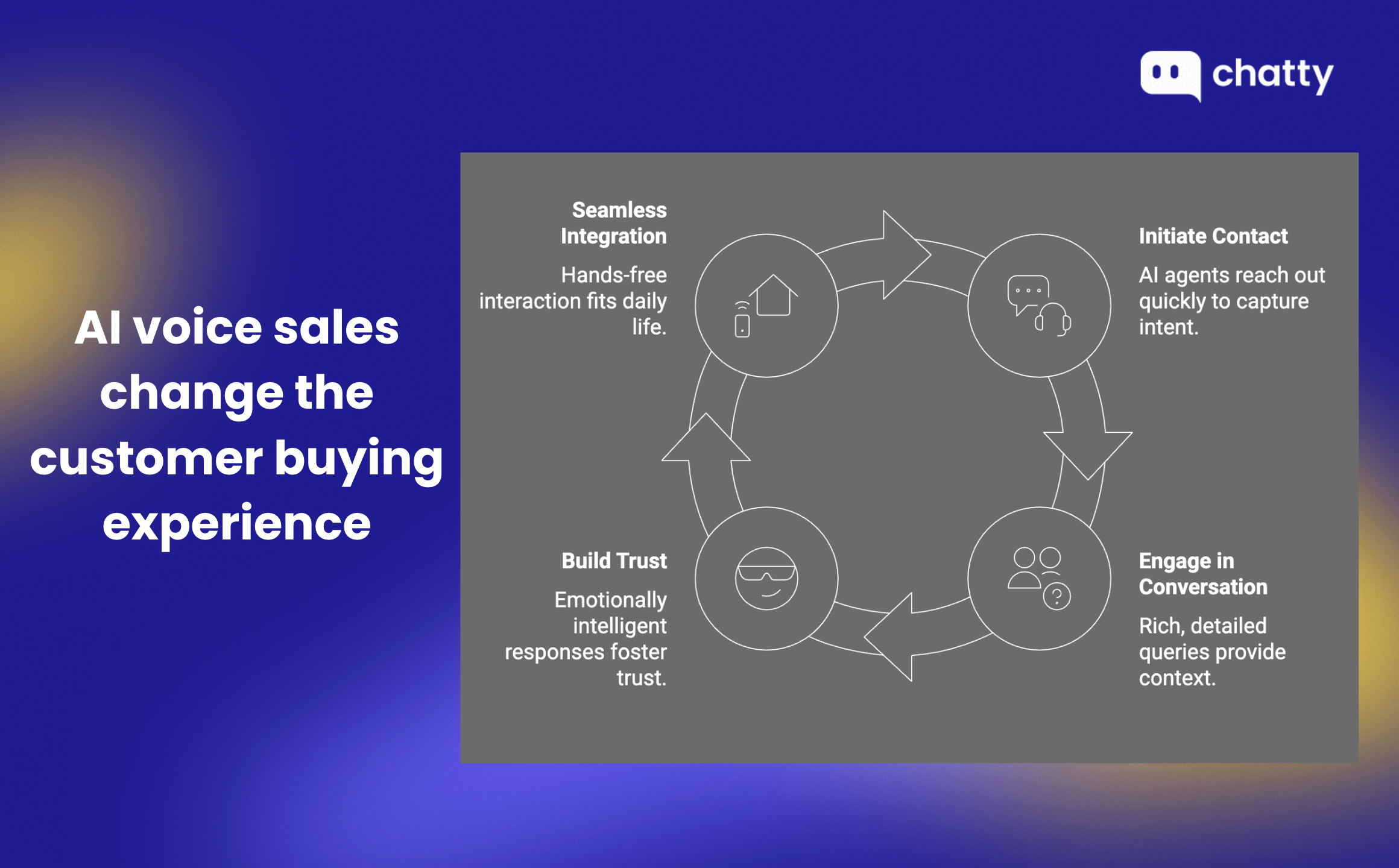
When a customer calls or is called by a voice AI sales agent, there's an implicit sense of immediacy: “I need help, and I need it now.” AI voice systems respond in real time. So high-intent customers aren’t left waiting for something that dramatically reduces drop-off.
In fact, voice agents can reach out within seconds or minutes, capturing customer intent while it’s still hot
Richer, more descriptive queries
Unlike typed searches, which are often short, limited, and fragmented, spoken queries tend to be more detailed and specific. When people talk, undoubtedly, they describe their needs in complete sentences, giving the AI more context to make tailored suggestions.
This conversational richness helps voice agents understand customer pain points and guide sales more intelligently.
Increased trust through spoken guidance
Research shows that vocal tone strongly influences how persuasive and trustworthy a voice assistant feels.
When users hear well-modulated responses that sound emotionally intelligent and context-aware, they feel more heard and understood. That emotional connection can boost conversion rates because it feels more like talking to a knowledgeable friend than reading a cold chatbot.
Fits seamlessly into real-life moments
Voice AI works beautifully in real life: while you’re commuting, cooking, or walking, you can have a meaningful, spoken shopping conversation. There is no need to stop what you’re doing, pull out your phone, or type.
This hands-free interaction aligns with how decisions actually happen in daily life and makes the buying journey much more natural.
What are the core features to look for in an AI Voice Agent?
When you’re choosing a voice AI sales agent, not all solutions are created equal. Some stand out because they blend strong technical capabilities with smart business integrations.
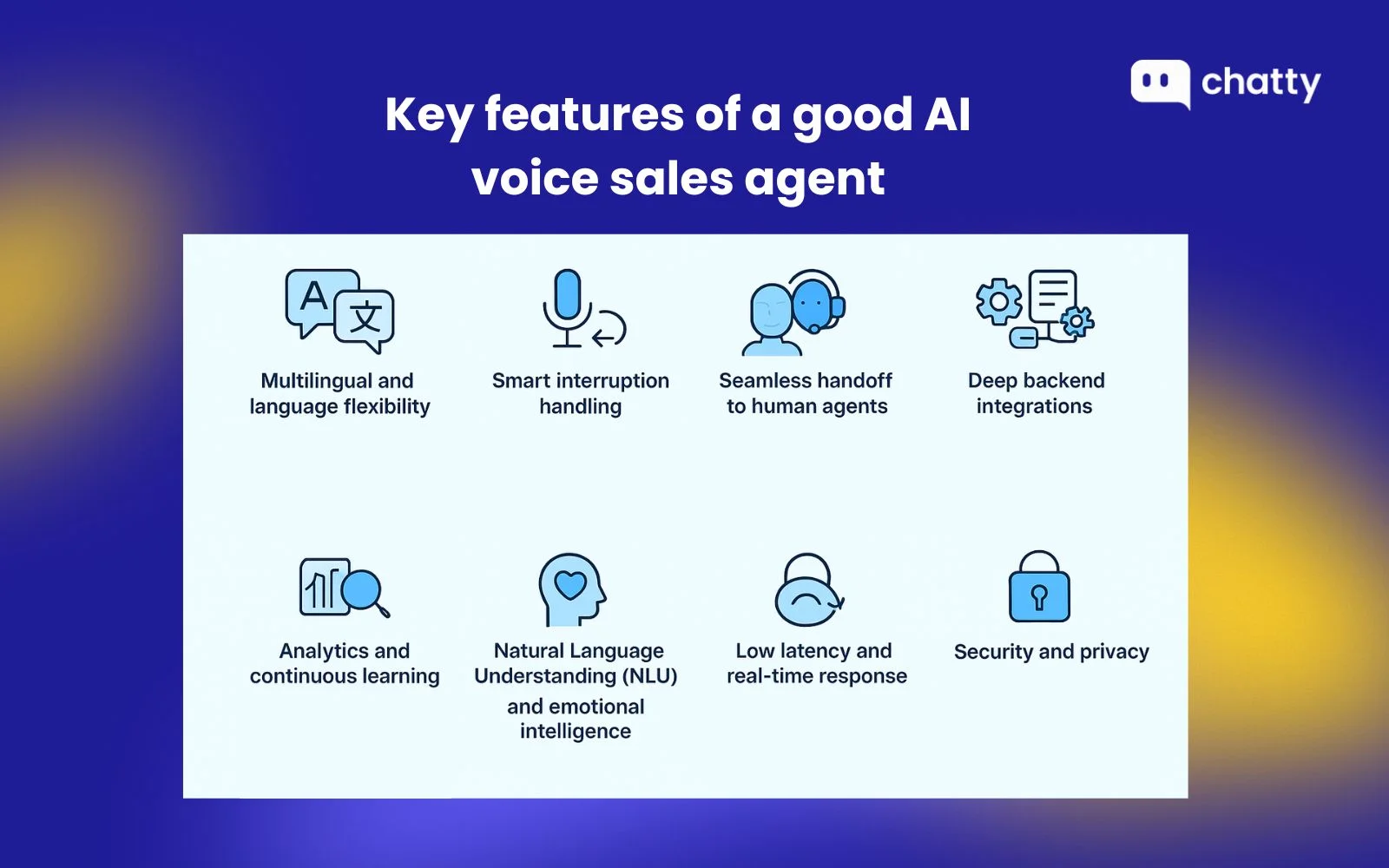
Here are the must-haves:
- Multilingual and language flexibility: A top-tier voice AI agent should support multiple languages and dialects so it can serve a global or diverse customer base. Seamless language detection and switching help make the agent feel natural and inclusive.
- Smart interruption handling: In real conversations, people interrupt or shift direction. The best voice agents don’t freeze up, but they handle overlapping speech and mid-sentence interjections gracefully. This is crucial for keeping things natural and making users feel heard, not boxed into a rigid script.
- Seamless handoff to human agents: Even the strongest AI can’t solve everything. That’s why good voice agents must escalate to a live human when needed without losing context. This handoff preserves the customer journey and keeps frustration low.
- Deep backend integrations: Voice AI agents should integrate tightly with CRM systems, calendars, help desks, and other business tools. That allows the agent to read and write data during or after calls.
- Analytics and continuous learning: AI voice agents should deliver strong analytics like customer sentiment, drop-off points, and more. You should also be able to train and fine-tune the agent based on real conversations. This feedback loop helps the system become better at handling tricky calls over time.
- Natural Language Understanding (NLU) and emotional intelligence: A powerful agent also understands intent, tone, and emotion. According to Catalect, good AI systems can detect sentiment, infer meaning, and adapt their responses accordingly.
- Low latency and real-time response: Speed matters for voice interactions. Advanced platforms are now delivering real-time, low-latency performance, thanks to streaming ASR (automatic speech recognition) and fast LLMs (large language models).
- Security and privacy: Because voice agents deal with sensitive customer conversations, features like encryption, secure voice storage, and data-protection protocols are non-negotiable. These safeguards help protect user data and ensure compliance.
Top voice AI sales agents every business should consider
The market for voice AI sales agents is growing fast, with several platforms standing out for their realism, reliability, and sales-focused capabilities.
Below is a quick comparison of the top 10 tools that businesses rely on today.
| Rank | Voice AI Sales Agent | Best for | Key features | Strengths | Limitations |
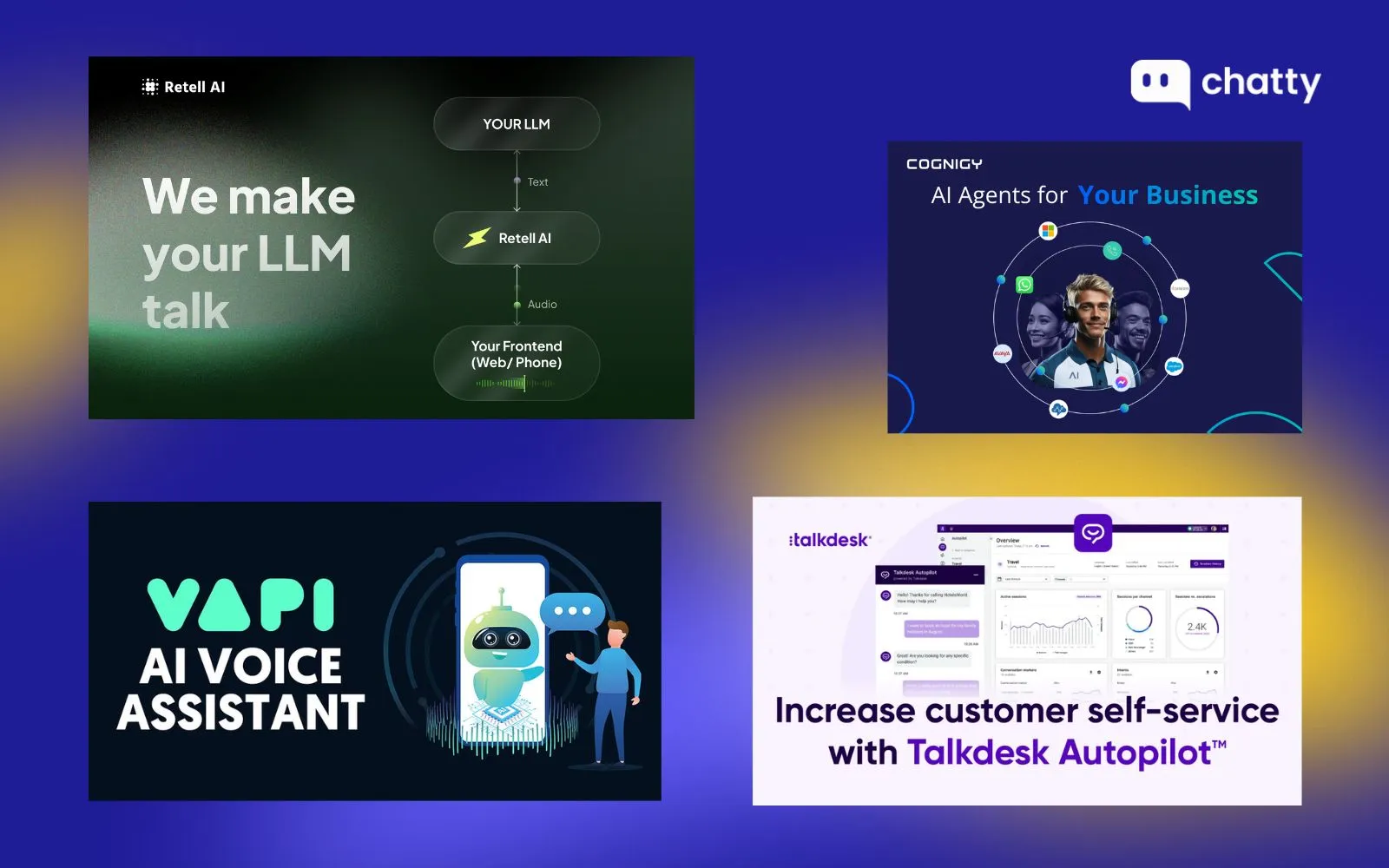
| 1 | Retell AI | Outbound sales, cold calling, appointment setting | – Real‑time voice LLM – Natural sounding voice – Dynamic scriptingBuilt-in telephony | – Very natural conversations – Low latency – Easy integration | Pricing can become expensive at high call volumes: $0.07+/min for voice + LLM + telephony. |
| 2 | Vapi AI | Building custom AI voice agents, developer projects | – API-first, modular architecture – Support for various STT, TTS, LLM providers – CRM and telephony integrations | – Highly flexible – Full control over components – Scalable | Requires substantial technical expertise |
| 3 | Custom stack (OpenAI Realtime + Whisper/TTS) | Enterprise-grade, tailored voice agent | – Streaming ASR (e.g., Whisper) – Custom LLMHigh-quality voice synthesis | Maximum flexibility and control over voice quality and logic | – Needs full development effort (engineering plus infrastructure). – No out-of-the-box solution |
| 4 | Cognigy Voice AI | Enterprise call centers and contact centers | – NLU + agentic AI – Native voice gateway – Multichannel – Knowledge orchestration | – Very scalable – Supports 100+ languages – Tight contact center integration | High cost, complex setupEstimated enterprise contracts start very high. |
| 5 | Five9 IVA | Call center automation,customer support | – No-code IVA builder- Voice + chat + SMS – Intent detection – Handoff to human agents- Voice avatars | – Reliable enterprise-grade platform – Seamless handoff – 25+ natural voice avatars | Pricing not publicly transparent |
| 6 | Talkdesk AI Voice | Hybrid customer support and sales | – Voice‑based AI workflow – Real-time guidance – AI assistance, and live agent integration | – Strong for mixed use cases – Good for agents + automation | Not as specialized for outbound cold-sales dialing Voice‑only features may be limited |
| 7 | PolyAI | Customer service, hospitality | – Highly natural conversational AI – Branded voice personas – Multilingual | – Very human-like voice – Strong customer experience focus | More oriented toward support than direct outbound sales |
| 8 | Air AI | Cold calling and inbound sales | – Human-level voice quality – Long context memory – LLM-powered conversational logic | – Good for B2B and B2C – Outreach personalized calls | – Needs large data training for optimal performance – Setup may require more effort or budget |
| 9 | Conversica AI Sales Agent | Lead engagement and follow-up | – Autonomous outreach via email and voice – Lead scoring, qualification | – Excellent at nurturing – Multi-channel engagement | – Voice capabilities are not as advanced as email or chat – May require a hybrid model |
| 10 | Kore.ai SmartAssist | Large enterprise digital contact centers | – Rich automation – Multi-language support – Voice and chat – Agent orchestration | – Highly scalable – Enterprise-grade – Wide integration capabilities | – Requires a technical team for implementation – Longer deployment time |
Implementation roadmap to build and deploy a voice AI sales agent
With a clear recognition of voice AI agents and the current top 10 tools, it’s time to turn insights into action. The below structured roadmap helps guide the process of designing, training, and deploying the agent.
Step 1 – Identify the sales workflows that benefit most
First, pick the parts of your sales process where a voice AI agent can add the most value. They can be
- Inbound support: When leads call in, the AI can answer basic questions, filter unqualified leads, and hand off promising prospects.
- Lead qualification: The agent can ask qualifying questions (e.g., budget, decision timeline) to score leads in real time, as in the lead qualification frameworks.
- Repetitive outbound tasks: For cold outreach or follow-ups, the voice bot can call leads, ask scripted qualification questions, handle objections, and even schedule meetings.
Through focusing on these high-impact workflows, businesses can maximize ROI and minimize risk in the first phase.
Step 2 – Map conversation flows and desired outputs
Once you've identified your use cases, design how conversations should go:
- Scripts vs. dynamic responses: Decide where you need tightly controlled, scripted dialogue and where the agent can use more flexible, context-aware responses. We recommend building both structured intent branches and fallback handling.
- Trigger conditions: Define what starts a voice call. To illustrate, an inbound lead hitting “Call me back,” a form submission, or a list of outbound contacts.
- Escalation rules: Plan when the agent should hand the call off to a human rep. These smooth handovers preserve customer context and reduce friction.
For example, when it detects strong buying signals, complex objections, etc.
Step 3 – Train and customize the AI
This is where your voice bot takes personality and smarts:
- Brand voice: Define the tone (friendly, authoritative, or casual) so the bot sounds like your company.
- Sales style: Tailor the style (urgent, consultative, or premium) to match your sales philosophy.
- Knowledge base creation: Feed your AI agent with relevant data: product specs, FAQs, pricing, and objection-handling scripts. Use historical calls, internal documents, and CRM data so it can respond knowledgeably.
Step 4 – Integrate with CRM & telephony system
Integration is where the voice bot joins your existing infrastructure. There are several kinds of integrations you must take into consideration
- API workflow: Use APIs (or webhooks) to let the voice agent fetch and update CRM data during calls.
- Automatic logging: All call results, customer responses, and qualification data should be automatically logged into your CRM. So nothing is lost, and human reps can pick up where the bot left off.
- Data syncing: Ensure bidirectional syncing so the voice agent always has the most up-to-date customer context, and your CRM reflects the latest interaction data.
Step 5 – Run pilot, measure KPIs, optimize
After setup, launch a controlled pilot to test, learn, and improve:
- A/B testing: Try different conversation flows, opening scripts, or escalation rules to see what works best.
- Feedback analysis: Review transcripts, customer sentiment, and conversation drop-off points to understand weak spots or misunderstandings.
- Monthly performance review: Track KPIs like qualification rate, conversion, call duration, escalation volume, and cost per qualified lead.
Based on insights, refine your flows, retrain your model, and re-tune your escalation logic
Best practices to maximize results with voice AI in sales
Implementing a voice AI sales agent is just the start. To get real value, you need to adopt best practices that keep continuously improving.
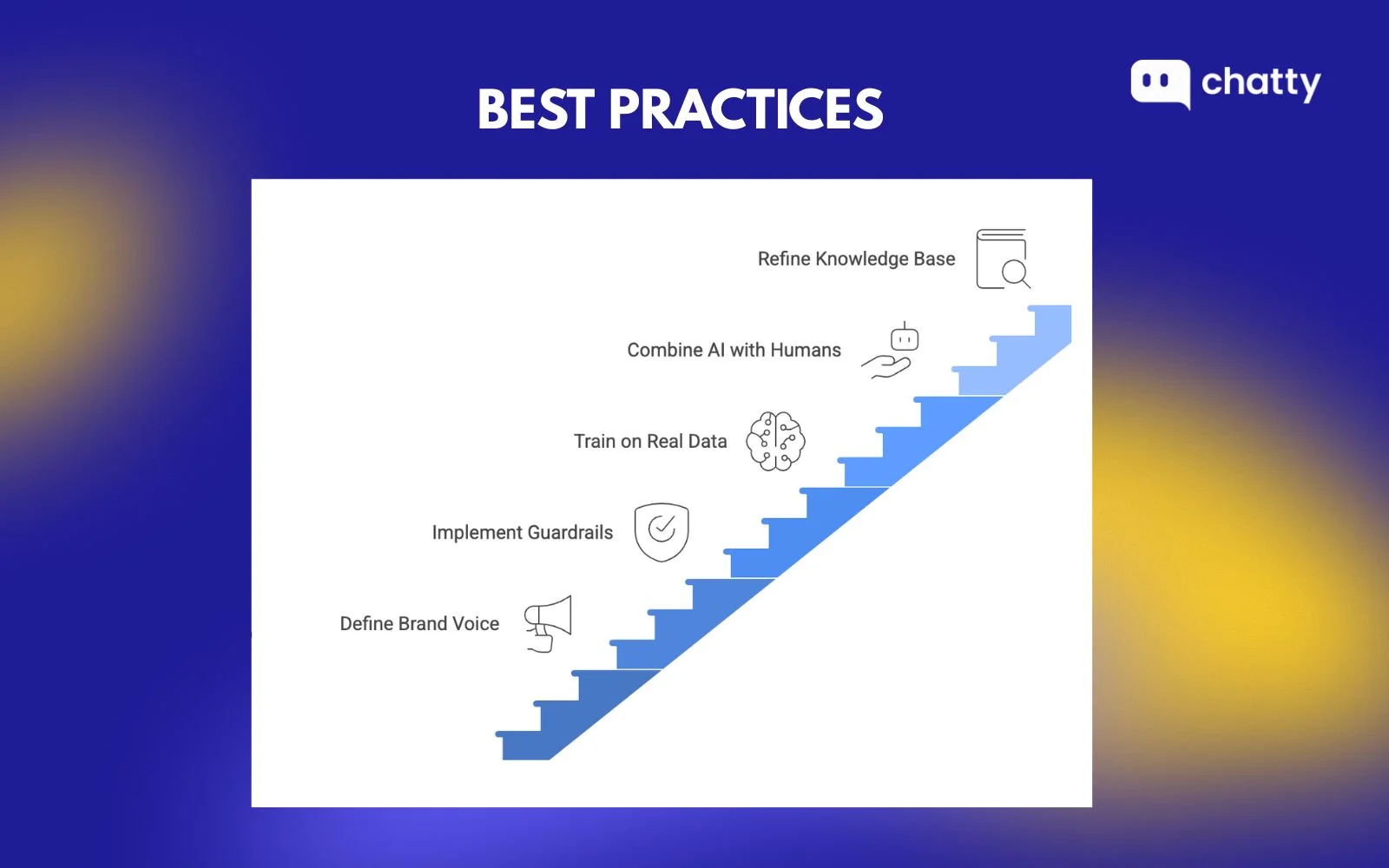
Define brand voice and tone clearly
Be explicit about the voice and style you want: should it sound premium, friendly, or technical? Aligning voice agents with your brand identity helps customers feel a sense of continuity, trust, and authenticity. For example:
- A financial company may want a calm, authoritative tone
- A lifestyle brand might lean more toward cheerfulness and conversation.
Use guardrails and fallback rules
Even the smartest AI can go off track. To prevent hallucinations, when the model makes things up, it is necessary to
- Enforce guardrails: use retrieval‑augmented generation (RAG) so the AI pulls from a trusted knowledge base rather than guessing.
- Set “rules of engagement” in your model prompts, using low-temperature sampling and explicit constraints so the agent can admit “I don’t know” or escalate.
- Also, build in compliance checks: ensure it honors consent, do-not-call lists, and relevant regulations.
Continually train on real customer conversations
To improve, the agent needs to learn from what real prospects actually say. All you have to do is
- Regularly feed it recorded calls, transcripts, and objection data so it can refine its understanding.
- Use human-in-the-loop feedback, where reviewers flag bad or inaccurate responses, and retrain the model with reinforcement learning from human feedback (RLHF) to align with real conversational norms.
This learning also helps the agent handle objections more smoothly, surfacing better rebuttals and reducing failed handoffs.
Combine AI with human agents
Voice AI excels at handling volume: screening large numbers of leads, calling prospects, and qualifying at scale. But for high-value or complex deals, human agents should take over: escalate promising or tricky situations to real reps.
This hybrid approach gives you the best of both worlds: cost‑efficient reach along with trusted human relationship-building when it matters most.
Regularly refine the knowledge base
Your AI’s knowledge base must stay current. So, review and update it on a regular basis to reflect what is actually happening in your business.
- Update it with pricing changes, new product lines, seasonal promotions, and any other strategic shifts in your business. If the bot uses an outdated database, its credibility and usefulness drop fast.
- Keep the retrieval layer version-controlled so you can track content changes and ensure safety in compliance.
Future of voice AI in sales
Voice AI in sales is entering a new phase, moving from basic call handling to intelligent agents that can understand emotion, support human sellers, run multimodal demos, and even negotiate deals.
- The next wave will be defined by emotion-aware systems that modulate tone and timing to match and influence buyer states. Research shows AI can detect frustration, excitement, or hesitation and adapt phrasing, pitch, and pacing in real time to calm, reassure, or accelerate a sale.
Practically, that means voice modulation (dynamic prosody, controlled pauses, and interrupt handling) and real-time empathy will be standard capabilities. These feed directly into conversational strategies that raise engagement and reduce drop-off during complex sales flows.
- Voice agents will rarely act alone; they will be co-pilots for human sellers. Enterprise copilots already surface CRM context, recommended actions, and next-best-steps inside seller workflows. Future systems will maintain shared CRM memory, so AI and humans can pick up a thread seamlessly across calls, email, and meetings.
- Multimodal sales agents combine voice with screen-sharing, interactive product demos, and immersive AR/VR experiences so a single agent can speak, show, and simulate product fit (especially for B2B or high-consideration purchases).
Research finds AR/VR demos increase engagement and purchase intent, making multimodal agents powerful for guided demos and configuration.
- Finally, autonomous sales agents capable of negotiating, closing, and signing agreements are emerging in labs and pilots.
- Early work on negotiation agents shows efficiency gains but also highlights risks: transparency, liability, consent, and fairness when machines set terms or finalize contracts.
- Ethical governance, audit trails, and human-in-the-loop safeguards will be prerequisites before fully autonomous closings become mainstream
Final thought
That moment when a helpful voice cuts through the noise and guides you to the right choice is precisely what voice AI can bring to every step of the customer journey. They are just the beginning of a future where conversations with technology feel human, helpful, and effortless.
Looking ahead, businesses that adopt voice AI strategically will see more than efficiency. They’ll create truly personalized experiences at scale, strengthen customer trust, and unlock new revenue opportunities.
The teams that take these small, strategic steps today will be the ones turning AI from a trend into tangible sales growth.
FAQ
A voice bot is a rule-based or semi-automated system designed to follow predefined scripts. It can answer common questions, route calls, and perform simple tasks, but it cannot truly understand intent, adapt to emotion, or handle complex sales conversations.
A voice AI sales agent, however, is built on advanced speech recognition, large language models, and real-time reasoning. It can understand open-ended questions, detect sentiment, ask probing questions, personalize pitches, handle objections, and guide prospects through full sales journeys. It can integrate deeply with CRM systems.
Yes, but only sometimes and with strict conditions. Voice AI can close high-ticket deals when the sales process, contract terms, and buyer expectations are sufficiently standardized; when e-signatures and legal workflows are in place; and when humans remain in the loop for risk, negotiation edge cases, and trust-building.
Integrating a voice AI agent with your CRM involves connecting the AI’s conversational intelligence and call handling capabilities directly with your customer data, workflows, and sales pipeline to ensure seamless, context-aware interactions.
The process typically follows these steps:
- API connection: The voice AI agent links to your CRM via APIs, allowing it to access customer records, deal history, and past interactions in real time.
- Shared memory: During conversations, the AI maintains context and shared memory with the CRM, so it can track deal stages, conversation history, and customer preferences seamlessly alongside human sales reps.
- Automated logging: Every call, transcript, and interaction is automatically recorded in the CRM, ensuring data is up to date without manual entry.
- Workflow integration: The AI can trigger CRM workflows such as updating opportunity stages, assigning follow-up tasks, or scheduling meetings, keeping the sales process moving efficiently.
- Security and compliance: All integration follows data privacy and security standards, using encryption and consent management to protect sensitive customer information.
Call recording with AI is not legal everywhere. Laws vary by country and region; like many U.S. states, allow one-party consent, while others, including several EU countries, require all parties to be informed and agree. GDPR and similar privacy regulations add strict rules for how recorded data can be stored, used, and shared.
AI introduces extra considerations because recordings are processed as personal data. Businesses must disclose AI involvement, explain data usage, and allow opt-outs.
Maintaining brand voice in AI conversations starts with:
- Clearly defining your tone and style, whether friendly, professional, or playful, so the AI can reflect your personality consistently.
- Training the AI on brand-specific content such as past interactions, marketing materials, and FAQs helps it respond in ways that feel authentic.
- Using guardrails and approved responses ensures the AI stays on-brand even in unexpected situations.
- Continuous monitoring and feedback allow you to adjust the AI over time, keeping the voice aligned with evolving standards.
- Finally, integrating the AI with customer context enables personalized interactions that feel natural while maintaining consistency with your brand identity.
The cost of a voice AI sales agent depends on whether you build it yourself or use a SaaS platform.
- DIY/custom systems can range from $10,000–70,000+ upfront, plus hosting and maintenance costs.
- SaaS platforms typically charge a monthly fee from $20 to $2,000+, often with per-minute usage fees ($0.05–$0.65/min) depending on call volume and AI sophistication.