









In 2026, artificial intelligence has shifted from an experimental technology to a practical business requirement. Companies across industries want to use AI to improve customer experiences, automate decisions, and accelerate operations, but building AI systems in-house remains costly and complex.
This has driven the rise of AI as a Service (AIaaS). Delivered through the cloud, AIaaS allows businesses to access capabilities such as chatbots, language processing, image recognition, and analytics without managing infrastructure or training large models.
This guide explains what AIaaS is, how it works, its main types, key platforms, and how to decide between AIaaS, in-house development, or a hybrid approach.
- AIaaS eliminates the infrastructure barrier that kept AI exclusive to large enterprises. By delivering AI capabilities through cloud APIs with no model training or hardware required, small businesses can access the same tools as Fortune 500 companies.
- Pretrained AIaaS models go live immediately, while custom in-house models take months. The speed advantage of AIaaS is not just cost but time-to-value, letting businesses add language processing or vision capabilities in days rather than quarters.
- AIaaS differs from SaaS because you integrate intelligence into your own product, not someone else's. While SaaS delivers a finished application you use, AIaaS delivers specific AI capabilities you embed inside your own systems and workflows.
- AI agents within AIaaS are splitting into two tiers: basic chatbots and autonomous conversational agents. Rule-following chatbots handle structured FAQs and forms, while advanced conversational AI agents powered by large language models manage open-ended, context-rich dialogues.
- Hybrid AIaaS deployments let businesses use cloud AI for scale while keeping sensitive data on-premise. This architecture satisfies both compliance requirements and the need for scalable AI without forcing companies to choose between security and capability.
What is AI as a service (AIaaS)?
AIaaS definition (simple explanation)
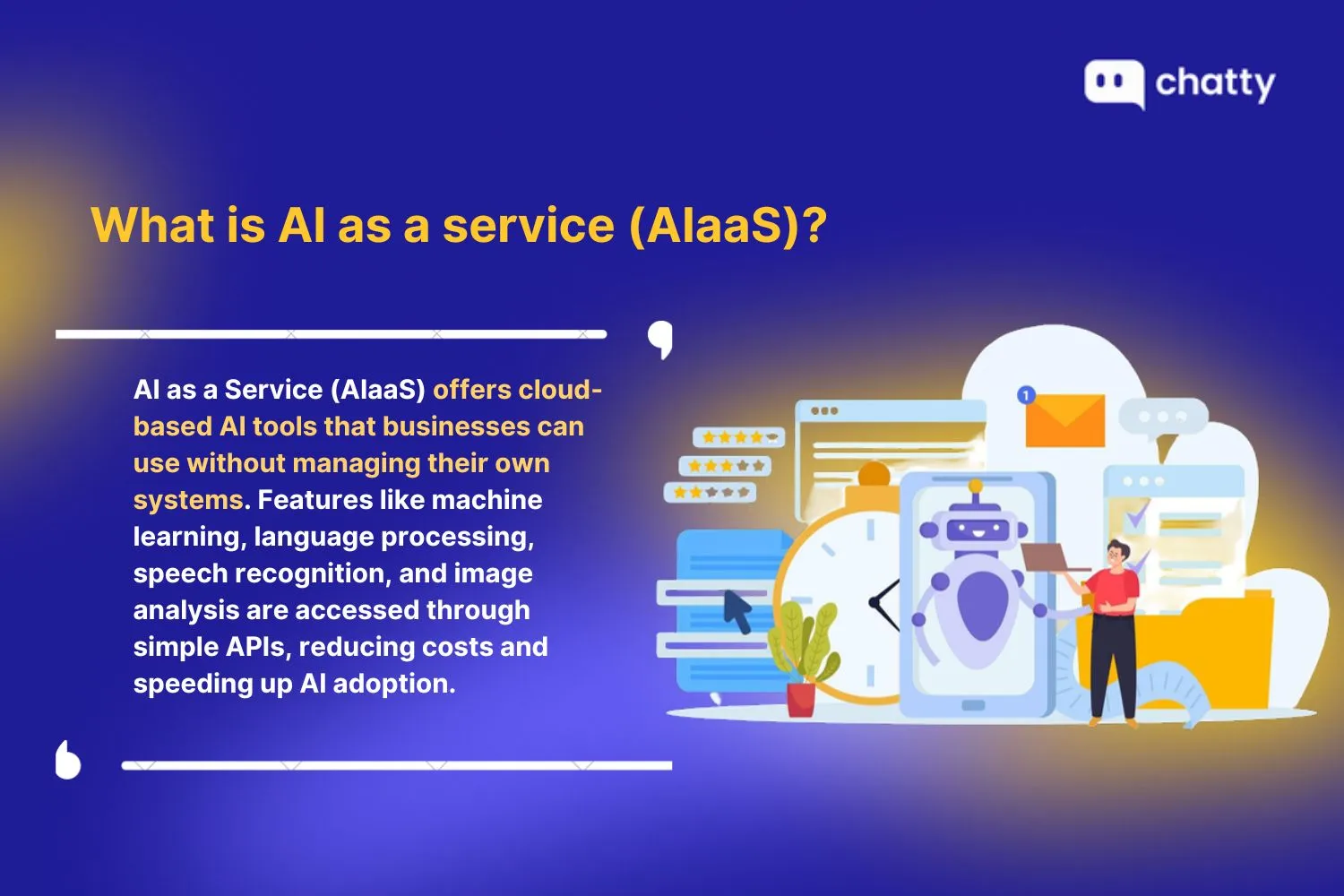
AI as a Service (AIaaS) provides cloud-based AI capabilities that businesses can use without building or managing their own AI systems. Delivered via APIs or managed platforms, AIaaS includes tools such as machine learning, natural language processing, speech recognition, and predictive analytics. By eliminating infrastructure and setup complexity, AIaaS makes AI faster, more affordable, and accessible to businesses of any size.
How AIaaS works (API and cloud delivery model)
AIaaS runs on cloud-based APIs that businesses integrate into their applications or systems. Data such as text, images, or audio is sent to the service, processed using scalable cloud resources, and returned as results in real time. The provider manages model training, updates, security, and performance, often offering pretrained models that can be used or lightly customized immediately.
AIaaS vs SaaS vs PaaS vs IaaS (quick differences)
To clearly understand AIaaS, it helps to compare it with other cloud service models:
- SaaS delivers a complete, finished application that users access through a browser or login, such as email tools or customer support software.
- IaaS and PaaS focus on infrastructure and development platforms, providing servers, storage, and environments so teams can build and run their own systems.
- AIaaS delivers specific AI capabilities through the cloud, allowing businesses to add intelligence to their products or processes without managing the underlying AI technology.
This positioning makes AIaaS ideal for teams that want practical AI benefits without becoming infrastructure or model management experts.
Types of AIaaS (what you can buy "as a service")
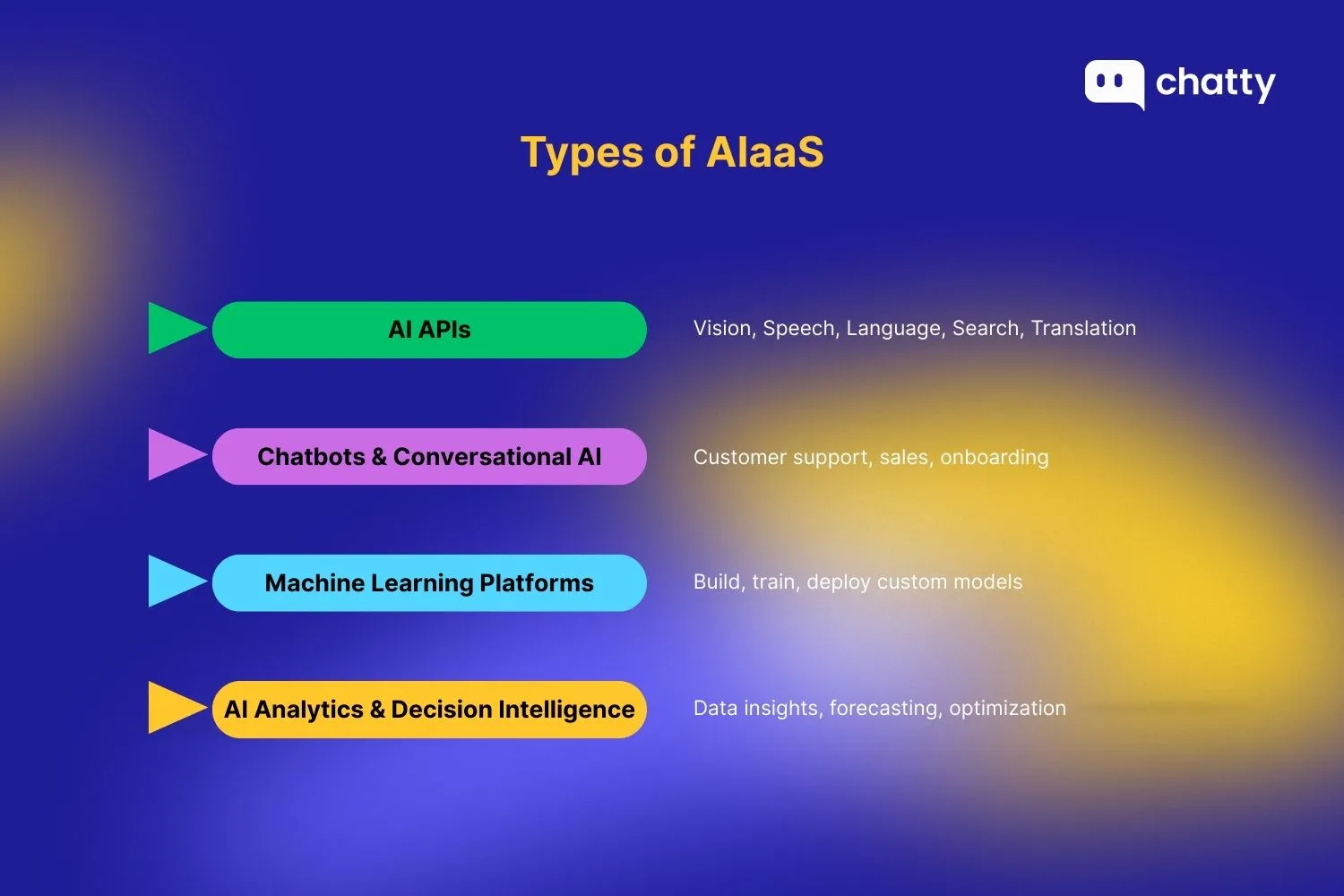
AIaaS offerings can be grouped by usage and user interaction. Here are the most common types of businesses adopted today.
AI APIs (vision, speech, language, search, translation)
AI APIs are the simplest way to start with AIaaS. They provide specific AI capabilities that developers can integrate into applications via cloud-based APIs, without managing models or infrastructure. Common APIs include:
- Vision: image/video recognition, object detection, visual analysis
- Speech: speech-to-text, text-to-speech, voice processing
- Language: text analysis, intent detection, content understanding
- Search: intelligent, relevance-based information retrieval
- Translation: real-time multilingual communication
These APIs typically run in the background, enhancing features such as content moderation, voice input, and global support while remaining invisible to end users.
AI agents
AI agents are a category of AIaaS that interact directly with users through chat or voice. They act as an intelligent interface layer. They receive requests, understand context, and take action in real time.
From a capability perspective, AI agents fall into two maturity levels.
- Chatbots (basic level): These systems follow predefined rules and scripts. They handle structured and repetitive tasks such as FAQs, order status, and simple form flows. However, they struggle with open-ended questions and long, context-rich conversations.
- Conversational AI agents (advanced level): These agents use large language models to interpret intent and maintain multi-turn context. They reason across complex situations, adapt responses, and guide users through flexible workflows.
As AIaaS, providers deliver these agents as fully managed cloud services. They run the models, maintain the infrastructure, and handle scaling. Businesses configure the logic and connect the agents to web, messaging, or voice channels.
In practice, many customer-facing platforms follow this model. For example, solutions such as Chatty offer pre-built conversational AI agents that companies can deploy quickly, without building or operating their own AI stack.
Machine learning platforms (build, train, deploy models)
Machine learning platforms let organizations create custom models in the cloud. They provide data management, automated training, versioning, and deployment tools. Ideal for specific use cases that off-the-shelf APIs cannot solve, they free businesses from managing raw infrastructure or scaling challenges.
AI analytics and decision intelligence (AI inside BI/ops tools)
AI analytics and decision intelligence embed AI into business intelligence and operations tools. These services analyze data, detect patterns, forecast outcomes, and recommend actions. Use cases include demand forecasting, anomaly detection, performance optimization, and risk analysis, allowing decision-makers to apply AI insights directly within workflows.
Benefits of AIaaS: Why teams choose it
AI as a Service (AIaaS) is popular because it delivers cost efficiency, scalability, and speed with minimal operational complexity. Here's why teams across industries prefer this model.
Faster AI adoption (time-to-value)
AIaaS lets organizations move quickly from concept to results. With pretrained models and ready-to-use APIs, businesses can integrate AI into products and workflows in days or weeks, rather than building systems from scratch. This accelerates time-to-market and allows teams to focus on business problems rather than infrastructure.
Industry research shows that AIaaS shortens development cycles and enables faster iteration than traditional solutions. For instance, Google Cloud's Vertex AI reduced document processing from a week to under two hours, while Observe.AI cut model development time from a week to just a few hours.
Lower upfront cost and scalable usage (pay as you go)
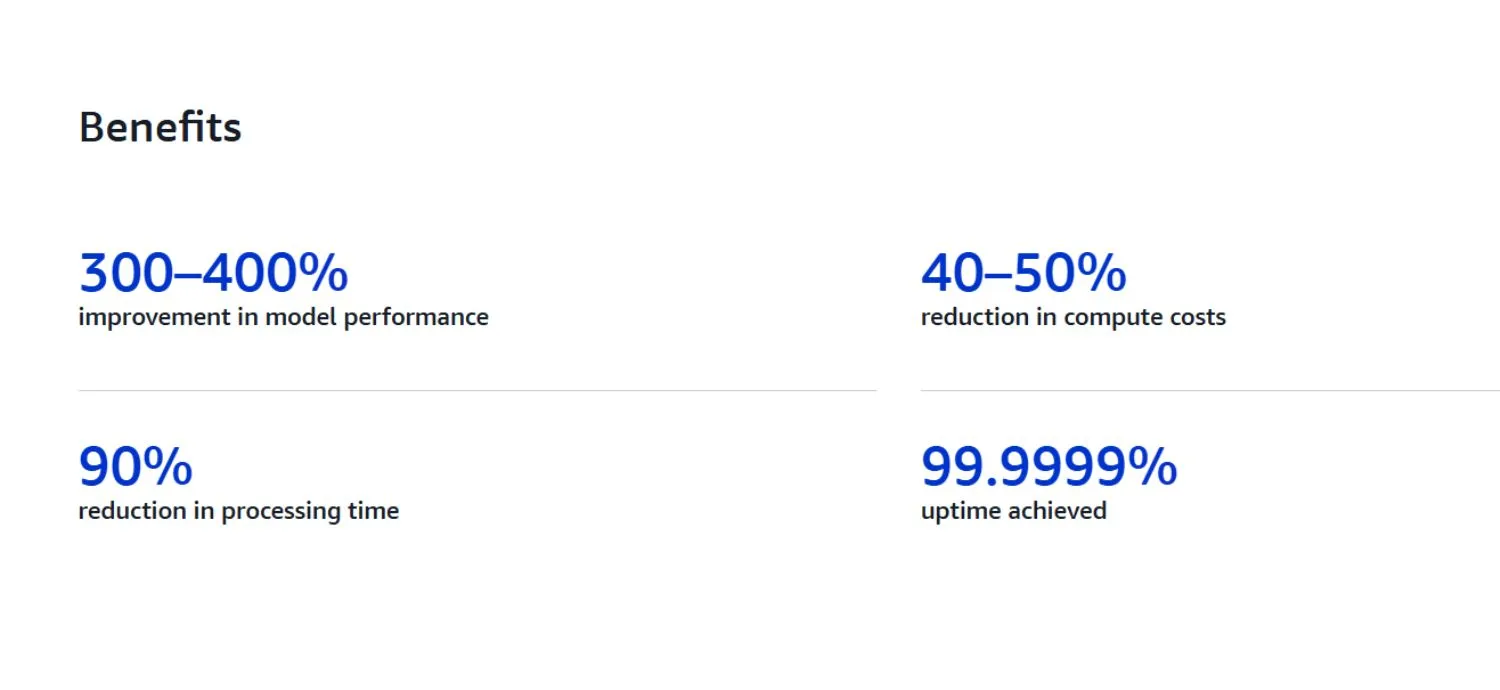
AIaaS reduces initial investments in hardware, data centers, and specialized staff through subscription or pay-as-you-go pricing. This makes advanced AI accessible even for smaller teams. Forethought, for example, reported up to 80% cost savings on managed AI, Observe.AI over 50%, and EagleView 40-50% after migrating workloads to AIaaS platforms.
The model also scales with demand. Cloud infrastructure can automatically handle spikes, so organizations pay only for what they use, whether running small experiments or deploying AI at enterprise scale.
Reduced operational burden (provider-managed infra/model ops)
AIaaS shifts responsibility for infrastructure, updates, security, and performance to the provider. Provider-managed AI infrastructure reduces internal workload and operational risk while ensuring continuous updates and reliable scaling.
The advantages of faster adoption, lower costs, scalable use, and reduced operational burden make AIaaS an efficient and practical choice for businesses. It allows organizations to implement AI quickly, cost-effectively, and with minimal technical overhead.
Core AIaaS platforms
OpenAI
OpenAI is a leading AIaaS provider focused on generative AI, reasoning, and semantic understanding delivered through APIs. Its models are widely used to power applications that work with text, images, and speech.
Key OpenAI offerings include:
- GPT models for text generation, reasoning, and conversational use cases.
- DALL·E for image generation from text prompts.
- Whisper for speech recognition and transcription.
- Embeddings for semantic search, classification, and recommendations.
Because these tools are accessible through simple APIs, developers can build content creation tools, intelligent assistants, and search systems without managing models or infrastructure. OpenAI's strength lies in its versatility across multiple AI modalities within a single platform.
Google Cloud AI
Google Cloud AI provides AI and machine learning services that integrate closely with analytics and data platforms. It is designed to help organizations apply AI directly to large-scale business data.
Core Google Cloud AI tools include:
- Vertex AI for training, deploying, and managing ML models.
- AutoML for building custom models with minimal coding.
- BigQuery ML for running machine learning inside SQL workflows.
- Vision APIs and Dialogflow for visual and conversational use cases.
This platform is well-suited for organizations that rely heavily on data analysis and want AI capabilities embedded directly into large-scale analytics and cloud-native systems.
AWS AI
Notable AWS AI services are designed to support end-to-end machine learning, content understanding, and conversational experiences. Together, they allow teams to build intelligent applications without managing complex infrastructure.
Key services include:
- Amazon SageMaker for the full ML lifecycle, from data preparation and model training to deployment and monitoring at scale.
- Amazon Rekognition for image and video analysis, supporting object detection, facial recognition, and content moderation.
- Amazon Comprehend for natural language processing tasks such as sentiment analysis, entity extraction, and text classification.
- Amazon Lex and Amazon Polly for conversational AI, enabling chatbots, virtual assistants, and natural-sounding text-to-speech experiences.
AWS AI is often chosen by enterprises that already run on AWS and need scalable, production-ready AI services that integrate seamlessly with existing cloud infrastructure.
Microsoft Azure AI
Microsoft Azure AI delivers a tightly integrated AIaaS ecosystem, especially suited for organizations already using Microsoft tools. It combines machine learning, cognitive APIs, and enterprise search to embed intelligence directly into applications and workflows.
Core Azure AI services include:
- Azure Machine Learning for training, deploying, and managing models with MLOps support.
- Azure Cognitive Services for vision, speech, language, and decision-making APIs.
- Azure AI Search for semantic and vector-based search across structured and unstructured data.
- Azure Digital Twins for modeling real-world environments and IoT systems.
Azure AI is particularly attractive to organizations already using Microsoft products. It integrates smoothly with Microsoft 365, Dynamics, and Azure's identity and security ecosystem.
IBM Watson
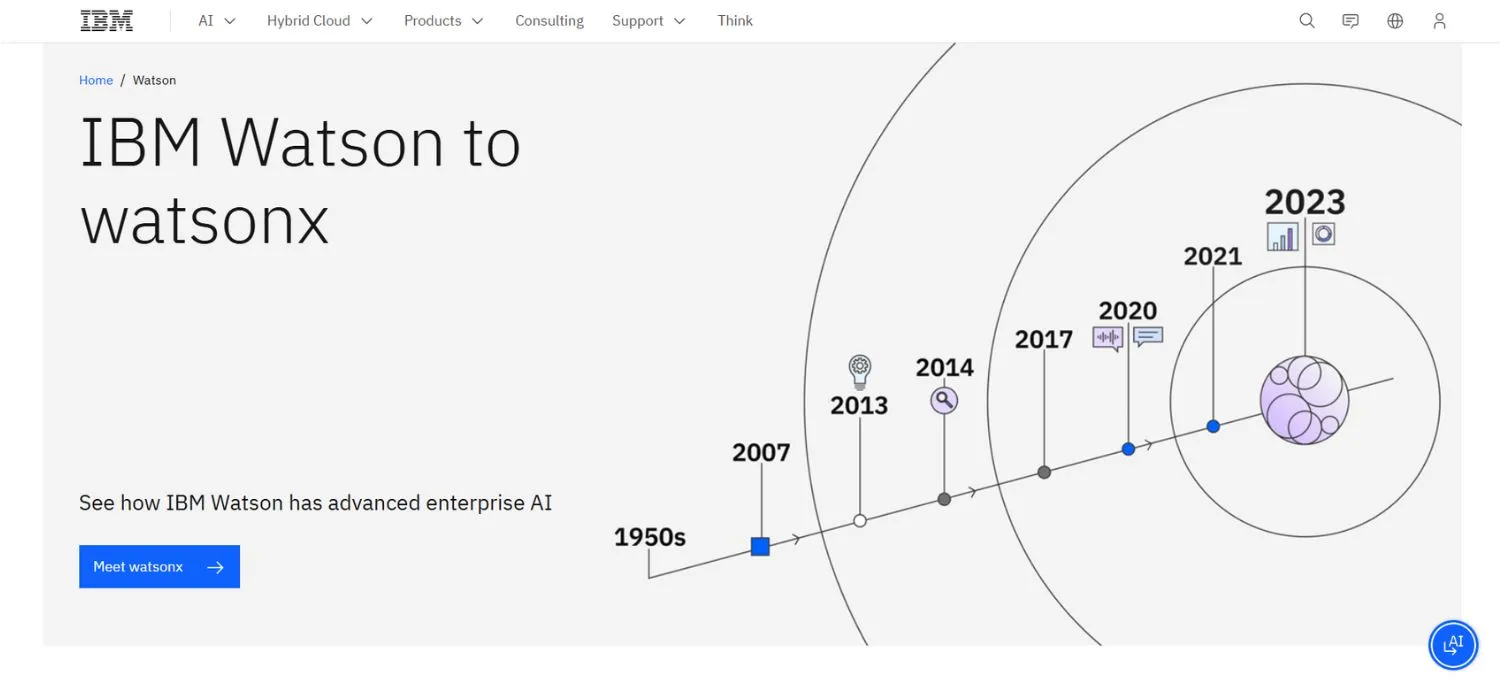
IBM Watson focuses on domain-specific AI, making it a strong choice for regulated and knowledge-heavy industries like healthcare, legal, and finance. Instead of generic models, Watson emphasizes customization and explainability.
Key Watson services include:
- Watson Assistant for enterprise-grade chatbots and virtual agents.
- Watson Discovery for document search and insight extraction using NLP.
- Watson Knowledge Studio for training models on specialized, industry-specific data.
- Watson Speech Services for speech-to-text and text-to-speech applications.
This tailored approach allows organizations to deploy AI that aligns closely with complex business rules and terminology.
How businesses are leveraging AIaaS for growth
To see how this works in practice, the following examples highlight how businesses are applying AIaaS to solve real problems and unlock new growth opportunities.
Coca-Cola: Driving efficiency and creativity with AIaaS
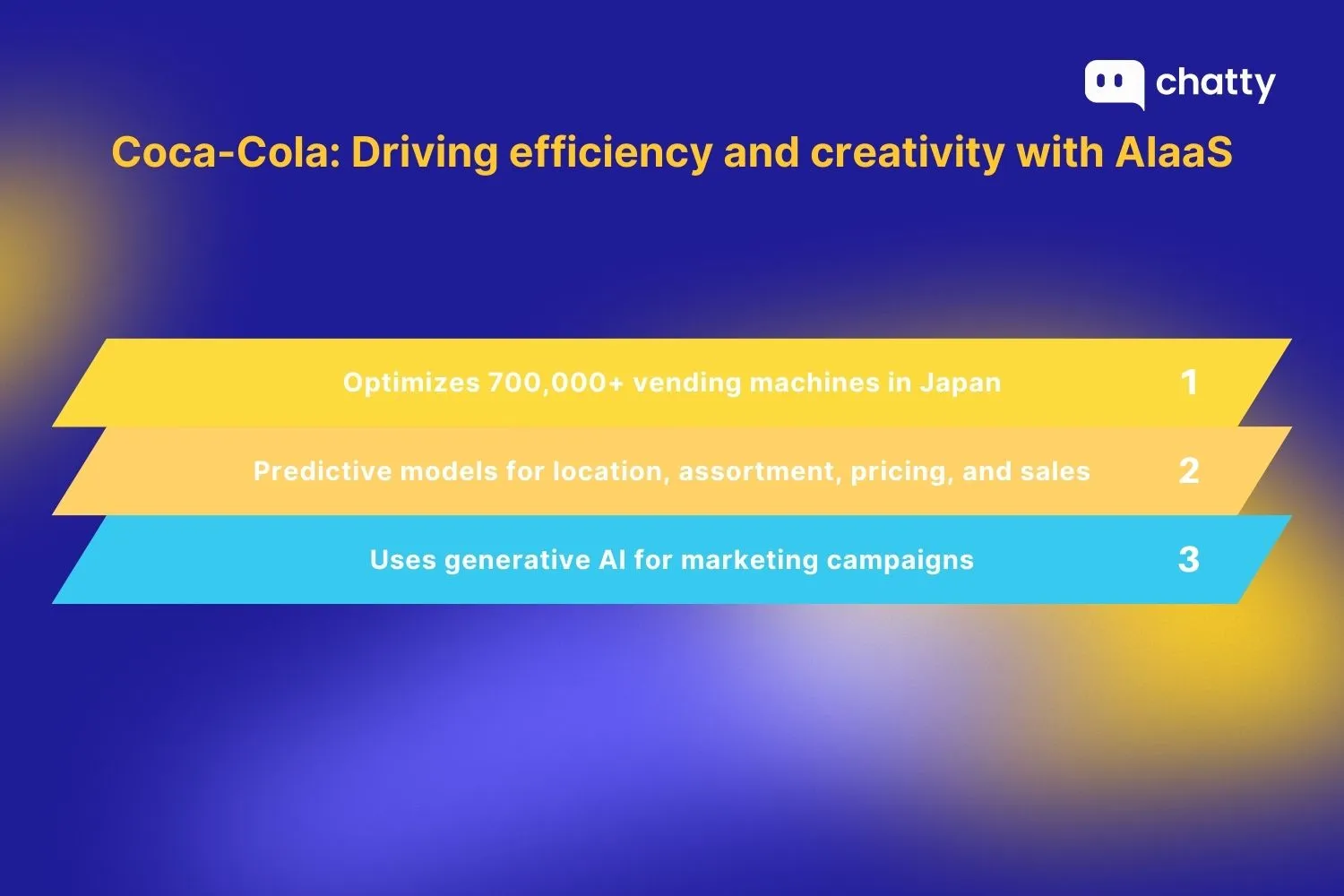
Coca-Cola uses AIaaS to improve both operational performance and brand engagement. In Japan, Coca-Cola Bottlers Japan manages more than 700,000 vending machines and relies on Google Cloud's Vertex AI, BigQuery, and AutoML to build predictive models. These models help optimize:
- Vending machine locations
- Product assortment inside each machine
- Pricing and expected sales volume
By applying AIaaS to large-scale analytics, Coca-Cola improved distribution efficiency and forecasting accuracy. Beyond operations, the company partnered with OpenAI to experiment with generative AI in marketing. Using ChatGPT and DALL·E, Coca-Cola launched creative campaigns such as the AI-powered "Masterpiece" campaign, proving how AIaaS can accelerate content production while maintaining brand storytelling.
Perhutani: Scaling forest management with AIaaS
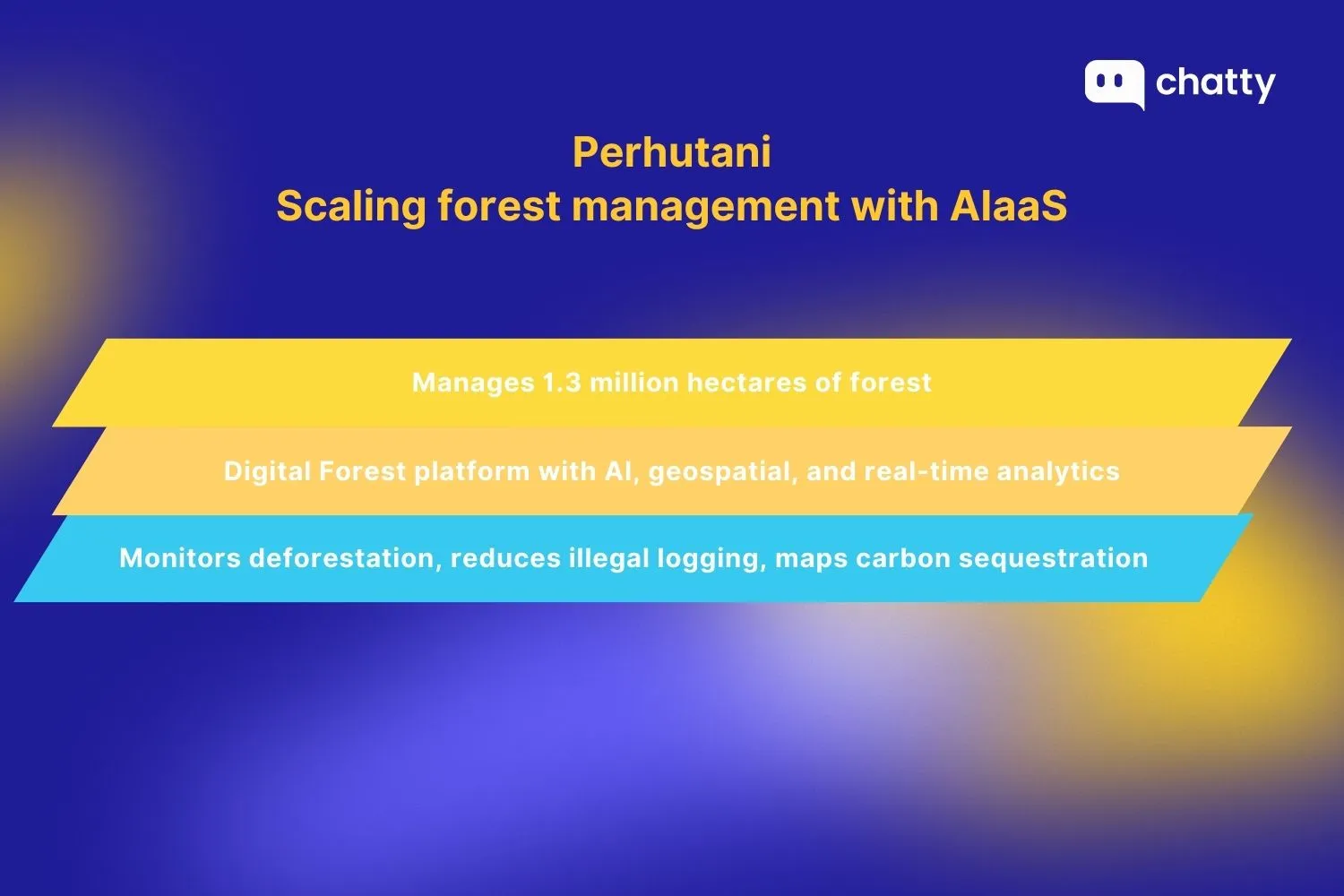
Perhutani, Indonesia's state-owned forestry company, oversees around 1.3 million hectares of forest across Java and Madura. Managing such a vast and remote area with limited staff was a major challenge. To solve this, Perhutani partnered with Alibaba Cloud to build the Digital Forest platform using AIaaS. The solution combines:
- Generative AI and large language models.
- Geospatial and satellite data analysis.
- Real-time analytics on cloud infrastructure.
This AIaaS deployment strengthened deforestation monitoring, reduced illegal logging risks, and supported initiatives such as carbon sequestration mapping. More importantly, it accelerated Perhutani's broader digital transformation without requiring in-house AI infrastructure.
Trivago: Improving personalization and conversion with AIaaS
Trivago faced a different growth challenge: organizing massive volumes of user-generated travel photos. By adopting Clarifai's computer vision AIaaS, the company automatically detected landmarks, categorized destinations, and tagged travel features across millions of images. This transformed unstructured visual data into a powerful personalization engine.
Within a month, Trivago could better match images to traveler intent, leading to measurable results:
- A 10% reduction in visitor bounce rates.
- A 15% increase in conversion rates.
This case highlights how AIaaS can quickly turn raw data into growth-driving customer experiences.
AIaaS risks and challenges (and how to reduce them)
Data privacy and security (shared responsibility model)
AIaaS shifts part of the security workload to third-party providers, but responsibility does not disappear. Organizations remain accountable for how their data is used and protected. Most AIaaS platforms operate under a shared responsibility model. Providers secure infrastructure and core services, while customers manage data quality, access control, and compliance requirements.
Risks increase when sensitive or regulated data is sent to external models without clear governance. Limited visibility into data handling can also raise compliance and regulatory concerns.
To reduce these risks, organizations should take the following steps:
- Classify data before using AIaaS services
- Apply encryption in transit and at rest
- Restrict access using role-based controls
- Anonymize or mask sensitive fields where possible
- Review provider policies on data retention, logging, and model training
These controls should align with internal security policies and applicable legal obligations.
Vendor lock-in risk (portability and exit planning)
Data management decisions directly affect vendor dependency. AIaaS can create lock-in when applications rely heavily on proprietary models or APIs. Over time, switching providers becomes more complex and costly, often requiring application changes, retraining, or data migration.
This risk can be reduced by designing for portability. Business logic should be separated from model calls, with prompts and configurations documented. Data should be stored in provider-neutral formats. An exit plan should define how data is retrieved, how models are replaced, and how transitions occur with minimal disruption.
Customization limits of prebuilt models
Even with strong governance and portability, prebuilt models introduce another challenge. Pretrained AIaaS models perform well for common scenarios but may struggle with specialized domains or edge cases. As organizations rely more heavily on AI outputs, gaps in accuracy, context awareness, or language understanding become more visible.
Addressing these limitations requires early evaluation of customization needs. Fine-tuning, retrieval-augmented approaches, or hybrid architectures can improve relevance and accuracy. In some cases, AIaaS must be combined with custom components. Planning for customization early helps avoid performance issues that are costly to correct later.
Reliability, SLAs, and operational monitoring
Because AIaaS depends on external infrastructure, reliability becomes an operational concern. Service outages, latency changes, or unannounced model updates can directly impact business processes. Clear SLAs, redundancy strategies, and continuous monitoring of performance, accuracy, and failure rates are essential. Treating AIaaS as a critical production system rather than a plug-in ensures stability as usage scales.
AIaaS vs building AI in-house: how to decide?
Choosing between AIaaS and in-house AI depends on business priorities, capabilities, and long-term strategy. Both deliver value but suit different needs.
Use AIaaS when you need:
- Rapid deployment and faster time to value.
- Flexibility to experiment, validate use cases, or iterate quickly.
- Support for small or limited data science and engineering teams.
- Management of variable or unpredictable demand.
- Reduced operational overhead without investing heavily in infrastructure.
AIaaS allows teams to focus on business outcomes rather than maintaining AI infrastructure. It is especially useful for early-stage projects, common use cases like chatbots or analytics, or when trying out new AI applications without long-term commitment.
Build AI in-house when you need:
- Highly specialized or domain-specific models.
- Full control over sensitive data, privacy, or regulatory compliance.
- Customization that directly affects competitive advantage.
- Long-term AI solutions that are core to your business differentiation.
In-house AI requires higher investment and ongoing maintenance, but can deliver stronger differentiation and reduce reliance on vendors.
Hybrid approach:
Many organizations combine AIaaS for general-purpose tasks or experimentation with in-house models for critical data or proprietary logic. This approach balances speed, control, and innovation, helping teams scale AI effectively while maintaining flexibility as needs evolve.
Final thought
AI as a Service has transformed how organizations adopt artificial intelligence, enabling faster deployment and scalable use without high upfront costs. It offers a faster time-to-value and reduces operational complexity. However, careful planning is essential, considering data security, vendor reliance, customization limits, and reliability.
Many organizations combine AIaaS with in-house models to balance flexibility and control. Success depends on aligning AI strategies with business goals rather than trends. Companies that understand when and how to use AIaaS will be better positioned to innovate, adapt, and compete in an increasingly intelligent digital landscape.
FAQ
AIaaS provides AI capabilities such as language, vision, or predictions through cloud APIs for integration into products or workflows. SaaS delivers complete, ready-to-use applications. AIaaS lets businesses build custom AI solutions, while SaaS focuses on using finished software.
AIaaS is generally cheaper than building AI in-house because it avoids infrastructure and hiring costs. Most providers use pay-as-you-go pricing, keeping small-scale costs predictable. Costs can grow with high-volume or complex workloads, so monitoring usage is important.
No. AIaaS complements SaaS. Many SaaS products use AIaaS to add intelligence like automation or personalization. SaaS delivers complete applications, while AIaaS powers smarter features within them.
AIaaS is best for speed, variable AI demand, limited internal resources, or rapid experimentation. Building in-house suits for highly specialized models or strict data control needs.