









Sales development is changing faster than ever. Rising customer acquisition costs, shrinking response rates, and overloaded SDR teams have forced businesses to rethink how they use AI in sales to grow their pipeline. Enter the AI Sales Development Representative (AI SDR) – a digital team member built to prospect, qualify, and book meetings around the clock.
Unlike traditional automation tools, today’s AI SDRs can research prospects, write personalized messages, hold two-way conversations, and even sync data directly to your CRM. They don’t just save time, they redefine what’s possible at the top of the funnel.
In this guide, you’ll learn exactly what an AI sales development representative does, how it compares to human SDRs, the benefits it brings to modern sales teams, and the top tools you can use to build your own AI-powered SDR stack.
- AI SDRs research prospects, write personalized messages, and sync CRM data automatically without manual input.
Unlike traditional automation that sends generic sequences, AI SDRs analyze individual prospect data to craft messages that start real conversations based on actual context.
- Human SDRs can only manage a finite number of prospects daily; AI SDRs reach thousands simultaneously without fatigue.
This scalability difference is not incremental but structural: AI fundamentally changes the economics of top-of-funnel prospecting by removing the headcount ceiling.
- AI SDRs maintain perfectly consistent tone and messaging across every interaction, eliminating the quality variance of human reps.
Where human SDR performance varies with mood, experience, and workload, AI ensures brand voice and value proposition are communicated identically on the first touch and the twentieth.
- AI SDRs do not replace human reps but change where their time goes, shifting focus from repetitive outreach to relationship building.
By handling prospecting, qualification, and follow-ups automatically, AI SDRs give experienced sales reps more time at the deal stages where human judgment and empathy drive close rates.
- Integrations with HubSpot, Salesforce, and LinkedIn mean AI SDRs log every interaction and update lead status without manual CRM entry.
This automatic data synchronization removes the administrative overhead that consumes 28% of a typical sales rep's week and causes lead status to lag actual pipeline reality.
What is an AI sales development representative?
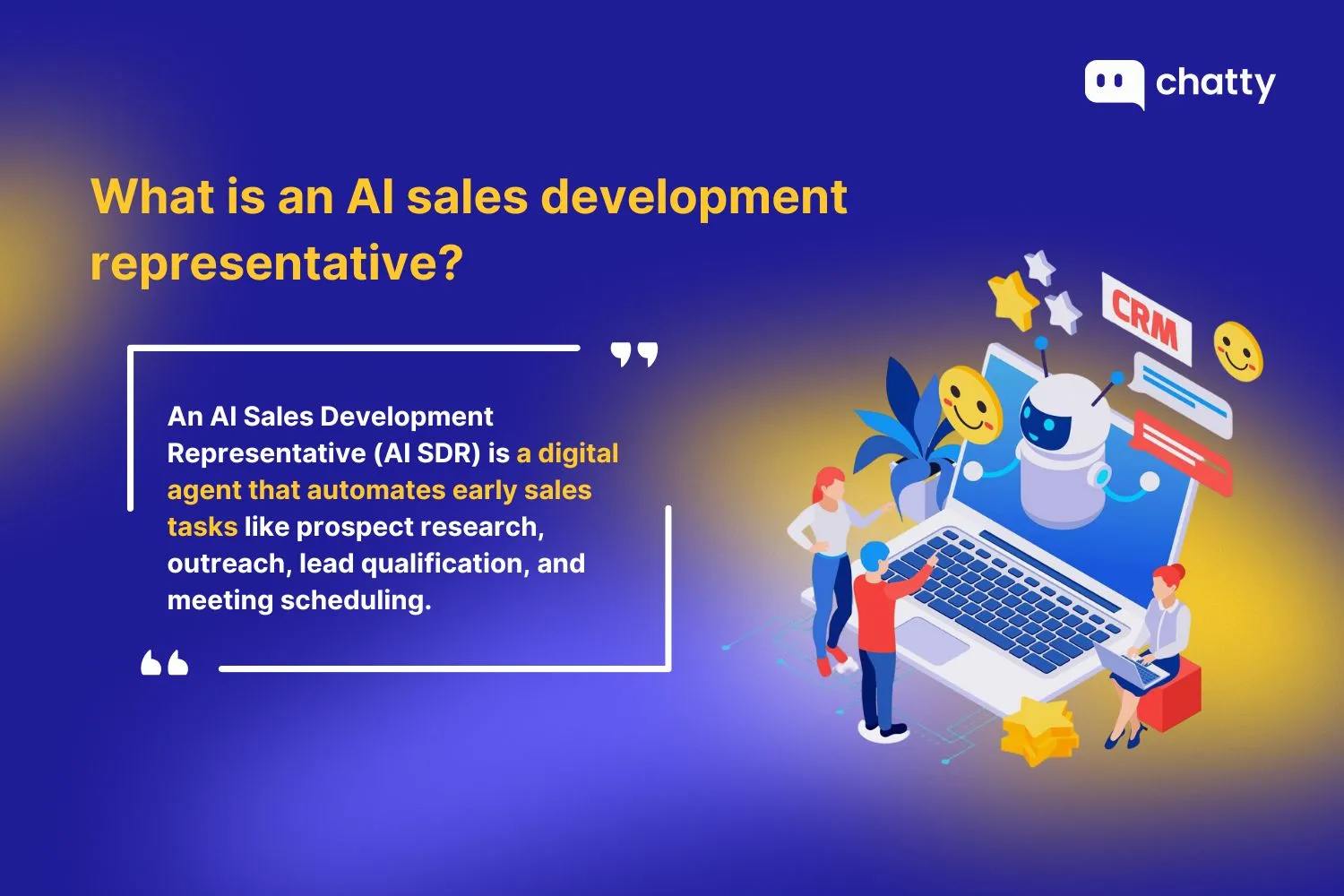
An AI Sales Development Representative (AI SDR) is a digital agent trained to handle the early stages of the sales process. It takes care of top-of-funnel tasks such as researching prospects, reaching out to potential leads, qualifying them based on fit and intent, and scheduling meetings with human sales reps.
In simple terms, an AI SDR performs the same duties as a traditional SDR but with more speed, accuracy, and consistency. It uses artificial intelligence to analyze customer data, personalize messages, and engage prospects through email, chat, or LinkedIn. Instead of relying on manual work or guesswork, the AI studies patterns to identify the best leads and sends relevant, human-like messages that start real conversations.
Modern AI SDRs also connect directly with your existing sales tools. They integrate into CRM platforms like HubSpot and Salesforce and communication channels such as LinkedIn and email. Every interaction is logged automatically, lead statuses are updated instantly, and all data stays synchronized. This allows your sales team to see who is engaged, who needs a follow-up, and who is ready for a meeting without switching between tools.
You can think of an AI SDR as an AI-powered sales teammate that never sleeps or misses a follow-up. It does not replace your team but supports them by handling repetitive and time-consuming tasks. This gives human sales reps more time to focus on building relationships and closing deals.
In a fast-changing sales environment, AI SDRs are helping companies generate leads more efficiently and make prospecting smarter and more data-driven.
AI vs Human SDRs
When it comes to scaling your sales pipeline, both AI and human SDRs play essential but different roles. AI SDRs shine in repetitive, data-driven tasks, while humans excel at relationship building and nuanced conversations. Here’s how they compare:
| Aspect | AI SDRs | Human SDRs |
| Scalability | Can reach thousands of prospects simultaneously without fatigue. Ideal for automating outreach and follow-ups. | Limited by time and energy. Each SDR can only manage a set number of prospects per day. |
| Consistency | Maintains a unified tone and message across every interaction, reducing errors or off-brand communication. | Messaging quality can vary depending on mood, experience, or workload. |
| Learning & Optimization | Continuously improves through data feedback and performance tracking. Adjusts messaging automatically. | Requires manual review and coaching to refine approaches over time. |
| Cost Efficiency | No payroll or training costs. Scales instantly with minimal additional investment. | Higher hiring, training, and management costs. Scaling requires more headcount. |
| Personalization & Empathy | Personalizes at scale using data insights but lacks emotional intelligence. | Excels at empathy, humor, and human connection that builds trust. |
| Decision-Making in Complex Scenarios | Effective in structured, rule-based environments. Struggles with ambiguity or creative problem-solving. | Adapts quickly to unexpected responses and complex buyer needs. |
| Cultural Understanding | Learns from global data but can miss subtle cultural or contextual cues. | Understands local nuances, tone, and context better. |
Why AI SDRs matter in modern sales teams
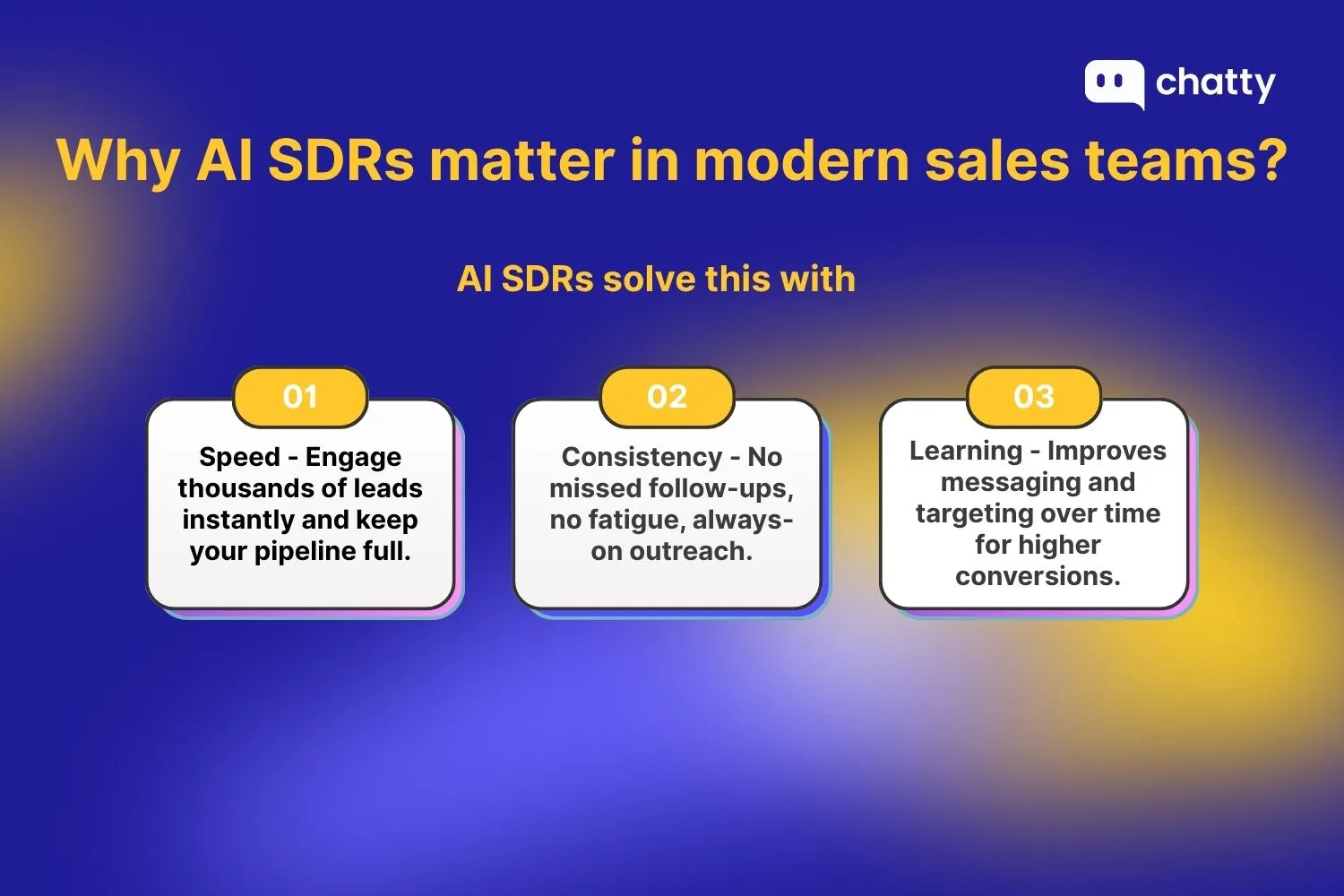
Modern sales teams face three major challenges: rising customer acquisition costs (CAC), limited human bandwidth, and buyers who expect faster, more personalized engagement. According to a ProfitWell study, CAC has increased by over 60% in the past five years, while the average SDR only spends about one-third of their time actively selling. At the same time, 80% of B2B buyers now expect real-time, personalized outreach across multiple channels. These shifts make traditional outbound strategies too slow and costly to keep up.
This is where AI Sales Development Representatives (AI SDRs) step in. They solve these pain points through speed, consistency, and continuous learning.
- Speed: AI SDRs can contact thousands of leads every day, far beyond what any human team can handle. They research, personalize, and send outreach messages in seconds. This ability keeps your pipeline full while allowing your human team to focus on closing deals instead of chasing cold leads.
- Consistency: Unlike human reps, AI SDRs never get tired, distracted, or inconsistent. They follow up on every lead at the right time, ensure error-free communication, and maintain a smooth, professional experience for every prospect. That means no missed follow-ups, no forgotten emails, and no mixed messaging across campaigns.
- Learning: Over time, AI SDRs become increasingly intelligent. They analyze which messages perform best, learn from engagement data, and refine their outreach strategies automatically. This data-driven approach ensures your campaigns keep improving, delivering higher conversion rates without additional manual effort.
In short, AI SDRs matter because they bridge the gap between human creativity and machine efficiency. They give modern sales teams the ability to scale outreach, reduce acquisition costs, and deliver the fast, personalized engagement buyers now expect. Instead of replacing human SDRs, they empower them, turning sales development into a 24/7 growth engine that never slows down.
How does an AI sales development representative work?
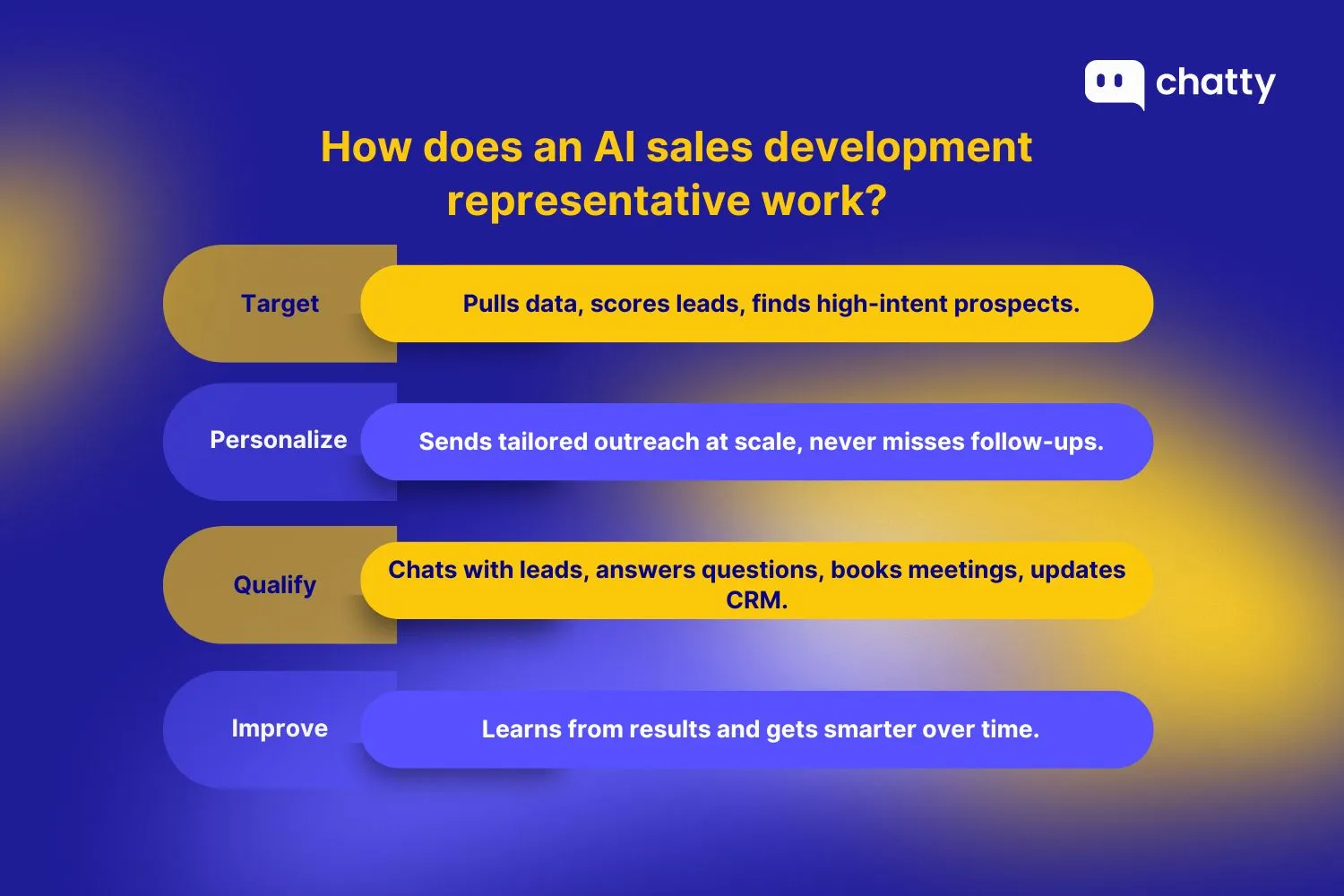
An AI Sales Development Representative (AI SDR) functions like a digital sales teammate that automates the top of your sales funnel. It uses artificial intelligence, CRM integration, and natural language processing to find, engage, and qualify leads – all while learning and improving with every interaction. Here’s how it works step by step:
1. Data enrichment and targeting
The AI SDR starts by gathering and analyzing data from multiple sources:
- CRMs like HubSpot or Salesforce
- Professional networks such as LinkedIn
- Email lists and intent-data tools to track buyer intent
It enriches this data with details such as company size, role, industry, and recent activities. Using LLM-based reasoning, it identifies high-fit leads and prioritizes them based on buying intent. This ensures your sales team spends time only on prospects most likely to convert.
2. Personalized outreach
Once the target list is ready, the AI SDR crafts and sends messages that feel personal and relevant.
- Writes customized cold emails or LinkedIn messages at scale
- Adjusts tone and content based on persona (e.g., founder vs. marketing lead)
- Aligns messages with the buyer journey stage
It’s like having hundreds of personalized sales assistants who never miss a follow-up.
3. Conversation handling and qualification
When a lead replies, the AI SDR engages in real-time conversations.
- Answers product questions and manages objections
- Gathers qualifying details such as budget, authority, need, and timeline (BANT)
- Automatically schedules meetings in your calendar and updates CRM records
This makes lead qualification fast, consistent, and always on.
4. Continuous learning
Every interaction helps the AI SDR improve.
- Tracks what subject lines get the best responses
- Learns which lead types convert fastest
- Refines targeting and messaging over time
The result is a continuously learning system that becomes smarter and more effective the longer it runs – delivering scalable, personalized outreach that feels human but performs like AI.
The advantages of using an AI sales development representative
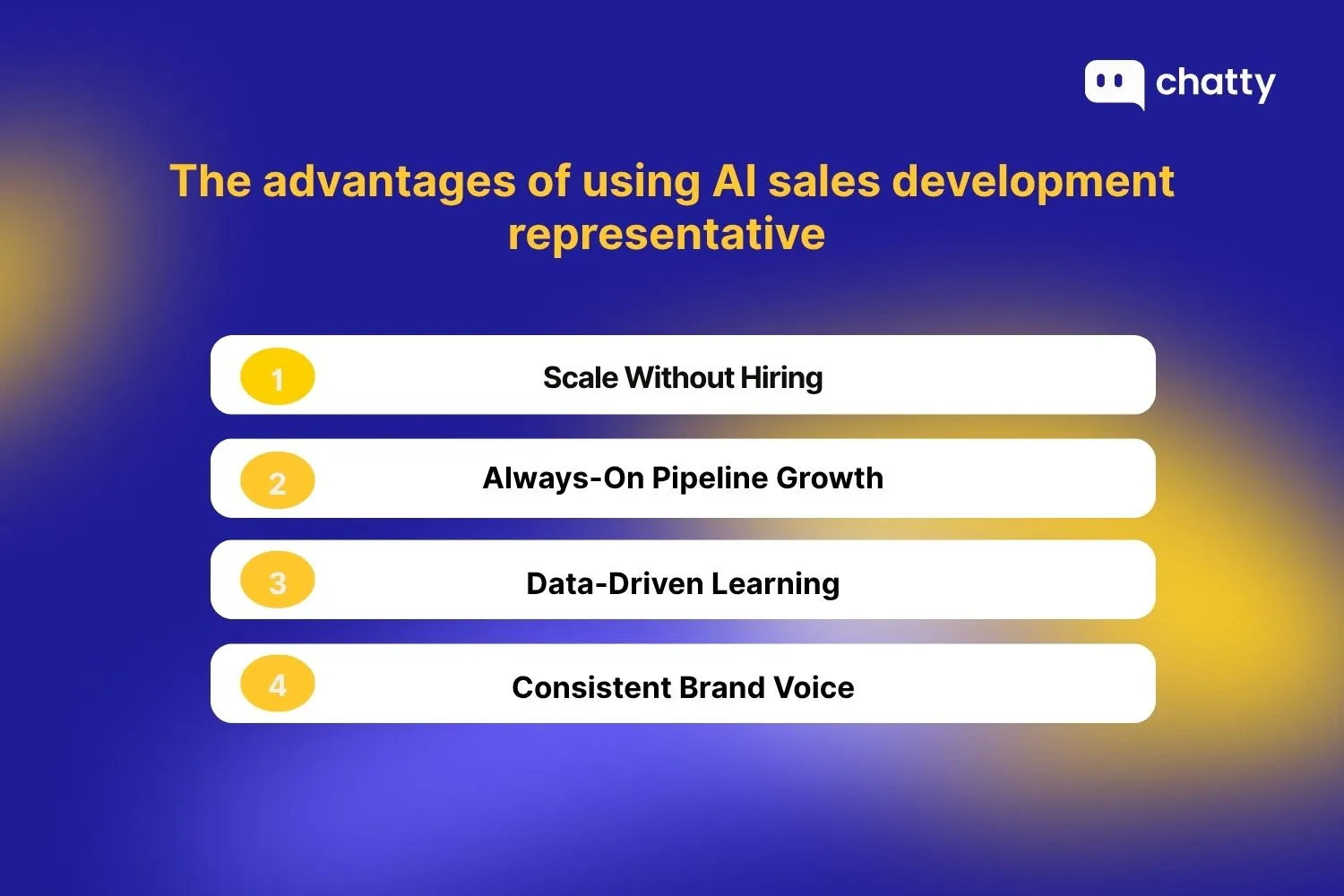
An AI Sales Development Representative (AI SDR) gives your sales team superpowers. Instead of relying on manual outreach and limited hours, it automates top-of-funnel tasks with speed, consistency, and intelligence. Here are the key advantages:
1. Scale without hiring
Reach thousands of prospects without expanding your team. Human SDRs can only handle a limited number of conversations per day. AI changes that capacity instantly:
- Unlimited outreach potential: AI can send thousands of targeted emails and LinkedIn messages simultaneously.
- No onboarding delays: Activate pipeline-ready support in hours, not months.
- Lower cost-per-lead: Reduce recruitment, training, and salary expenses while expanding your market reach.
This means startups can operate like enterprise sales teams – without the headcount.
2. Always-on pipeline growth
AI SDRs never stop following up, boosting conversion, and pipeline velocity. Prospects often need several touchpoints before converting. AI ensures no lead slips through the cracks.
- 24/7 outreach and follow-ups across time zones
- Instant lead engagement for inbound inquiries
- Automated cadence execution: emails, reminders, nurturing sequences
With consistent outreach and immediate response times, your pipeline stays active around the clock.
3. Data-driven learning
Every conversation improves the next; messaging evolves through feedback loops. AI SDRs continuously refine their communication:
- Learns from replies and behavior to improve tone, timing, and targeting
- Optimizes personalization based on industry, persona, and past interactions
- Improves conversion rates with each engagement cycle
Instead of manual analysis, optimization happens automatically.
4. Consistent brand voice
AI can be trained on your company's tone and product language. Messaging consistency builds trust. AI ensures your outreach always aligns with brand standards:
- Tailored to your tone, terminology, and value propositions
- Can adjust style per persona (executive tone vs. casual technical language)
- Ensures error-free, compliant, and polished communication
Together, these advantages make AI SDRs an essential tool for modern sales organizations looking to accelerate growth and maximize efficiency.
How can AI SDRs improve your sales processes?
AI Sales Development Representatives (AI SDRs) transform how sales teams manage leads, qualify prospects, and grow their pipeline. Instead of spending hours on repetitive admin work, your team can focus on high-value conversations and deal closing. Here’s how AI SDRs enhance your sales process from end to end.
1. Smarter inbound lead management
Most SDRs spend over two-thirds of their time on non-selling tasks, leaving many inbound leads unqualified or unanswered. AI SDRs solve this instantly.
- They engage every inbound lead in real time 24/7 through email, chat, or form follow-up.
- They ask discovery questions, qualify prospects using criteria like budget or intent, and schedule meetings automatically in your CRM.
This ensures no warm lead is lost to delay or human bandwidth limits. Salesforce reports that teams using AI SDRs now qualify nearly 100% of inbound leads, compared to typical averages below 60%.
2. Faster and more consistent follow-ups
AI SDRs never forget a follow-up. They maintain perfect cadence across time zones, channels, and campaigns.
- Follow up instantly after lead engagement.
- Send personalized nudges at optimal times to boost response rates.
- Keep every conversation consistent with your brand tone and message.
This level of reliability leads to higher conversion and pipeline velocity without adding headcount.
3. Automatic CRM updates and insights
Manually logging notes into a CRM is one of the biggest time drains for human SDRs. AI SDRs handle it automatically.
- Every conversation is logged, summarized, and categorized in your CRM (e.g., Salesforce or HubSpot).
- They enrich contact records with data from interactions, improving visibility for sales reps.
- Reps can jump straight into meetings with full context on every lead.
4. Improved sales efficiency and team focus
By automating outreach, qualification, and scheduling, AI SDRs give your human reps time back to focus on relationship-building. In Salesforce’s 2025 State of Sales report, 81% of sales teams using AI tools saw higher productivity and 20+ qualified leads handled per rep per day when paired with AI SDRs.
Recommended tools to build your own AI SDR stack
Building your own AI SDR stack is easier than ever. With the right tools, you can automate lead research, outreach, and meeting booking, all while keeping your team focused on closing deals. Here are five tools to get started.
Chatty AI – for real-time qualification and product demo booking on Shopify.
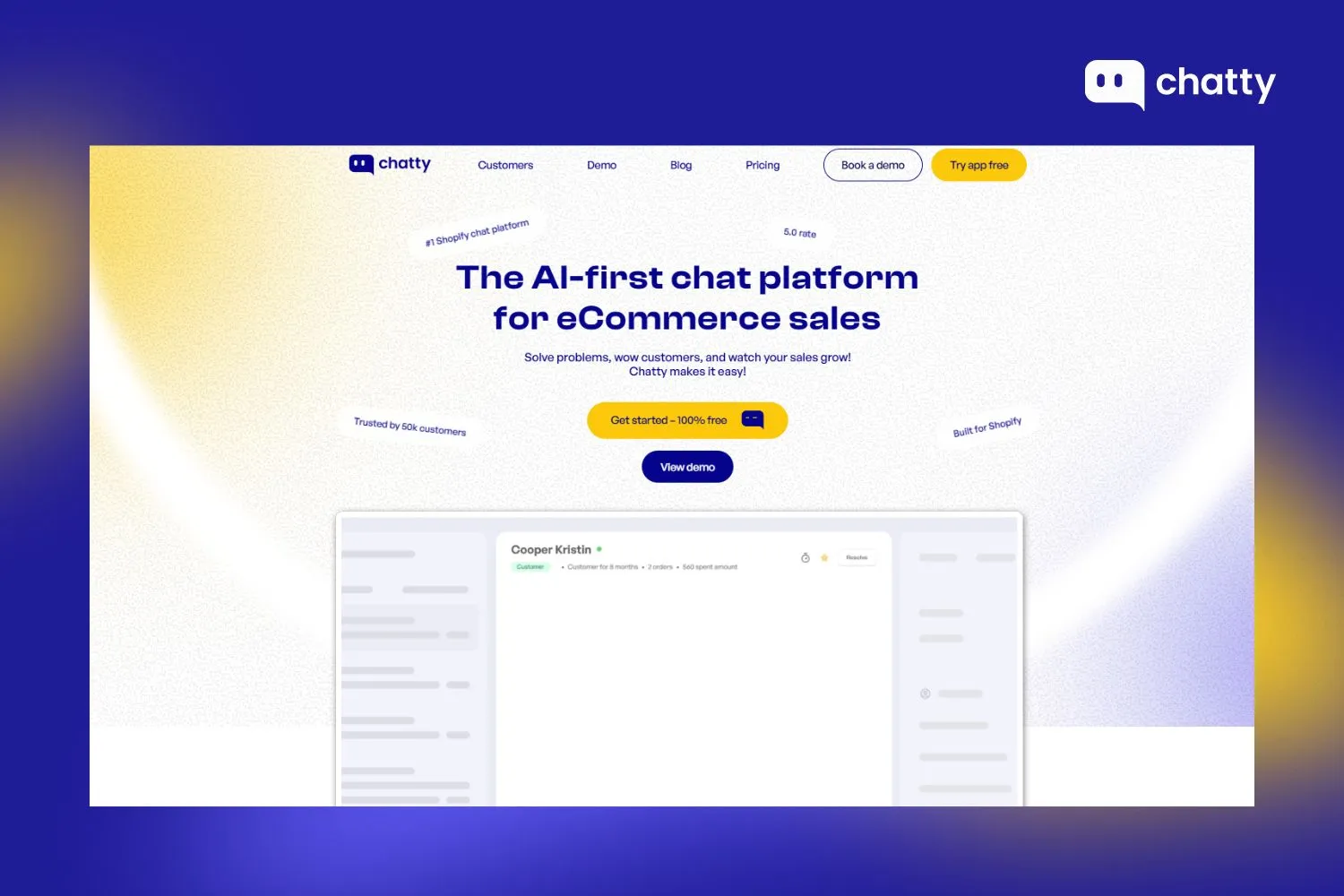
Chatty AI helps Shopify brands convert inbound visitors into sales conversations and booked demos. It acts like an AI-powered sales rep on your storefront, answering questions, qualifying prospects, and triggering meeting scheduling when the user shows buying intent. It syncs with your product catalog automatically, so the bot understands your offering without training.
For businesses that generate inbound traffic, Chatty AI ensures no high-intent visitor slips through. Instead of depending on live chat availability, the bot handles first-touch qualification, gathers customer info, and hands hot leads off to your team. The tool is especially useful for e-commerce B2B brands, SaaS-on-Shopify apps, or productized services selling through Shopify.
Use it for: capturing leads, answering pre-sales questions, booking demos in real time, and routing qualified requests into your SDR pipeline.
Clay + OpenAI API – to automate research and personalization.
Clay combines data enrichment, scraping, and AI personalization into one workflow. You can pull lead data from dozens of sources – LinkedIn, Crunchbase, website pages, funding announcements – then feed that enriched data into the OpenAI API to generate tailored messaging at scale.
Instead of SDRs spending hours researching each prospect, Clay automates it. Your team still edits and approves messages, but the heavy lifting is automated. This is where personalized outbound at scale becomes reality.
Use it for: scraping prospect insights, enriching lists, generating tailored cold outreach, and producing research-based talking points.
Regie.ai – for outbound copywriting and sequence building.
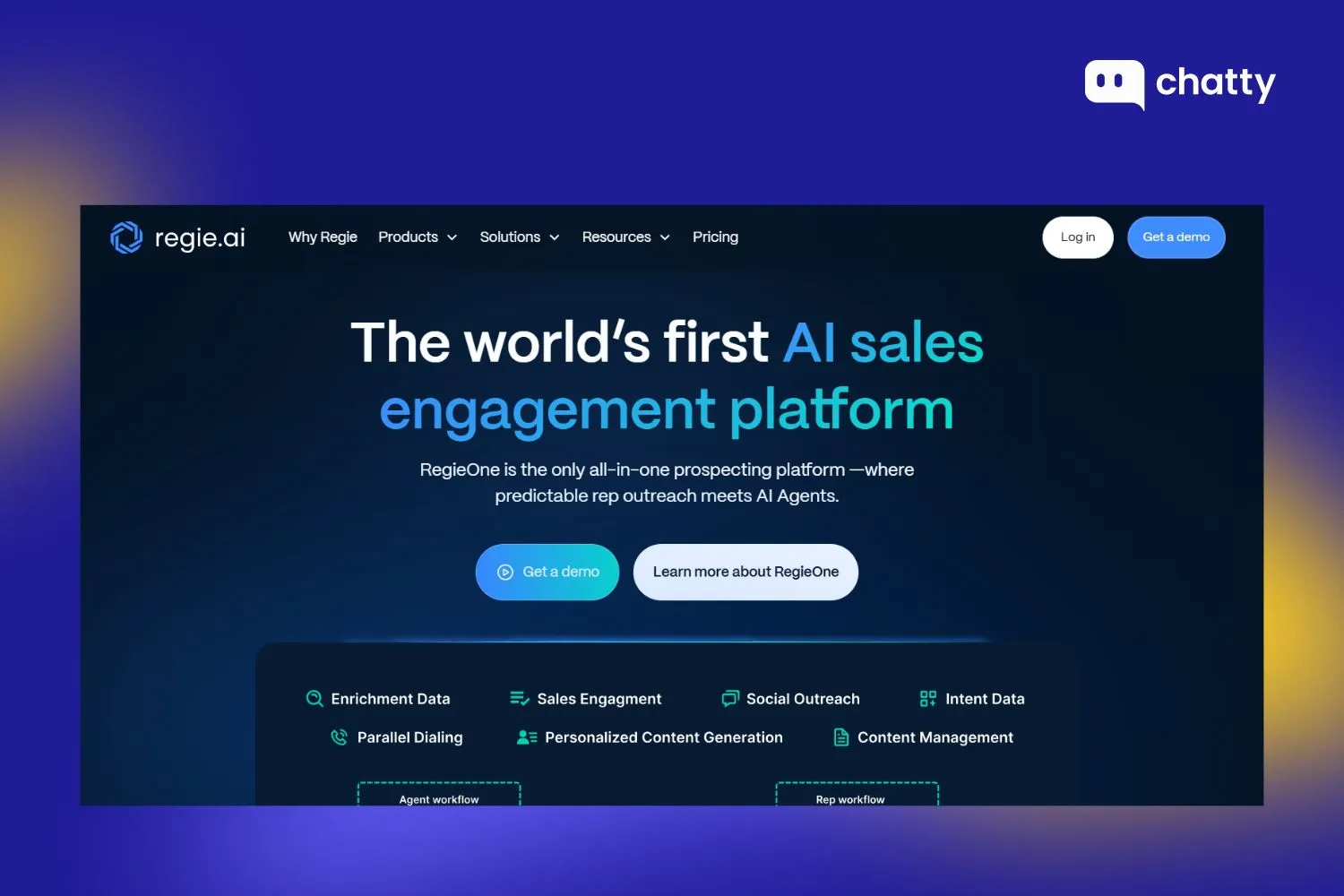
Regie.ai is built for outbound execution. It helps you create sales sequences across email, LinkedIn, and SMS while automatically generating messaging that matches your ICP and tone. It includes lead scoring, campaign performance visibility, and the ability to adjust messaging based on engagement.
It’s best when you've validated your ICP and message and are ready to run higher-volume outbound without losing personalization quality.
Use it for: building sequences, writing outbound copy, testing messaging frameworks, and scaling SDR outbound campaigns.
Zapier / Make.com – to connect CRMs, email, and scheduling tools.
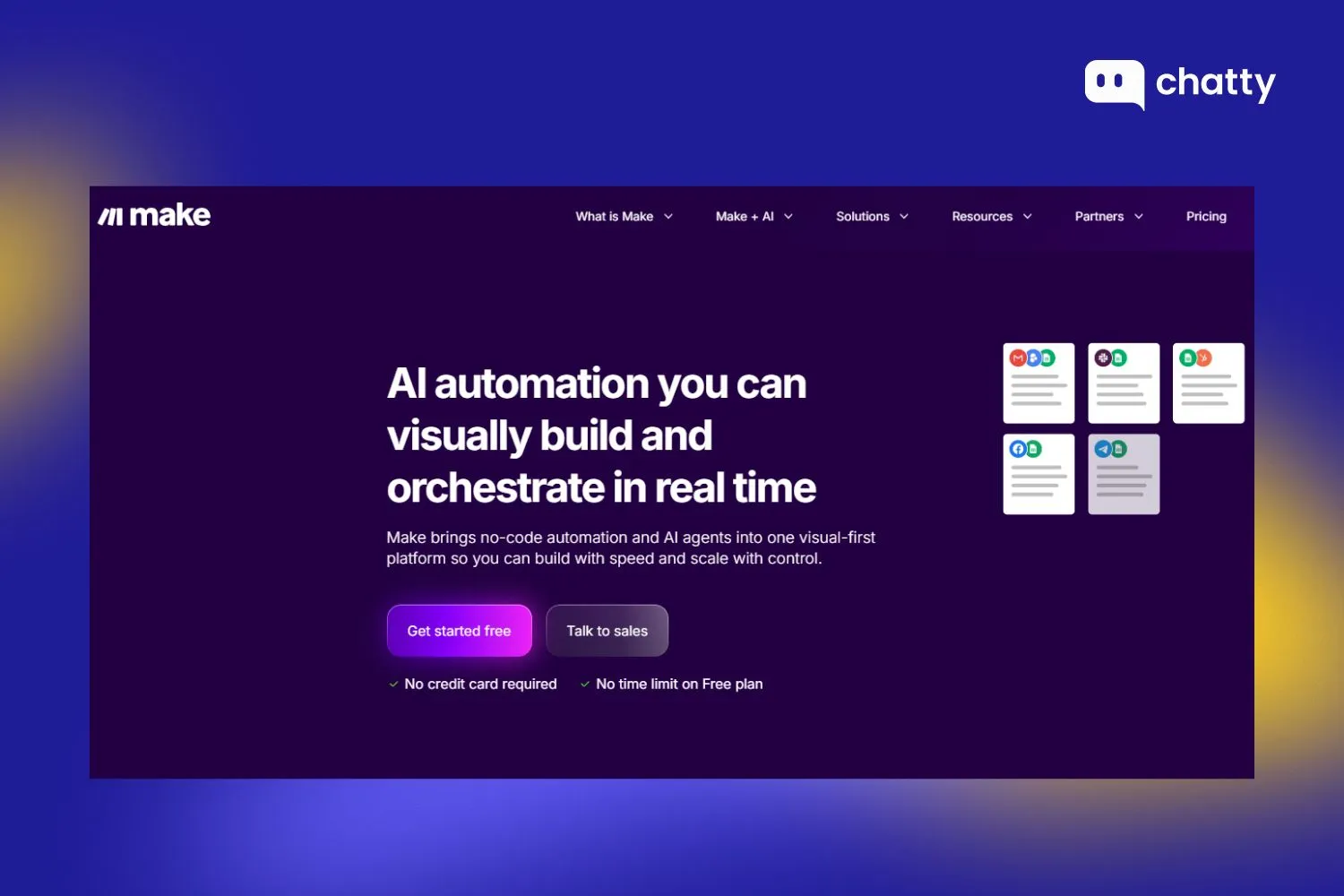
These automation platforms connect your stack without engineering. You can route leads from Chatty AI → Clay → your CRM → your sequencer, or trigger follow-ups when someone replies or books time. Zapier is simple and fast; Make.com offers deeper logic and data handling.
Use it for: syncing tools, auto-updating CRM fields, triggering actions across your stack, and preventing manual data handling.
Apollo AI SDR – for full-cycle autonomous outreach.
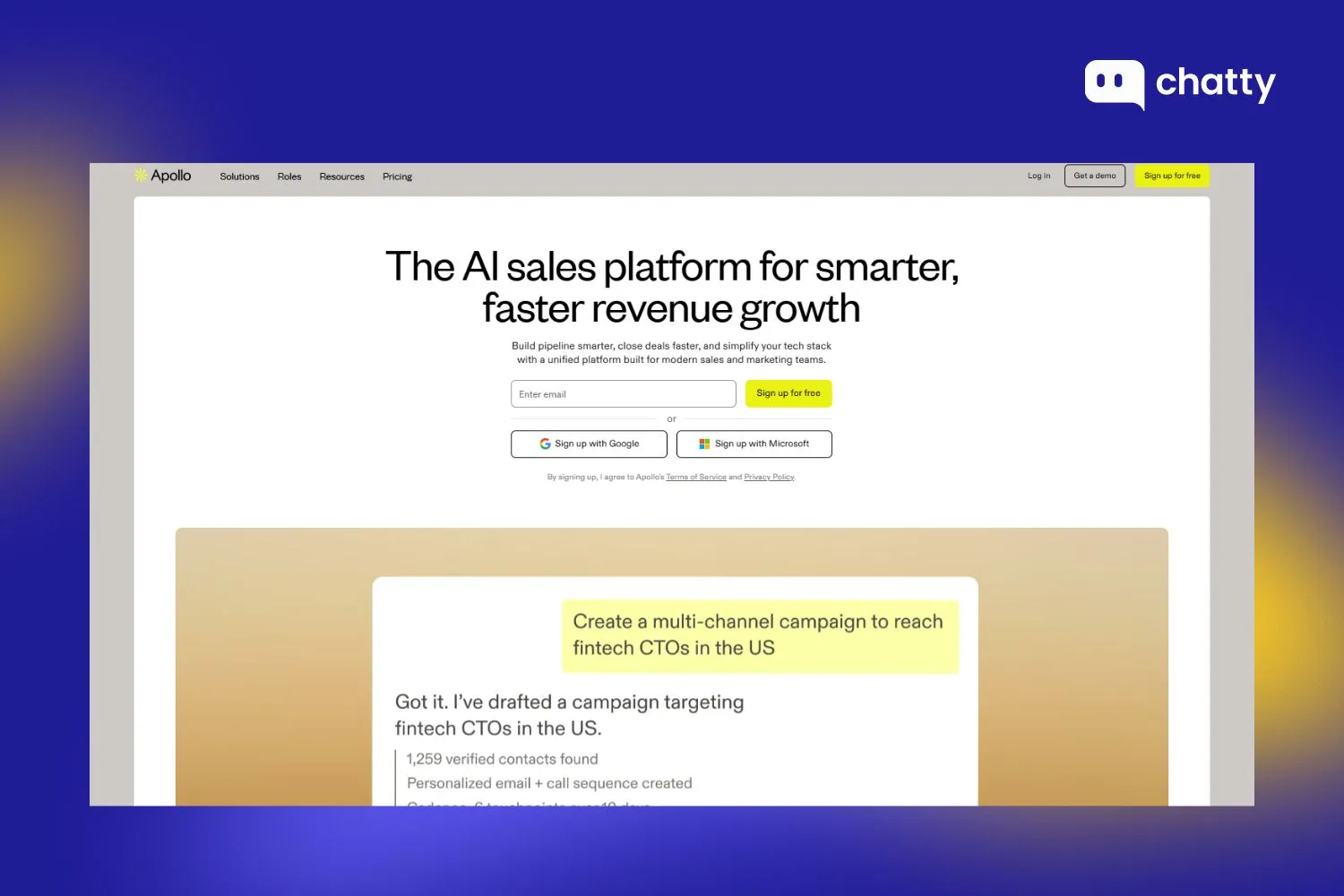
Apollo provides verified contacts, email sending, sequencing, and AI-powered prioritization in one place. With Apollo's AI SDR features, you can automate outreach tasks end-to-end: sourcing leads, writing messages, scheduling sequences, and tracking engagement.
Use it for: contact databases, automated outbound, enriched profiles, and SDR-level follow-up without manual effort.
Final thought: AI SDRs as “AI sales colleagues”
AI sales development representatives are becoming trusted partners, not replacements. The future of sales lies in hybrid teams where one human SDR oversees several AI assistants that handle prospecting, outreach, and follow-ups. This collaboration frees human reps to focus on strategy, relationship management, and creative engagement.
As technology advances, the role of SDRs will evolve from task execution to leadership and guidance. By combining human empathy with AI efficiency, sales teams can operate smarter, scale faster, and deliver more meaningful customer interactions.
FAQs
AI SDRs are designed to support, not replace, human representatives. They take over repetitive tasks like prospecting, outreach, and follow-ups so that human SDRs can focus on building relationships and closing deals. The most effective approach combines both, with humans guiding AI tools and using insights to drive stronger results.
AI SDRs integrate smoothly with major CRMs such as HubSpot, Salesforce, and Pipedrive. They can automatically pull lead data, log conversations, update deal stages, and schedule meetings. This connection keeps all sales activities synchronized in one system, helping teams save time, reduce manual work, and maintain accurate, real-time pipeline visibility.
AI SDRs deliver the strongest results in industries that rely on high-volume outreach and data-driven sales processes. Sectors such as SaaS, eCommerce, B2B services, and real estate benefit most. These teams use AI to personalize messages, qualify leads faster, and scale prospecting efforts without increasing headcount or losing quality.