











E-commerce has reached a point where manual workflows alone cannot keep up with the demand for fresh content and personalized experiences. Generative AI fills that gap by creating copy, visuals, and conversations that adapt to each shopper in real time.
When brands apply generative AI use cases in e-commerce with clear goals, they see lower CAC, faster launch cycles, and higher conversion from the same traffic. In this article, we will map out the key use cases, the benefits, and a realistic path to getting started.
- Generative AI fills the content and personalization gap that manual e-commerce workflows cannot close.
Creating fresh product copy, personalized recommendations, and real-time chat responses at the volume modern stores require is only feasible with generative AI assistance.
- Seven distinct generative AI use cases in e-commerce each address a different growth bottleneck.
From AI-generated product descriptions and visual creation to conversational selling and dynamic pricing, each use case reduces a specific operational cost or conversion barrier.
- Applying generative AI to clear goals produces lower CAC, faster launch cycles, and higher conversion.
Brands that define success metrics before deploying generative AI consistently outperform those that adopt it broadly without measuring impact on specific KPIs.
- Generative AI learns from product data and customer behavior to create content that adapts to each shopper.
Unlike template-based personalization, generative models produce unique outputs calibrated to individual context, making the shopping experience feel individually curated at scale.
- The realistic starting path for generative AI adoption is narrow use cases with measurable output quality.
Beginning with product description generation or chat response drafting allows teams to assess accuracy and brand fit before expanding AI involvement in customer-facing content.
A quick note on scope: this guide walks through what generative AI can actually do for your store, use case by use case. If you already know the use cases and want to compare specific tools, see our side-by-side review of the best AI ecommerce platforms. For a broader look at real-world examples of AI in action across retail, see 40+ AI ecommerce examples.
What is generative AI in e-commerce?
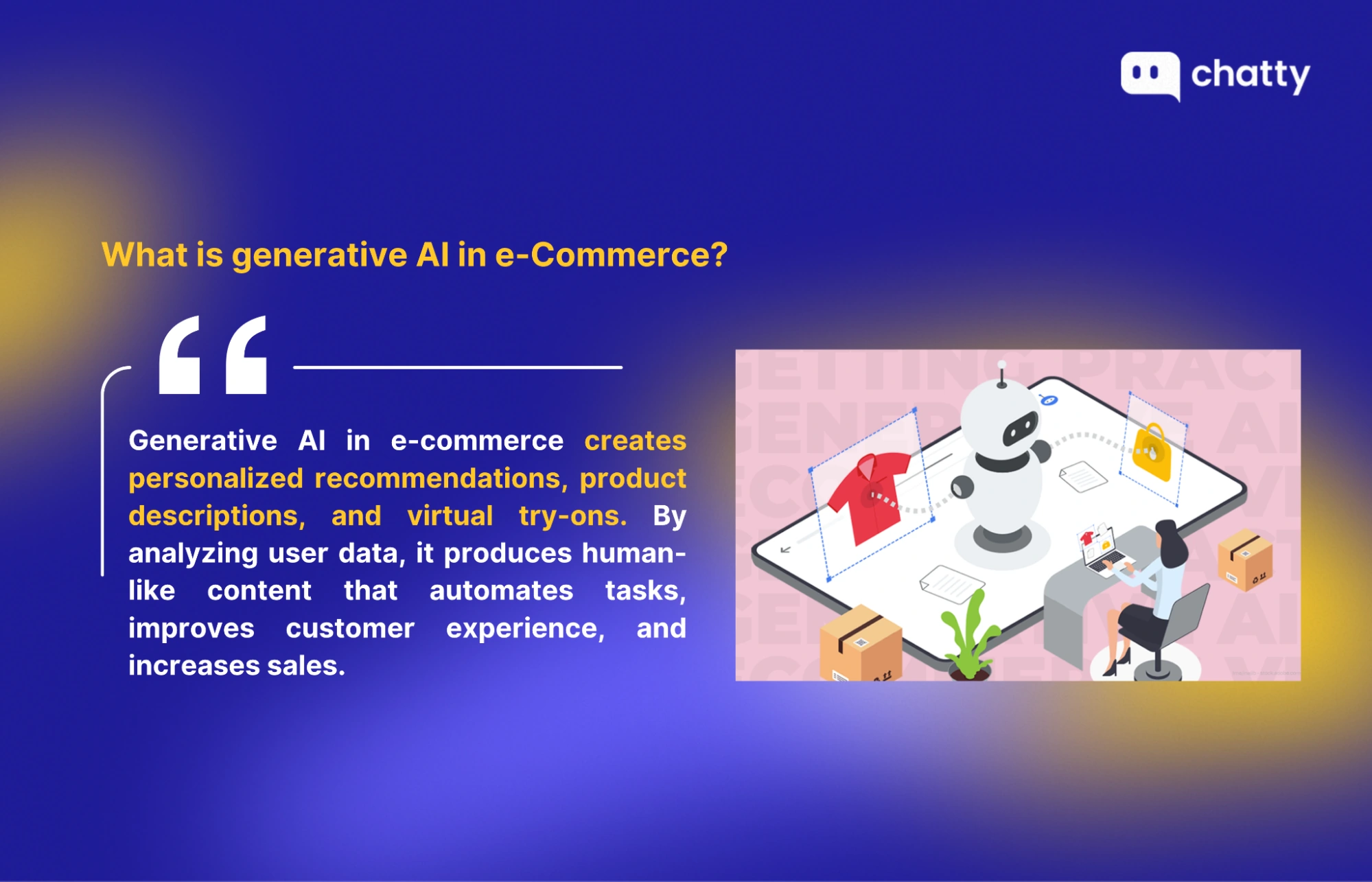
Generative AI in e-commerce is an AI approach that learns from product data, customer actions, and images, then creates new content that fits what shoppers actually need. It helps brands go beyond manual writing or editing by producing clear descriptions, realistic product visuals, and helpful responses at scale.
For example, a model can study similar items, identify which features customers compare most, and rewrite a product description to be more accurate and easier to understand.
Common forms include:
- Tools that generate text, such as product descriptions, FAQs, or personalized emails.
- Tools that create or refine images to show new colors, backgrounds, or missing angles.
- Conversational assistants that answer shopper questions with specific, product-level details.
Benefits of generative AI in e-commerce
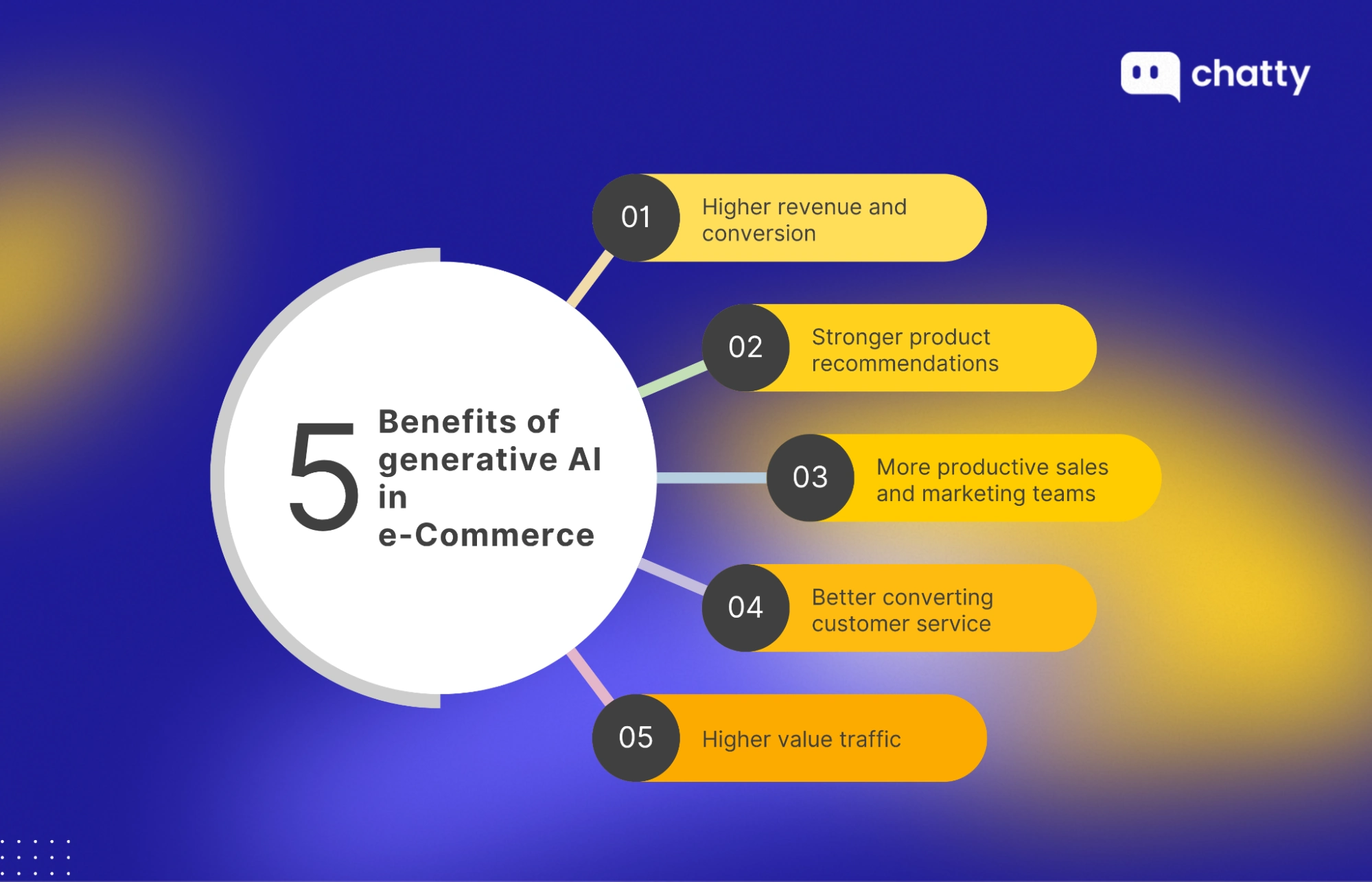
Generative AI brings very real, measurable gains for ecommerce brands, such as:
- Higher revenue and conversion: AI personalization can increase online store revenue by 10-15% on average and up to 25% for leaders because shoppers see products that match their real interests.
- Stronger product recommendations: AI analyzes browsing behavior, past purchases, and even search terms to suggest items that fit each shopper, reducing choice overload and making it easier for customers to add the “right” products to cart.
- More productive sales and marketing teams: Generative AI takes over repetitive tasks like drafting product copy, email variations, and basic reports so human teams can focus on strategy, creative testing, and bigger campaigns.
- Better converting customer service: AI chat converts about 12.3% of users compared with 3.1% without chat, so visitors who talk to an assistant are almost four times more likely to buy.
- Higher-value traffic: Retailers report an 84% increase in revenue per visit from AI-influenced shopping sessions, showing that AI not only drives traffic but also brings buyers.
The three transformations GenAI brings to e-commerce
Generative AI is reshaping online stores by speeding up content work, improving the shopper experience, and keeping revenue growing even when your team is busy.
1. AI speeds up creativity
AI tools can turn a short prompt into product photos, lifestyle images, ad ideas, and first draft descriptions in just a few minutes. This helps you launch new collections faster and test more angles for your campaigns without waiting for studio slots or long agency timelines.
In one case, a large furniture retailer used generative AI to rewrite and enrich descriptions for more than 61,000 SKUs, reducing manual copywork by most of the original effort and making each page clearer and more consistent.
The result was better search visibility and a clear lift in conversions because shoppers could finally understand the products without digging through vague or thin content.
2. AI upgrades customer experience
Modern Gen AI chat can handle long, multi-step conversations, help compare products, and answer detailed questions about fit, materials, or returns in a very natural flow.
At the same time, AI learns from browsing and purchase data to refresh recommendations and reorder blocks on the page so each shopper sees products that match their style and intent.
Beauty brand Sephora uses an AI-driven Virtual Artist tool that lets shoppers try on makeup with a camera, then suggests matching shades and related products. This kind of experience makes people more confident in their choice and reduces the back-and-forth that usually leads to cart abandonment or returns.

3. AI automates revenue activities
Gen AI can support merchandising by suggesting which products to feature together, which bundles to promote, and how to price or discount for different customer groups. It can also create and adjust email flows, on-site messages, and ad variations based on how people actually respond, not just on a fixed calendar plan.
Some ecommerce brands now use AI to tailor email content, product blocks, and send time for every subscriber, so each person sees items that match what they really buy.
Over time, this kind of system keeps learning and fine-tuning messages and placements, so your store continues to improve revenue even when your team is offline or focused on planning the next big launch.
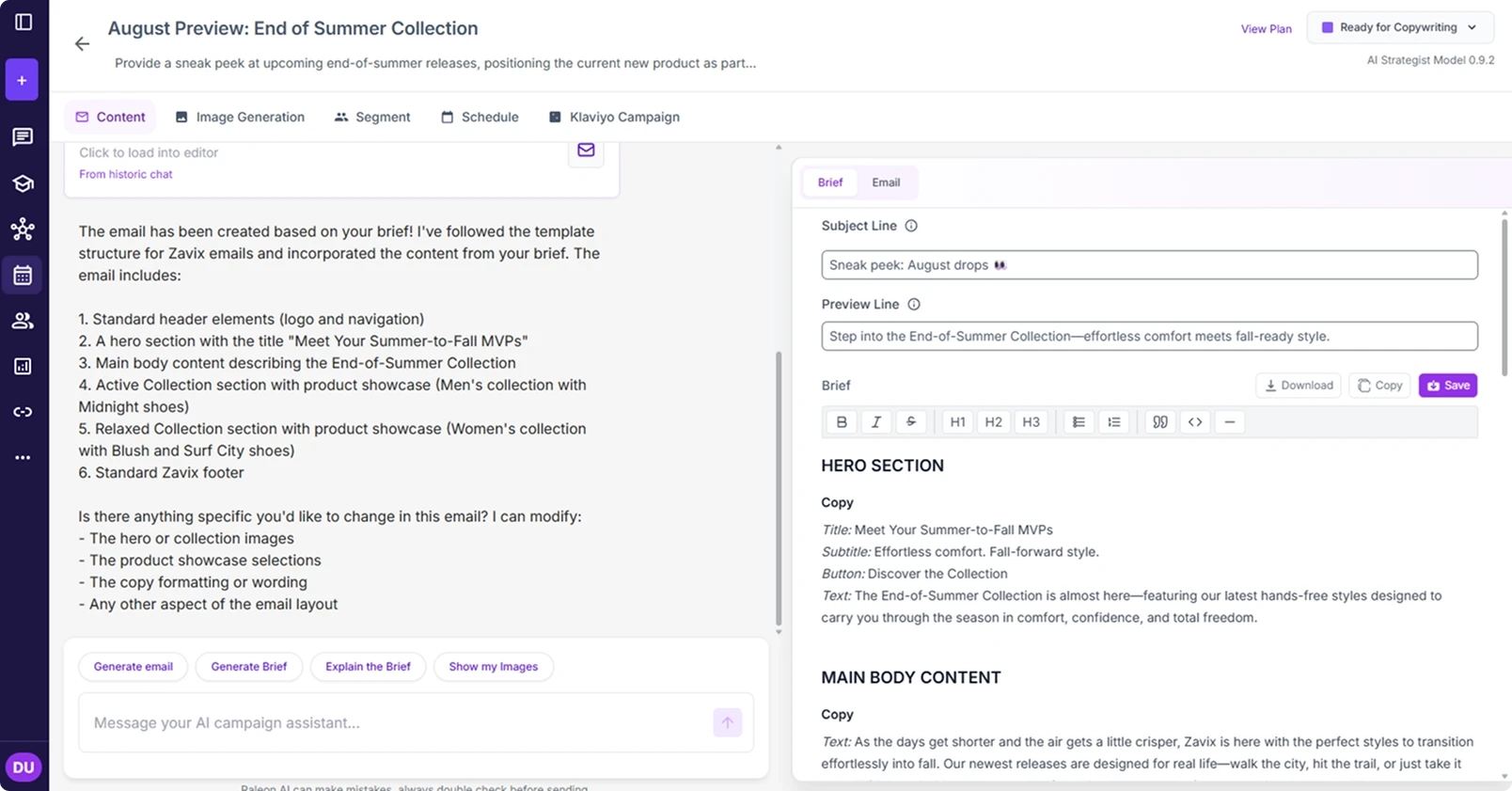
Image source: Raleon
The most practical generative AI use cases in e-commerce
Generative AI in e-commerce shines when it is tied to clear, everyday jobs inside your store. The use cases below are the ones teams actually use to save time, sell more, and give shoppers a smoother experience from first click to post-purchase.
1. AI shopping assistants
AI shopping assistants live in your chat bubble and answer customer questions in real time, instead of making people dig through FAQs or wait for email replies. They use large language models plus your own catalog and policy data, so they can understand natural questions and reply with specific products, rules, or next steps.
AI shopping assistants often handle:
- Questions about sizing, fit, materials, and care instructions before purchase
- Product discovery for queries like “running shoes for flat feet under 100”
- Order status, shipping updates, and basic return questions
- Cross-sell and upsell suggestions during the conversation
Chatty is one example that focuses on turning chat into a sales and support channel for Shopify brands by mixing live chat, automation, and AI product suggestions. With this setup, the bot handles common questions and simple sales while your human team steps in only when needed, protecting the customer experience without growing headcount too quickly.
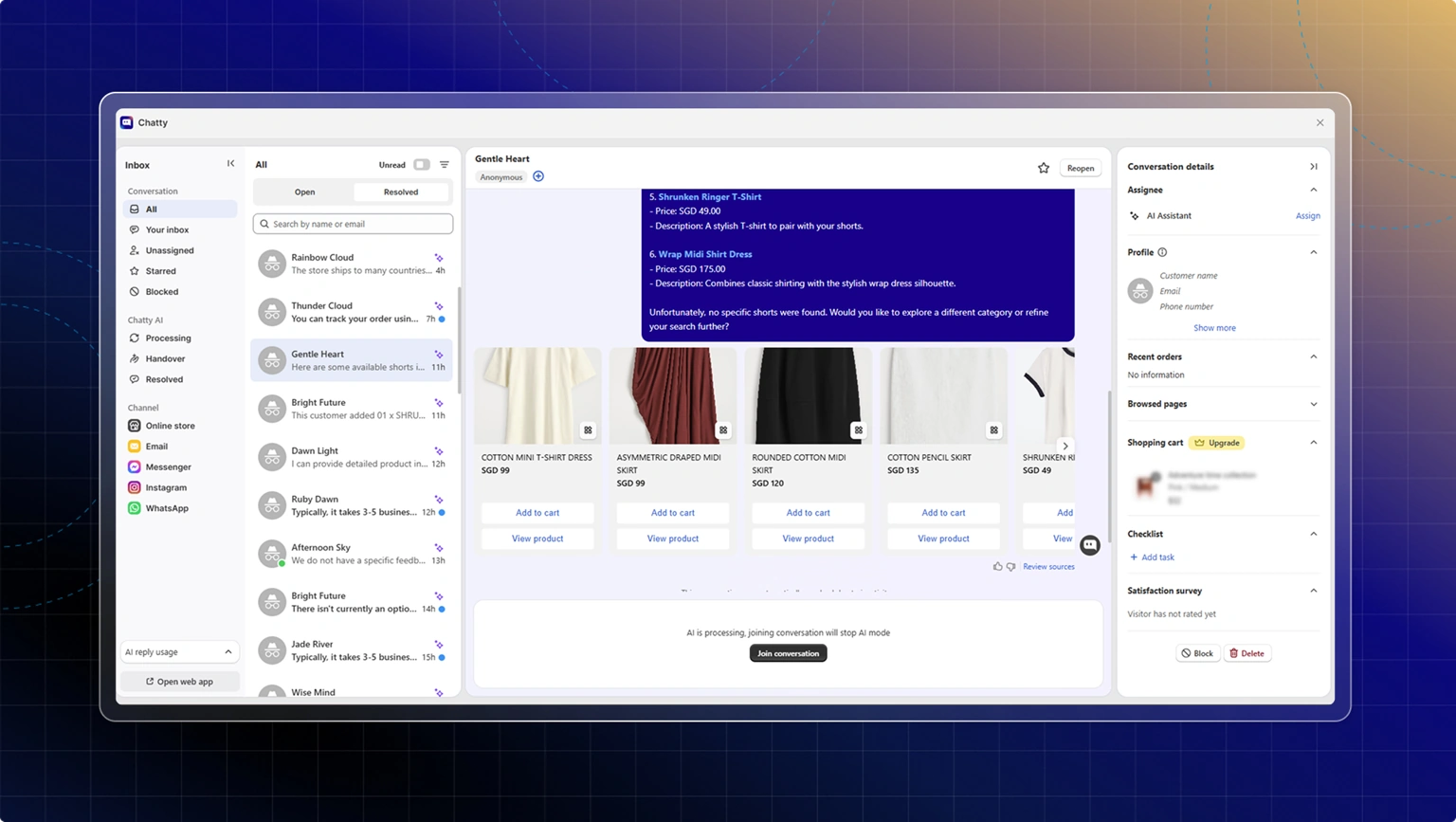
2. AI for product content creation
Generative AI can turn structured product data into clear titles, feature bullets, descriptions, and sizing guides at a speed that humans alone cannot match. You define the brand tone, length, and SEO keywords once, then reuse that style across new collections and channels so every page feels consistent.
AI content tools are often used to:
- Generate first draft descriptions from specs and short briefs
- Adapt copy for different marketplaces and languages while keeping the same core message
- Include target keywords and a structure that supports organic search
- Refresh weak or thin legacy descriptions at scale
Tools inspired by Phrasee and other AI copy platforms already produce descriptions and email lines that match brand voice while staying optimized for clicks and engagement.
The impact in practice is faster catalog launches, fewer thin or missing descriptions, and stronger SEO foundations, as every product page includes rich, structured text for search engines to index.
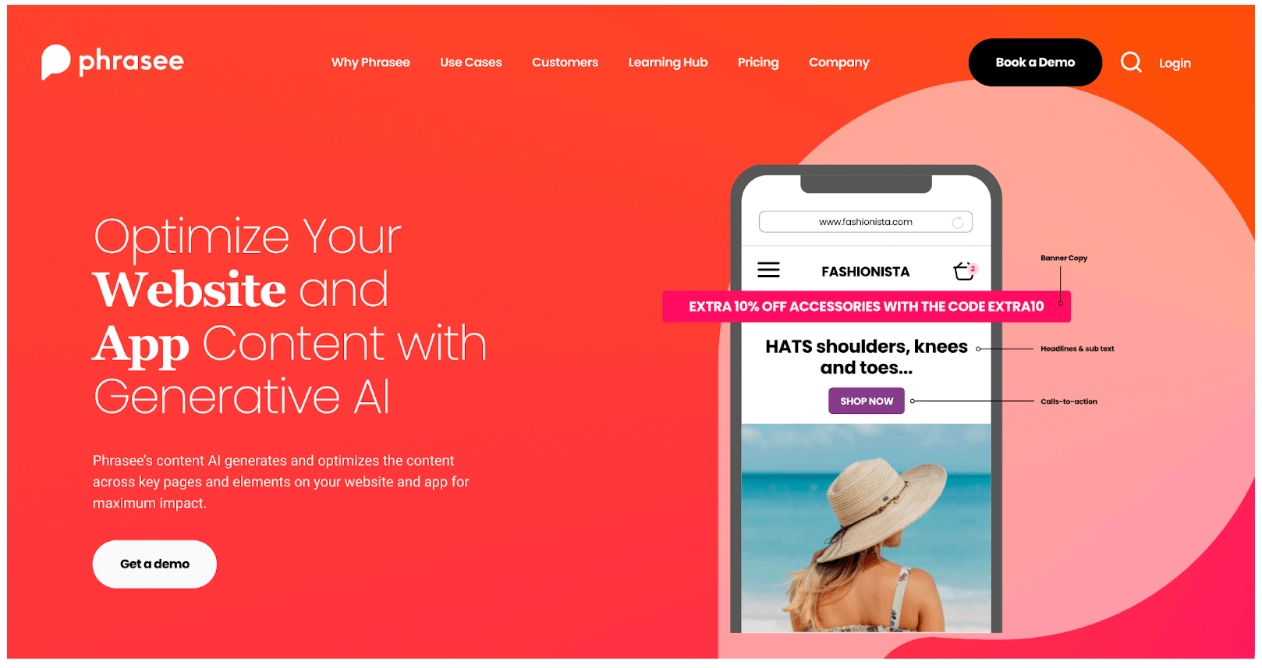
Image source: UX Design Institute
3. AI visual creation for stores & ads
On the visual side, generative image models can create product and lifestyle images from text prompts or a few reference photos that match your brand style. Once you have a good setup, marketers can request new scenes for seasons, promotions, or audiences without booking a studio and a full crew.
AI visual creation is especially useful for:
- Producing product shots on clean backgrounds in different colors or angles
- Generating seasonal homepage banners and promo graphics quickly
- Creating lifestyle mockups, such as furniture in different room styles or clothes on different body types
- Generating extra variations for paid ads to test performance
Brands are already using tools like Adobe Firefly and similar systems to create on-brand images in minutes instead of days. This lowers creative costs, speeds up campaigns, and gives you many more variations to test so you can double down on visuals that actually convert for your audience.

Image source: TechCrunch
4. Personalized storefronts generated in real time
With AI-powered personalization, your store does not have to show the same homepage and category layout to everyone. The system can shuffle sections, highlight different products, and adjust copy based on each visitor’s behavior, location, and history with your brand.
Real-time personalized storefronts often include:
- Different hero banners and product blocks for new visitors versus repeat buyers
- Category pages are ordered around what a specific shopper tends to click and buy
- Widgets like “recommended for you” and “complete the look” that refresh on every visit
- Dynamic content that reacts to campaigns, stock levels, and browsing context
Research on auto-generated flows shows that this kind of per-user site can be built from behavioral and demographic data instead of only static rules. For your store, that means each shopper feels like the shelves were set up for them, which usually leads to more clicks, more add to carts, and higher revenue from the same traffic.
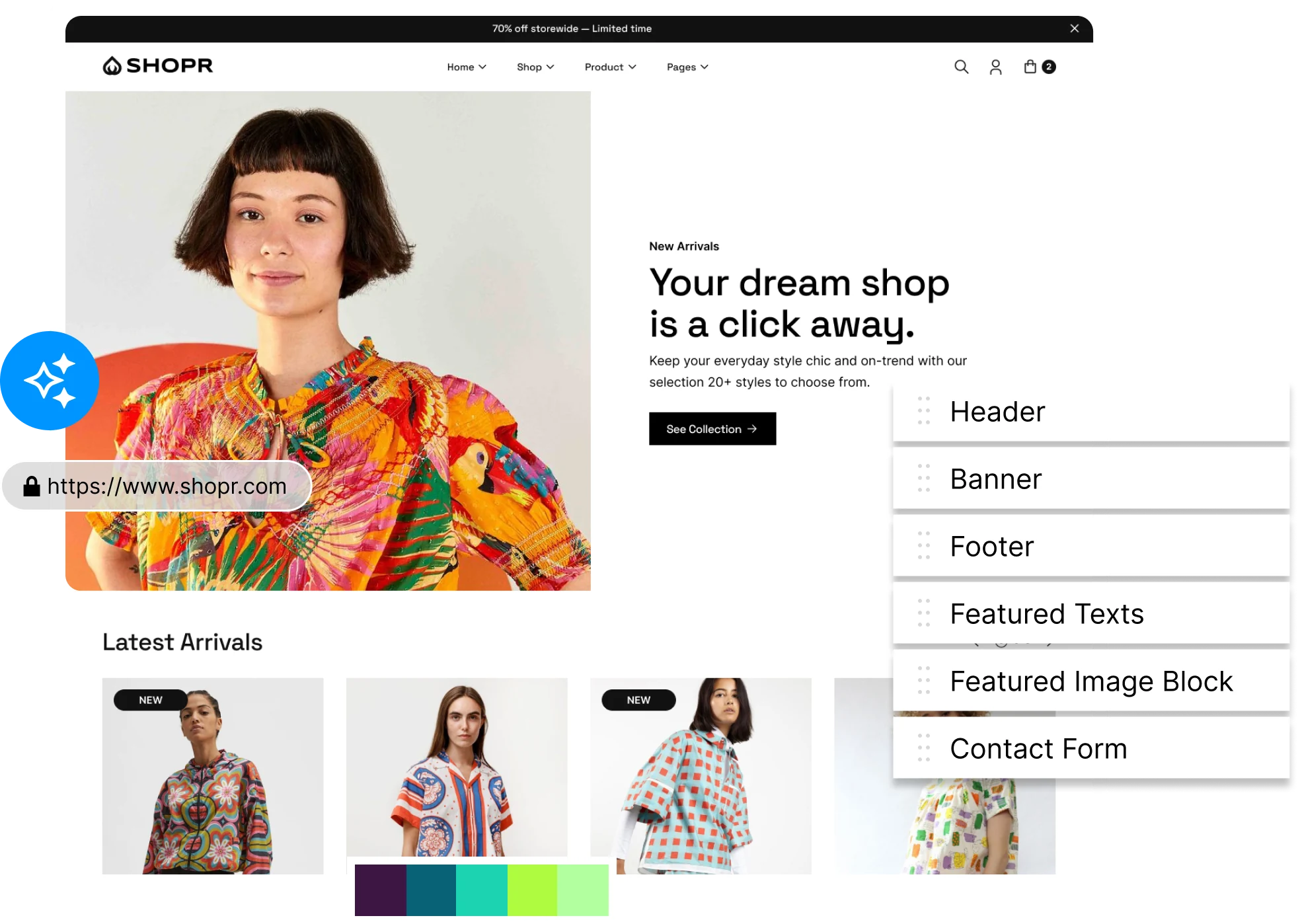
Image source: eComchain
5. AI-generated marketing campaigns
Generative AI is very good at turning one campaign idea into many versions of copy for email, SMS, and ads. You give it the offer, segment, and guidelines, and ask for multiple hooks tailored to new customers, loyal fans, or people who have not bought in a while.
AI marketing workflows often cover:
- Writing many subject lines and previews from a single brief
- Drafting email bodies and SMS messages for different audience segments
- Suggesting ad angles and headlines for performance and social channels
- Creating talking points or scripts that influencers can adapt to their own style
Some tools plug into your performance data so they can suggest the next campaign themes based on past winners and gaps in your calendar. This helps teams ship more tests, keep creative fresh, and spend their time on strategy and offers instead of getting stuck at the blank page for every send.

Image source: Braze
6. AI Insights: Summaries, diagnostics & forecasts
Generative AI can read large amounts of unstructured text and turn it into simple insights, which is perfect for reviews, surveys, and support logs. Instead of manually reading thousands of comments, you can ask the model to list the main reasons people love a product and the main reasons they return it.
Practical AI insight use cases include:
- Summarizing review themes across products or categories
- Surfacing top complaints that need fixes in content, product, or service
- Forecasting demand for product lines based on history and trends
- Flagging anomalies and potential fraud patterns in orders or payments
These insights feed into buying, inventory, marketing, and product teams so they act on data instead of gut feeling alone. Over time, this means better decisions with less manual analysis, fewer stock surprises, and a clearer picture of what is really driving satisfaction or churn.
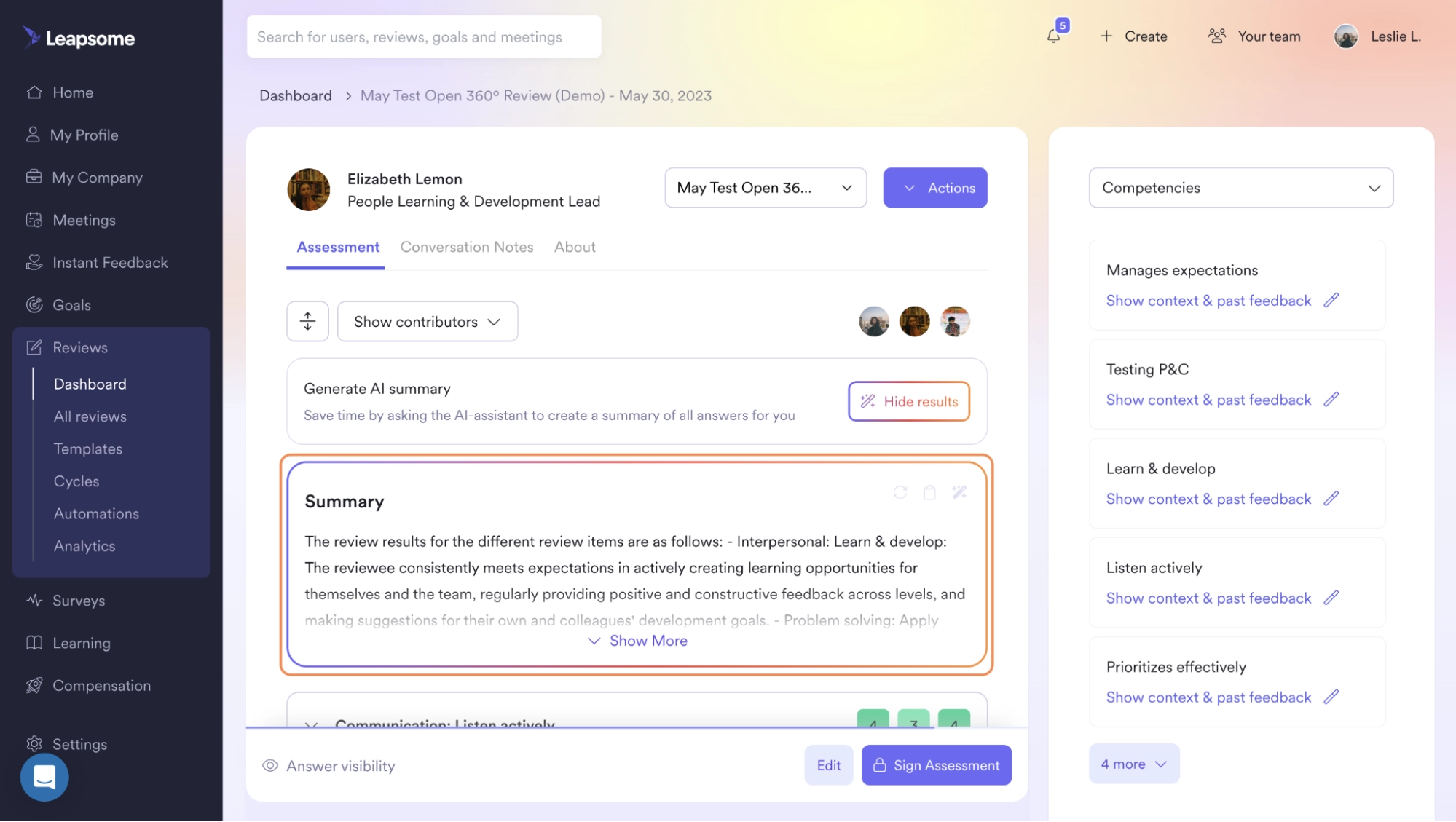
Image source: Leapsome
7. AI merchandising & store optimization
AI merchandising engines watch what customers do in real time and adjust which products get the best positions in your store. Strong sellers and rising items naturally move into featured slots while slower products drop down or move into bundles and promo areas.
Common AI merchandising actions include:
- Promoting current bestsellers and trending products to the top of the page
- Pushing slow movers lower or grouping them in bundles where they make more sense
- Building cross-sell suggestions based on real baskets, not just manual rules
- Factoring margin, stock, and return rates into what gets promoted
Because the system keeps learning from live behavior, it can react faster than manual merchandising, especially in large catalogs. Your team then spends more time setting smart rules and brand guardrails and less time dragging tiles around, while the store keeps uncovering extra revenue opportunities in the background.
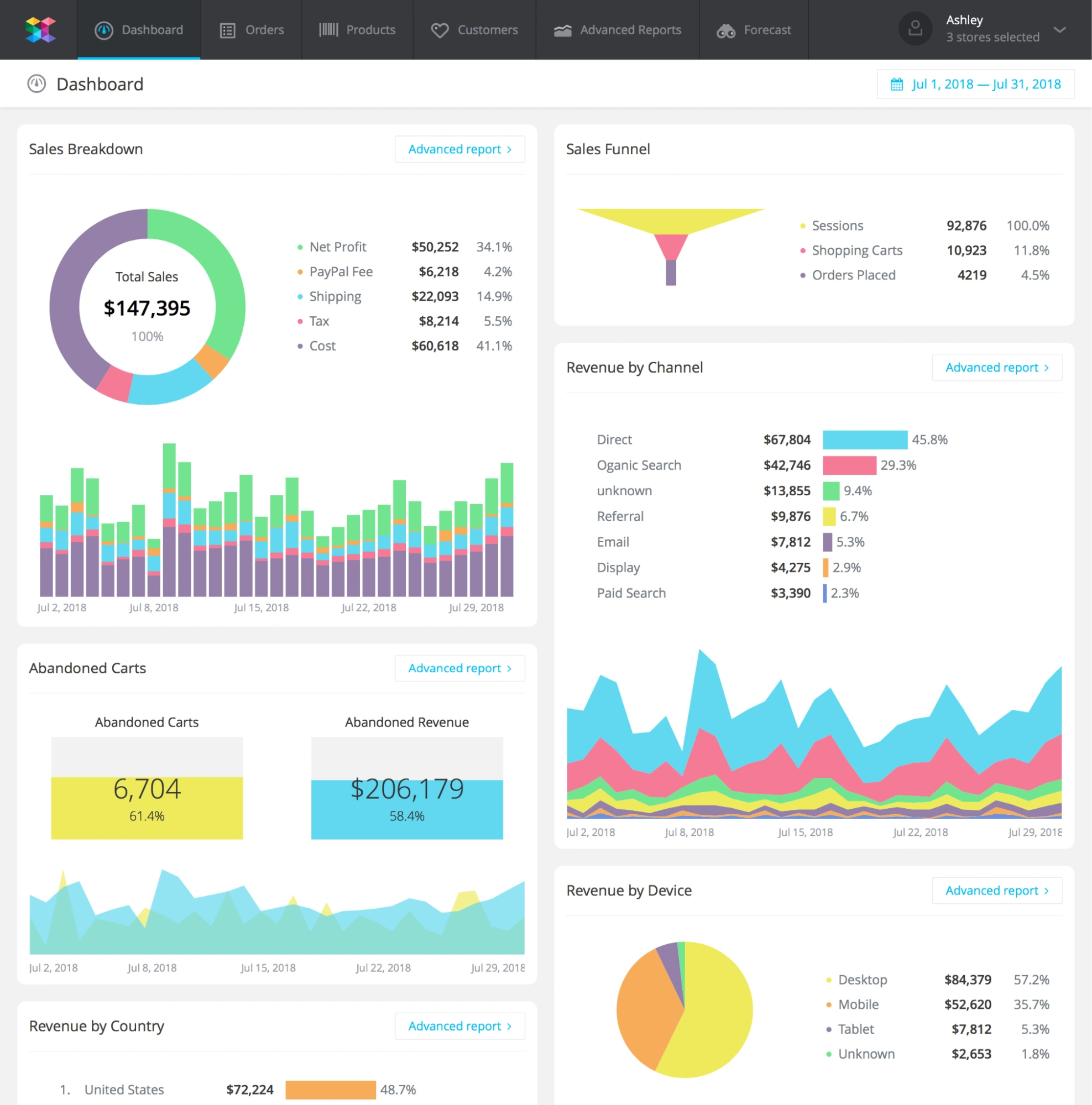
A visual dashboard showing real-time sales and behavior data — the foundation for AI-driven merchandising decisions. (Image source: Coupler.io)
What generative AI means for e-Commerce teams
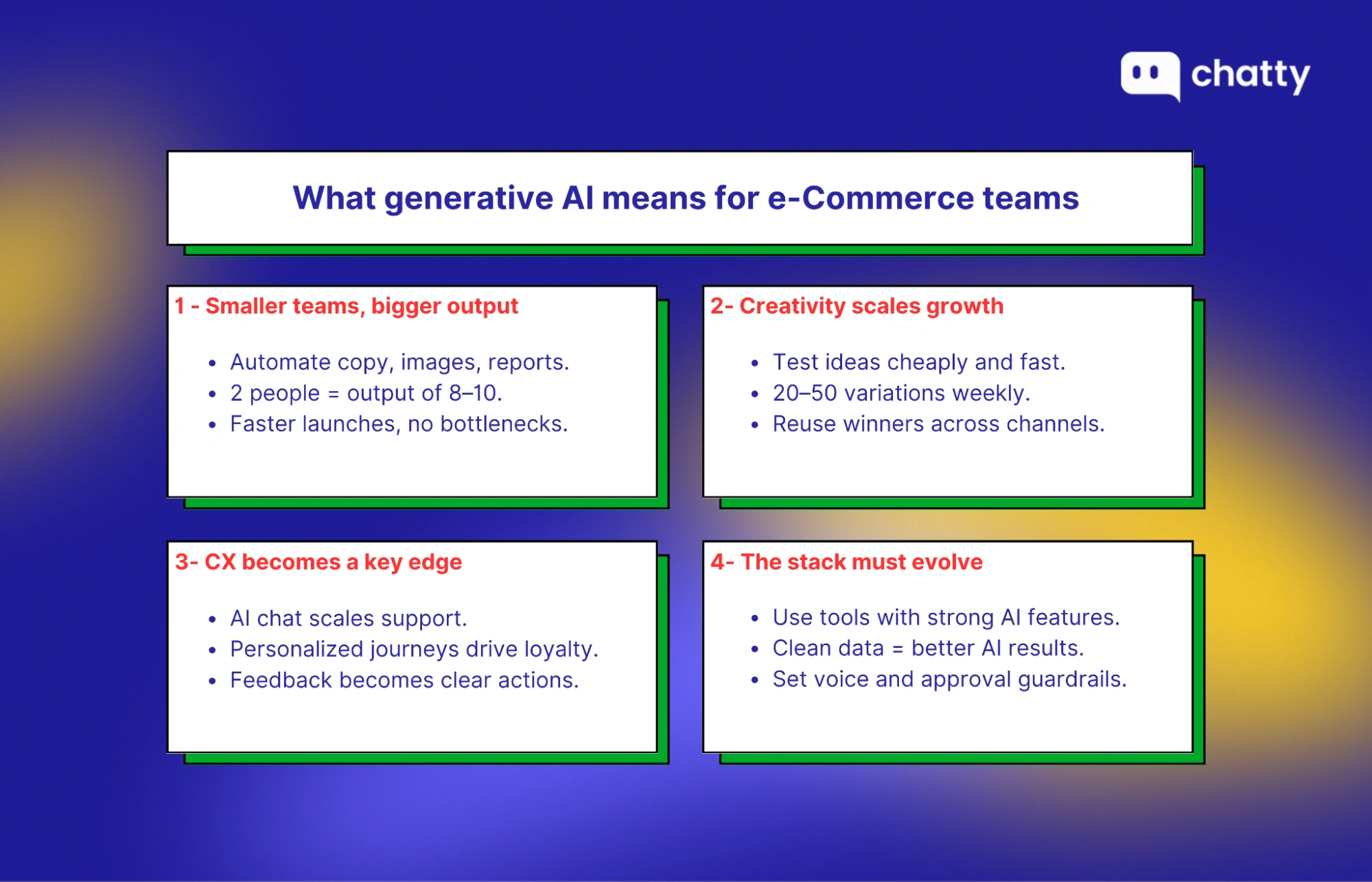
When you connect all these use cases together, generative AI changes what small teams can handle, how creativity drives revenue, where you win against competitors, and which tools belong in your stack. Specifically:
Smaller teams can do bigger things
With generative AI, a content or marketing team of 2 people can now produce as much output as a team of 8 to 10 used to create by hand. Routine work like descriptions, images, basic reports, and first draft emails can be automated, so humans spend more time on strategy, brand, and offers.
In practice, this means teams can:
- Launch more products without hiring a big copy or design squad.
- Keep every channel updated instead of letting some marketplaces or languages lag.
- Respond faster to trends, seasons, and competitors instead of missing the moment.
Creativity becomes a growth engine
When AI handles the heavy lifting, the cost of testing new ideas drops a lot, so creativity becomes a direct lever for growth instead of a bottleneck. You can move from a handful of campaigns per quarter to dozens of small controlled tests across email, ads, and on-site content.
Teams can now:
- Test 20 to 50 versions of a message or creative in a week, then keep only the winners.
- Recycle what works into new formats like SMS, social, and influencer scripts.
- Use insights from AI to brief designers and writers with more precise directions.
CX becomes your competitive advantage
As AI assistants, smarter recommendations, and personalized storefronts get better, customer experience becomes a key way to stand out. Shoppers start to expect instant answers, tailored product suggestions, and pages that feel built around their needs, not generic catalogs.
For ecommerce teams, this means:
- Support can scale with AI chat without linearly growing headcount.
- Personalization is no longer a nice extra but a core driver of loyalty and repeat purchases.
- Feedback and reviews can be turned into clear actions instead of sitting in spreadsheets.
The tech stack needs to evolve
To unlock all of this, your tools need to work smoothly with AI rather than sit on an island. Page builders, chat tools, CRMs, analytics, and ad platforms all need ways to send data into models and bring AI output back into daily workflows.
Strategically, this pushes teams to:
- Favor apps that offer native AI features and strong integrations over legacy tools built only for manual work.
- Clean and structure product and customer data so AI can actually use it well.
- Set clear guardrails for brand voice, approval flows, and measurement so AI becomes a reliable co-worker, not a side experiment.
Roadmap: How brands should adopt generative AI
Once you know what generative AI can do and how it changes team workflows, the next question is where to start so you see real results without overwhelming everyone. This roadmap will clearly display the steps.
Step 1: Start with content creation
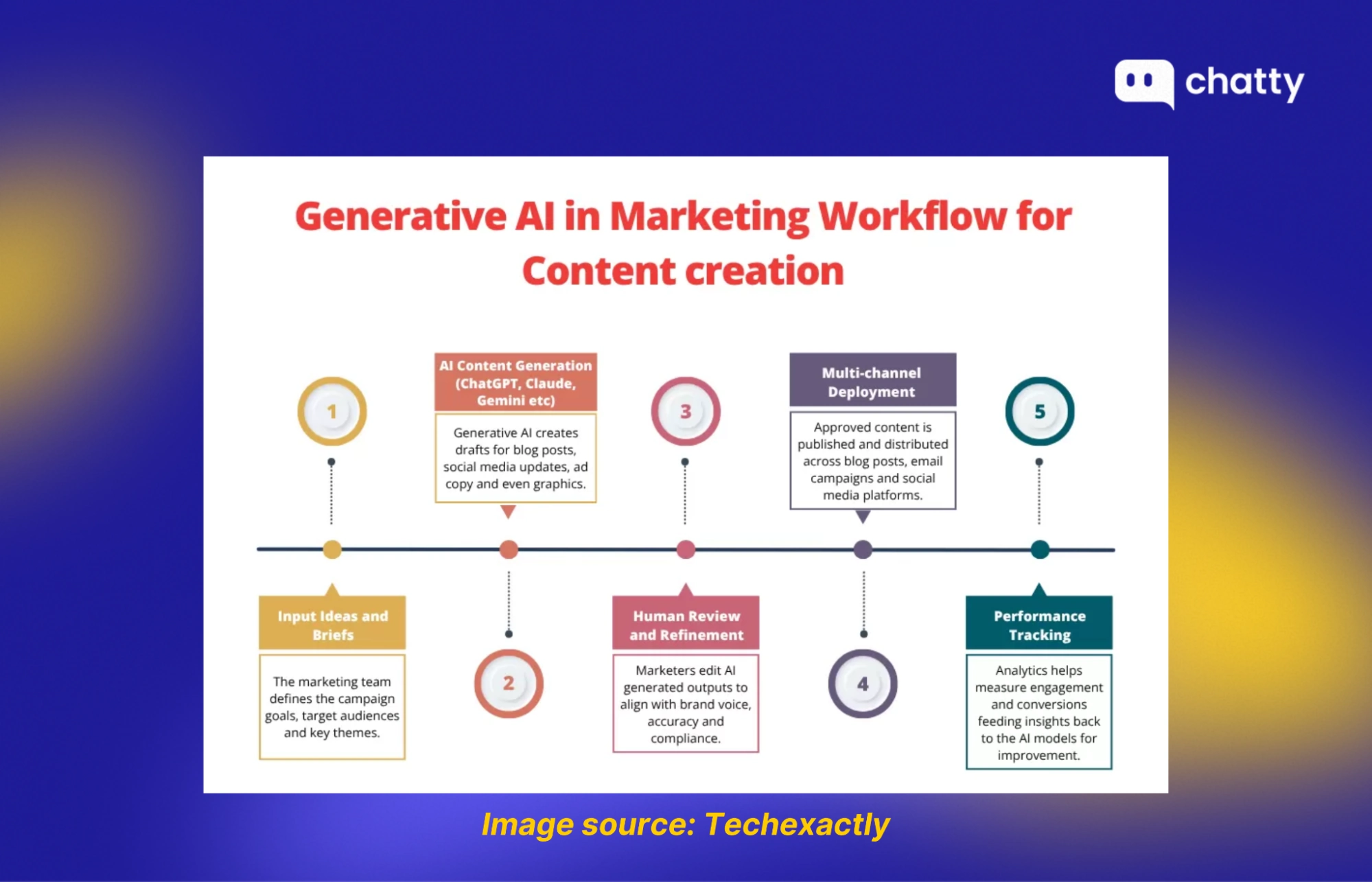
Content is the safest starting point because everything goes through a human review before reaching customers. You stay close to your product data, you control the voice, and you get fast, visible wins.
Start with content like:
- Product titles and descriptions for new or long tail SKUs
- Collection and landing page copy for key campaigns
- Ad headlines, primary text, and simple social captions
Set a few clear rules for tone, banned phrases, and structure, then let AI create the first draft and have your team polish the rest. This way, you learn how to work with the tools while keeping risk low.
Step 2: Add AI to your customer experience
When content feels under control, bring AI into customer touchpoints to remove friction and answer questions faster. Start small, measure the impact, and expand from there.
Good early CX pilots include:
- A chat assistant for FAQs, sizing, and simple “where is my order” queries
- On-site product recommendations that react to browsing history
- Guided finders that ask a few questions and suggest a short list of products
Ensure a clear handoff to humans for complex cases so shoppers never feel stuck with a bot that cannot help.
Step 3: Automate repetitive revenue tasks
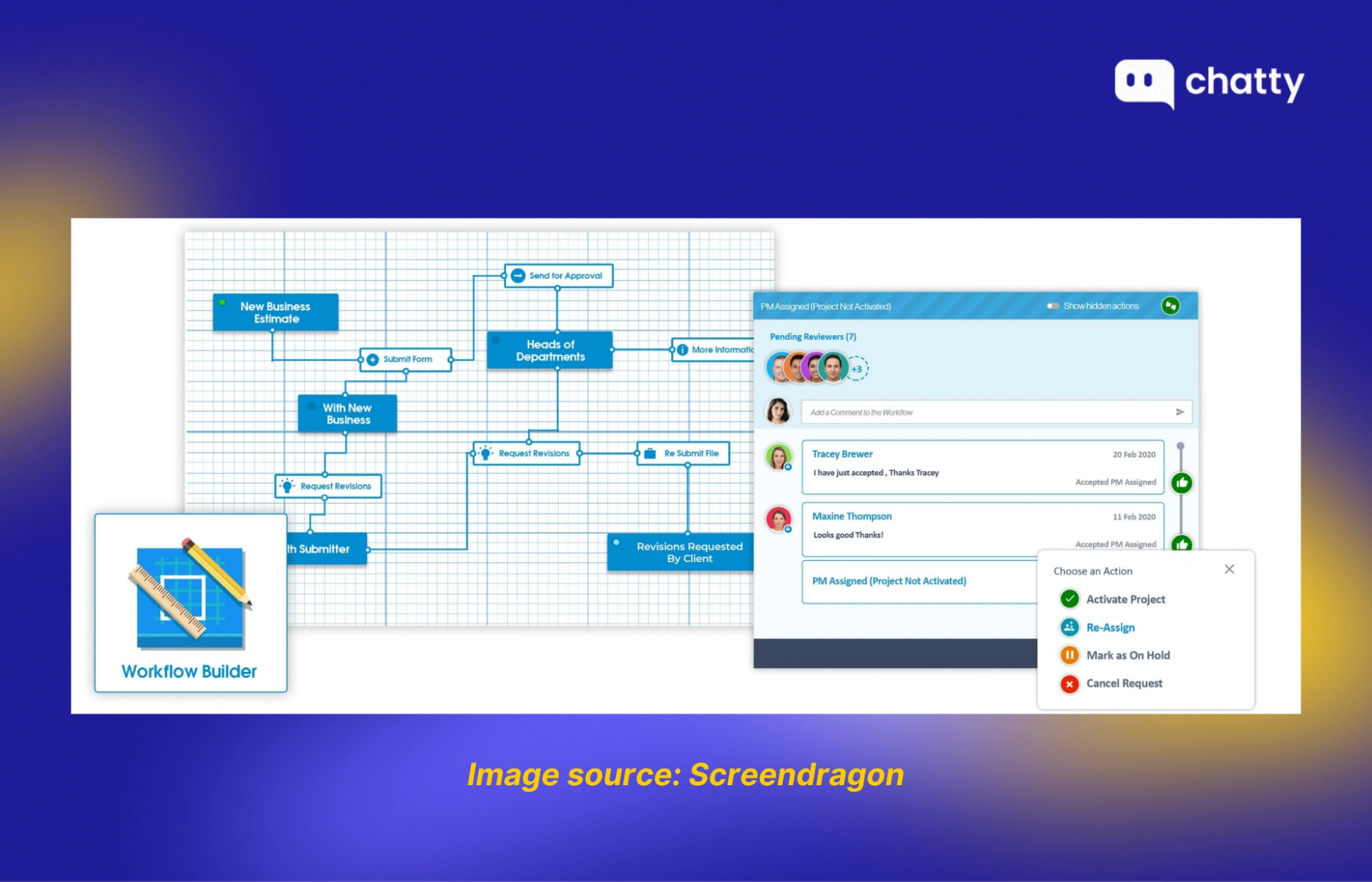
In this step, use AI for work that often repeats and involves precise numbers, so you can quickly see whether it helps. Good examples are refreshing lifecycle email flows, generating new ad angles and creatives, and updating simple merchandising rules that push bestsellers up and move weak items down.
You are not changing your growth strategy here; you are letting AI handle busywork so your team can focus on planning, testing, and analysis. Make sure the CRM, performance marketing, and merchandising owners stay involved so automations follow real business goals rather than whatever the model suggests by default.
Step 4: Move toward an AI-powered storefront
The final step is to let AI shape the entire shopping journey rather than handle isolated tasks. This is where data quality and stack integration matter much more.
An AI-powered storefront often includes:
- Pages that adapt layout and products for each visitor segment
- Dynamic offers that adjust to stock, demand, and customer value
- Predictive insights feed buying, pricing, and campaign planning
At this stage, treat AI as part of your core commerce engine and plan data cleanup, tech upgrades, and governance in parallel, so the system can stay reliable as you scale.
Future outlook: The AI-native store
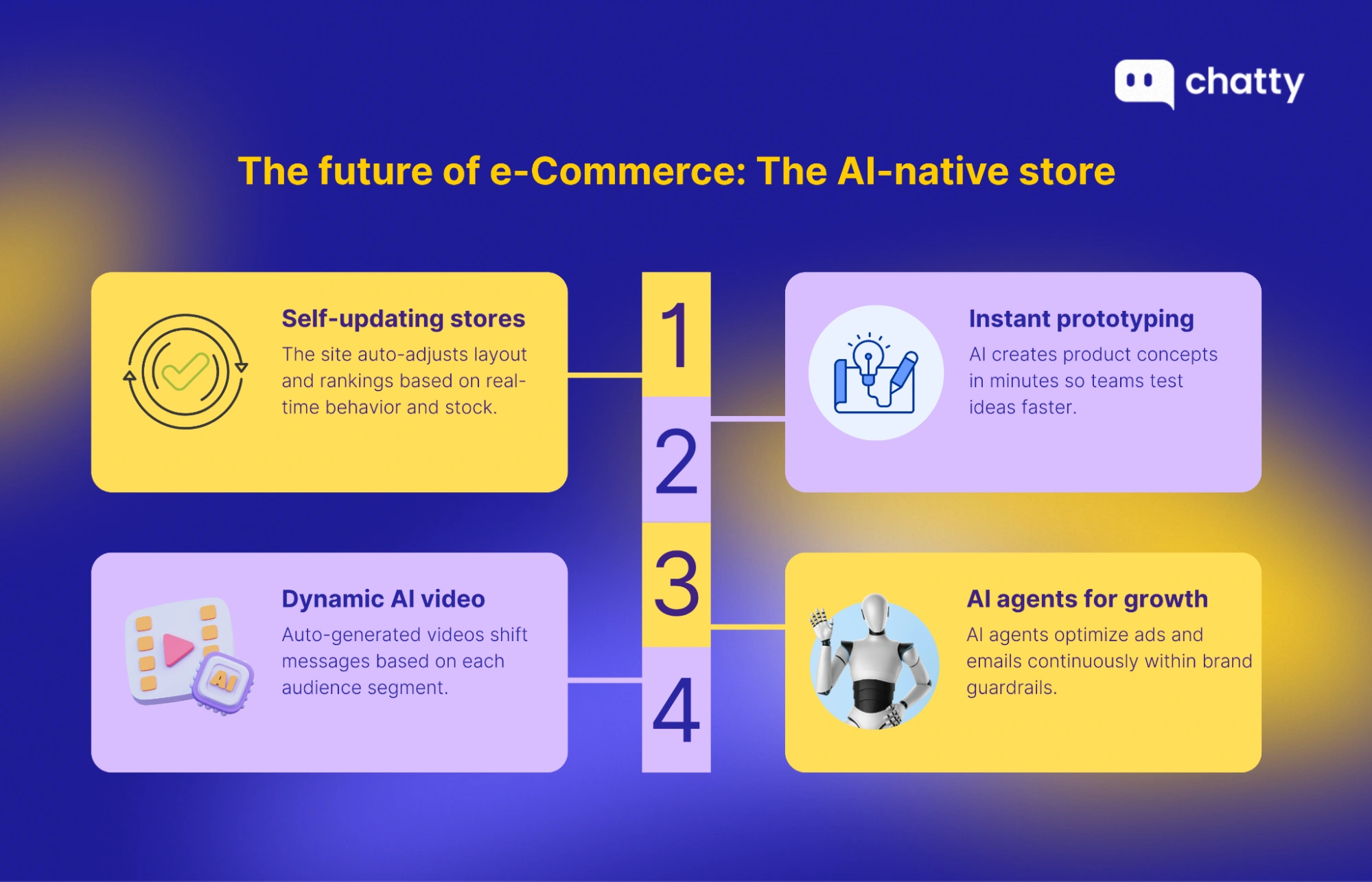
An AI native store is the next stage of e-commerce, where most of the work under the surface runs on live data and intelligent systems, while people focus on brand, product, and strategy. In the near future, 4 shifts will matter most for how these stores feel and perform.
Self-updating stores
In an AI native store, product rankings, recommendations, and banners adjust all day based on behavior, stock, and demand. Each visitor sees a slightly different version of the site that reflects what is happening right now, not last week’s manual changes. Your team spends less time moving tiles and more time setting rules for margin, inventory, and priority products.
Instant prototyping
Generative models can explore new colors, packaging ideas, and product concepts on screen in a few minutes. You test many options against brand rules and early data, then only pay for physical samples of the best ones. This faster loop helps even small brands react to trends while they are still relevant.
Dynamic AI video
Simple demo clips, fit explainers, or how-to use videos will be generated in many lengths and formats from one idea. The same product can highlight different benefits for different audiences based on their behavior and profile. Rich storytelling becomes possible without a big production budget or constant reshoots.
AI agents for growth
Dedicated AI agents will watch ad accounts, email flows, and experiments, and then suggest or apply changes inside clear guardrails. One agent may tune bids and audiences while another rotates subject lines and segments based on live results. The strongest brands keep humans in charge of direction and let agents handle the constant, detailed optimization work.
Final thought
We are at a point where generative AI use cases in e-commerce are shifting from “nice experiment” to daily, revenue‑driving workflows. When we plug AI into content, CX, and merchandising, small teams can act like much bigger ones without losing control of the brand. The stores that learn to work with AI now, instead of waiting, will be in the best position when customer expectations rise again.
FAQs
No, generative AI is valuable for businesses of any size, not just big e-commerce brands. Small and medium shops can use it to quickly create product content, optimize SEO, personalize marketing, and automate routine tasks, helping them compete more effectively without needing large resources.
Generative AI replaces repetitive tasks, not the need for human judgment, strategy, and brand thinking. Roles that only do basic copy or simple support are at risk, but new roles appear around prompt design, AI supervision, and higher-level CX and growth strategy.
AI content does not harm SEO by itself. Problems come from low-quality, duplicate, or unhelpful text. If you follow SEO basics, add real value, and fact-check and edit AI drafts, you can improve search performance and keep trust with customers.
Train your AI with examples of your best content and a clear voice guide, then use prompts that describe your tone and rules. Always keep a human review step and update your guidelines and prompts based on what works, so the voice stays consistent across channels.
Predictive AI analyzes past data to forecast things like demand, churn risk, or the chance of a click or purchase. Generative AI uses patterns in data to create new content such as text, images, video, or personalized experiences like dynamic product descriptions and on-site messages.