











Customer success teams work in a fast-moving environment. Customer bases grow, products become more complex, and expectations keep rising. At the same time, decisions around retention, adoption, and expansion rely on early signals scattered across product data, support conversations, and customer interactions.
AI for customer success helps bring those signals together. By analyzing customer behavior, usage patterns, and communication in real time, AI provides teams with clearer visibility into risk, better timing for engagement, and greater consistency across the customer lifecycle.
In this article, we'll walk through how AI for customer success works in practice. Let's check!
- Retaining an existing customer costs 5–25x less than acquiring a new one, making AI-driven churn prediction critical.
A 5% improvement in customer retention can boost profits by 25–95%, giving AI health scoring and early warning systems an outsized return on investment.
- AI for customer success predicts churn weeks before it happens by monitoring usage drops and sentiment signals.
Unlike reactive traditional methods that detect churn after a cancellation notice, AI surfaces risk patterns early enough for CSMs to intervene and reverse the trajectory.
- 78% of customer experience leaders believe AI will determine whether their business wins or loses by 2027.
This is not a prediction about distant technology but a deadline: companies not building AI-driven personalization and proactive engagement into CS today are already falling behind.
- Generative AI assistants deliver 15% or greater productivity gains for customer success managers on routine tasks.
By automating QBR summaries, renewal forecasts, and status updates, AI frees CSMs to spend their time on strategic expansion conversations instead of administrative work.
- AI customer success differs from AI support because it focuses on long-term outcomes, not just faster ticket resolution.
Where support AI closes issues faster, success AI monitors adoption, flags expansion opportunities, and guides customers toward milestones that reduce churn risk proactively.
What is AI in customer success?
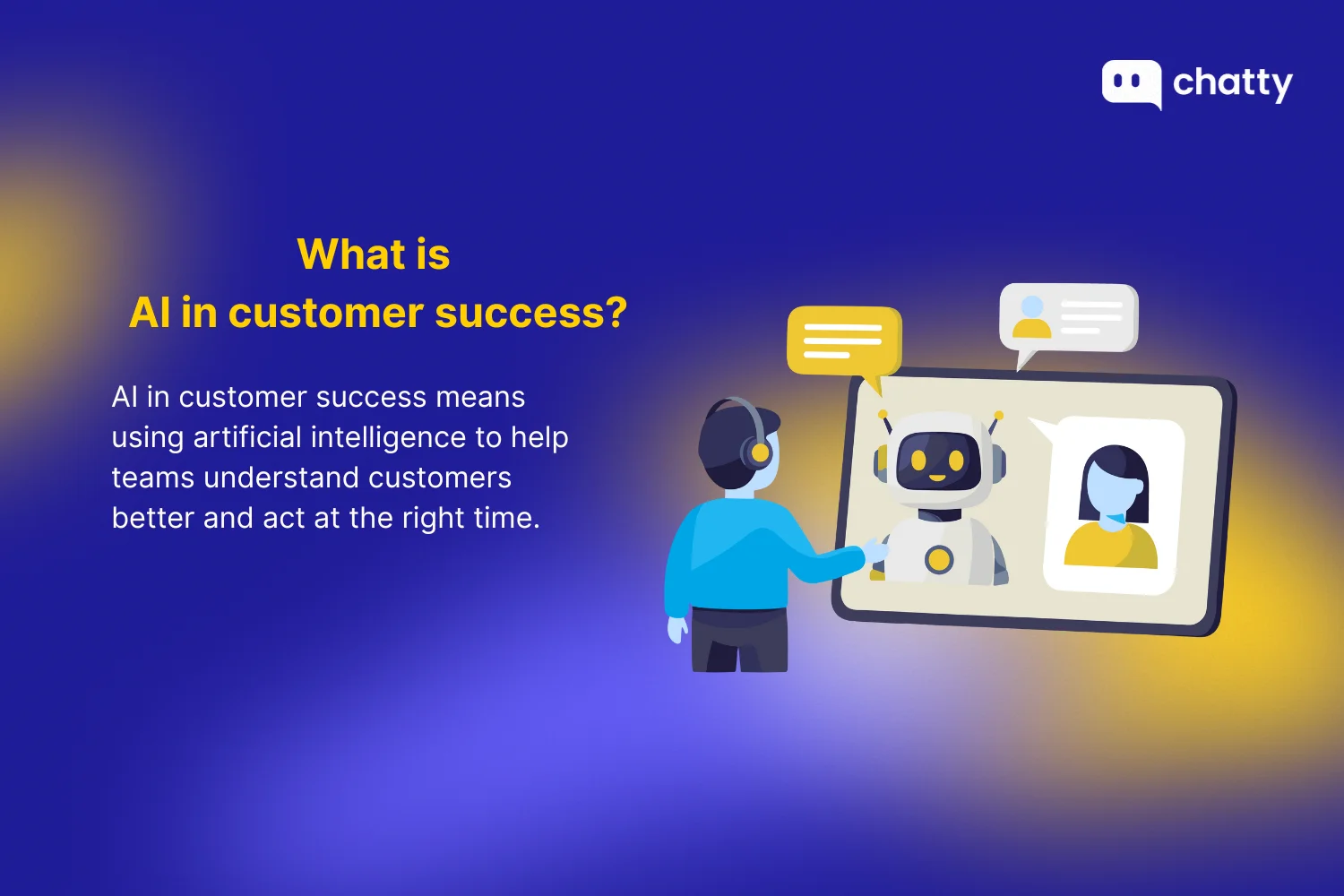
AI in customer success refers to using artificial intelligence to continuously analyze customer data, predict future outcomes, and recommend actions across the customer lifecycle. Its core role is to help teams anticipate issues and opportunities before they surface.
In practice, AI strengthens customer success in three critical ways. It turns fragmented data into a unified view. It converts patterns into predictions. It translates insight into timely action. As a result, teams move from reactive firefighting to proactive engagement.
To enable this, customer success platforms rely on several AI components:
- Machine learning, such as identifying usage patterns linked to churn
- Natural language processing, such as extracting intent from emails or calls
- Generative AI, such as drafting success plans or QBR summaries
- Predictive analytics, such as forecasting renewals and health scores
- Agentic AI, such as systems that trigger actions across tools without manual input
In some cases, AI in customer success is often confused with AI for support or simple automation. This confusion is understandable. All three use similar technologies. However, their objectives differ:
- AI for customer support focuses on resolving issues faster.
- AI for customer success focuses on outcomes such as adoption, retention, and expansion.
- Basic automation follows predefined rules, while AI adapts based on data and behavior.
5 Core benefits of AI for customer success (300-400 words)
Customer success teams are under pressure. Customer bases expand, products become more complex, and expectations rise, but headcount and time do not. AI closes this gap by helping teams understand customers faster and act earlier, without adding manual work.
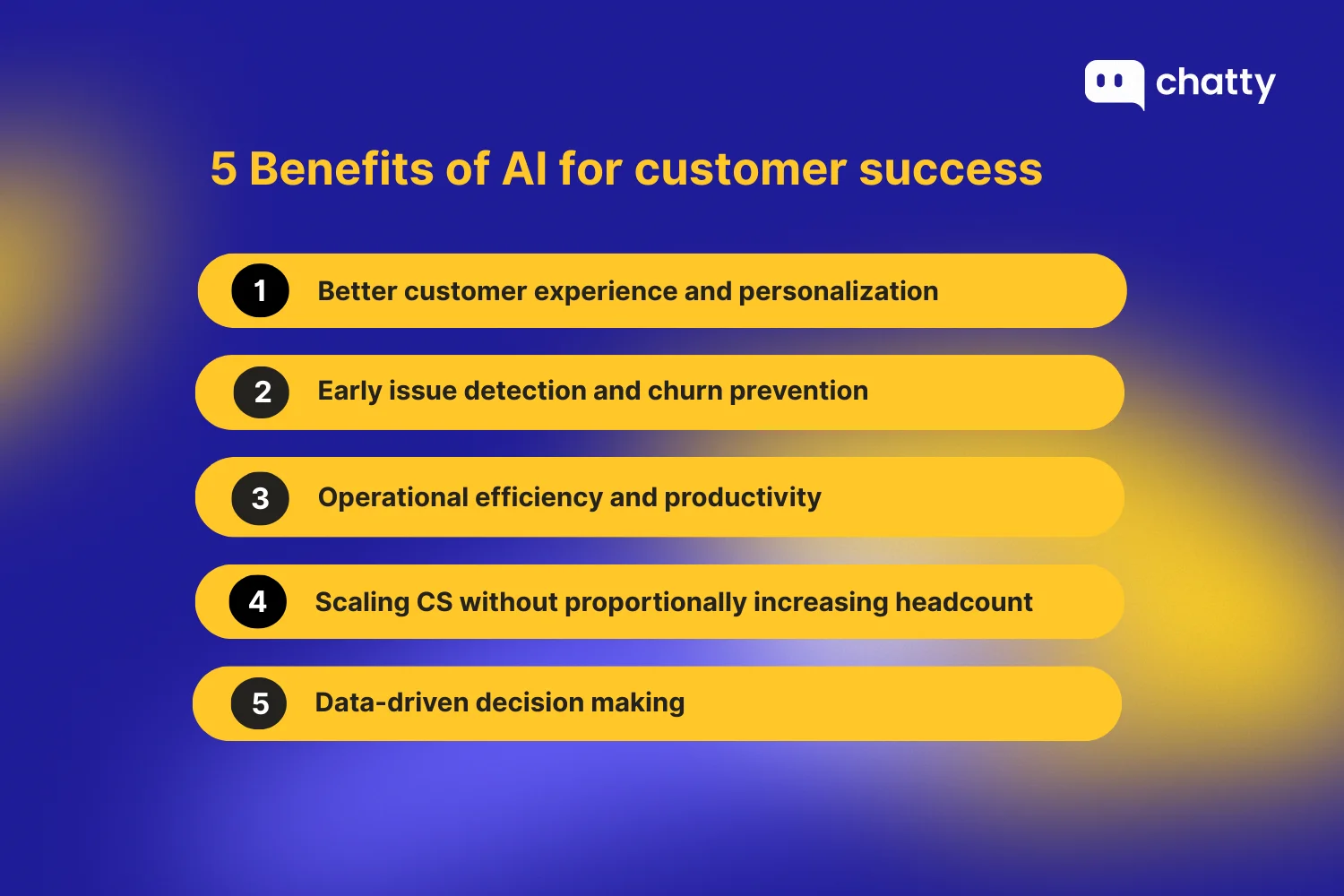
Better customer experience and personalization
Generic engagement fails to match today's customer expectations. Static segments and manual timing lead to irrelevant outreach and churn risks.
AI changes this by analyzing detailed behavior and preferences. Teams can tailor journeys and messages at scale, improving experience without proportionally increasing workload.
Research shows that 78% of customer experience leaders believe AI will shape or break business outcomes by 2027 because it enables deeper personalization and proactive engagement.
Early issue detection and churn prevention
Losing a customer is expensive. Acquiring a new one can cost 5–25 times as much as retaining an existing one, and a 5% improvement in retention can boost profits by 25–95%.
However, traditional churn detection reacts too late .AI changes this by continuously monitoring signals such as declining usage, negative sentiment, or repeated support friction. These models surface risk weeks in advance, giving teams time to intervene before outcomes worsen.
Operational efficiency and productivity
CSMs spend a large portion of their day on low-value work such as updates, notes, and routine emails. This reduces time for strategic activities.
AI automates these tasks and generates summaries, freeing capacity. Studies of generative AI assistants show that productivity gains of ~15% or more in handling tasks are common when AI supports human teams.
Applied to customer success, this means more time on value-add activities, such as strategy and relationship building. Common efficiency gains include:
- Automation of routine tasks, such as follow-up emails and reporting
- AI writing and summarization tools, such as meeting notes and success plans
Scaling CS without proportionally increasing headcount
As customer numbers grow, manual processes break down. Hiring alone becomes costly and slow. AI enables growth by coordinating actions across systems. It replaces manual monitoring with assisted orchestration. Therefore, teams support more customers without losing quality.
This shift moves teams from reactive management to structured, repeatable execution.
Data-driven decision making
Many customer success decisions rely on intuition or incomplete data. This creates inconsistency and risk. AI strengthens decision-making by translating data into clear insights. It connects metrics to outcomes. As a result, leaders act with confidence.
Key capabilities include:
- Actionable dashboards and KPIs, such as adoption and renewal risk
- Predictive analytics, such as forecasting expansion opportunities
15 high-impact use cases of AI in customer success
The following use cases reflect how mature customer success teams apply AI in practice:
Predict & prevent churn
Customer success teams struggle with churn because warning signs appear early. Action usually happens much later. The problem is not missing data. The problem is knowing which signals matter and acting in time. AI helps teams connect early signals to future churn through these use cases:
- Predict churn before it happens: Churn prediction works best when AI combines multiple early signals. These include usage decline, weaker engagement, and unresolved issues. These patterns often appear weeks before cancellation. Teams gain time to act before the situation becomes critical.
- Calculate real-time customer health scores: Static scores quickly become outdated. Customer behavior changes faster than reports update. AI recalculates health continuously. It adjusts signal importance based on real impact. This avoids focusing on active accounts that are not getting value.
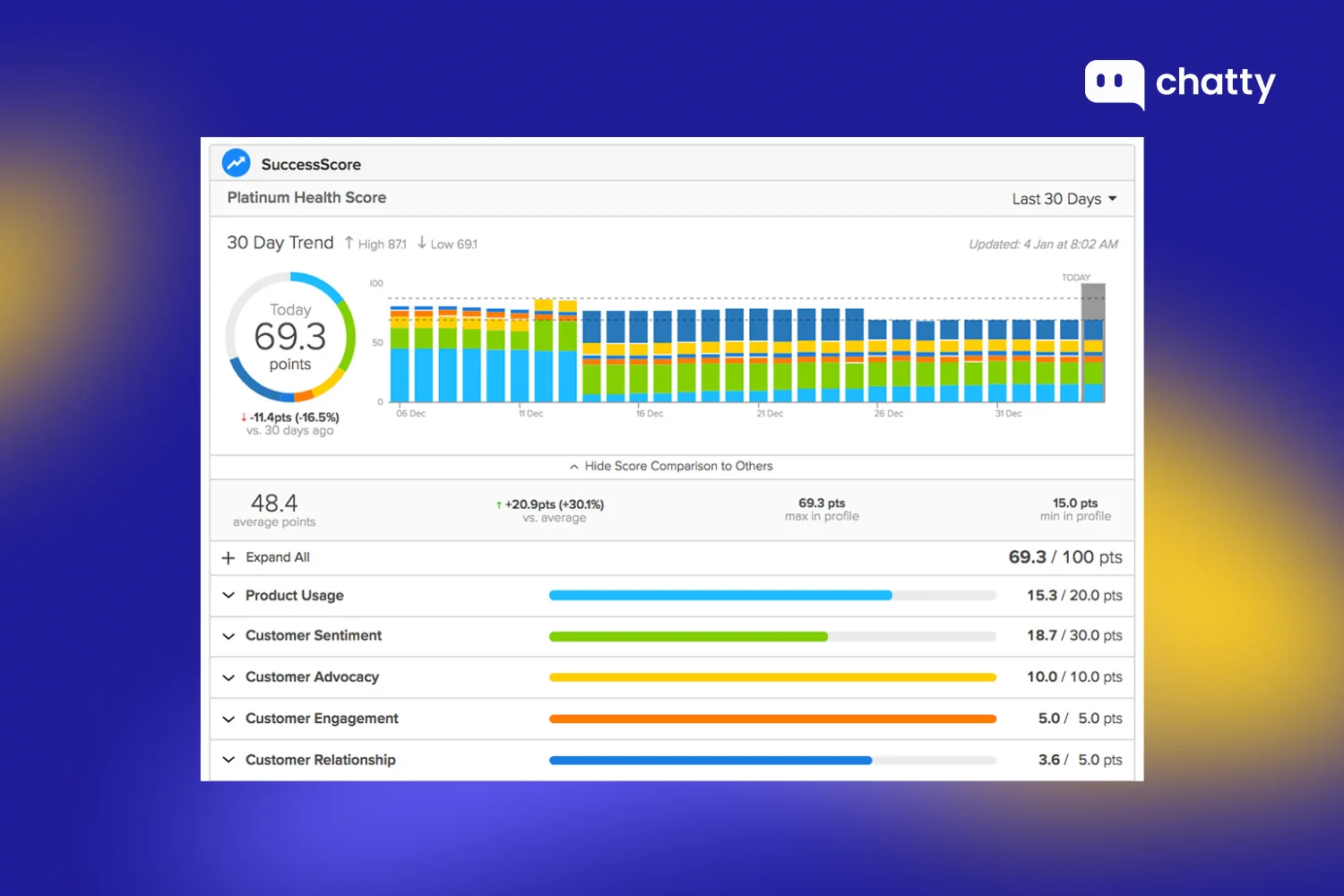
(Source: ClientSuccess)
- Detect adoption problems early: Many customers churn because they never fully adopt the product. AI tracks how features are used. It compares progress with successful customers. When adoption slows, teams can step in early. This prevents frustration and disengagement.
- Forecast renewals and revenue risk: Manual renewal forecasts rely too much on opinion. They are often optimistic. AI links health trends, adoption depth, and engagement to past outcomes. Then, leaders see risk earlier. Planning becomes more accurate.
- Surface hidden issues across systems: Some churn reasons do not show in usage data alone. AI connects product usage, support tickets, and sentiment. It reveals ongoing friction that manual reviews often miss. Teams can fix problems before they escalate.
Personalize & guide the customer journey
Customer journeys often fail because guidance arrives at the wrong time or in the wrong format. Static journeys assume linear progress and uniform needs. In reality, customers adopt at different speeds and face different blockers. Manual personalization cannot adapt as behavior diverges. AI enables behavior-driven journey guidance through the following use cases:
- Automate onboarding guidance and in-app coaching: Traditional onboarding follows fixed steps and timelines. AI monitors onboarding behavior in real time. It detects stalled activation steps. Contextual guidance is triggered immediately. This shortens time-to-value. Early confusion and drop-off are reduced.
- Personalize customer journey at scale: Manual personalization breaks down as customer volume grows. AI dynamically segments customers based on live behavior and intent signals. Guidance is continuously adjusted as usage patterns change. For example, Chatty, a Shopify-focused AI chatbot, applies this approach within live chat environments. It tailors guidance and product suggestions based on real-time customer intent. By the end, the e-commerce brand can personalize journeys at scale without added complexity.
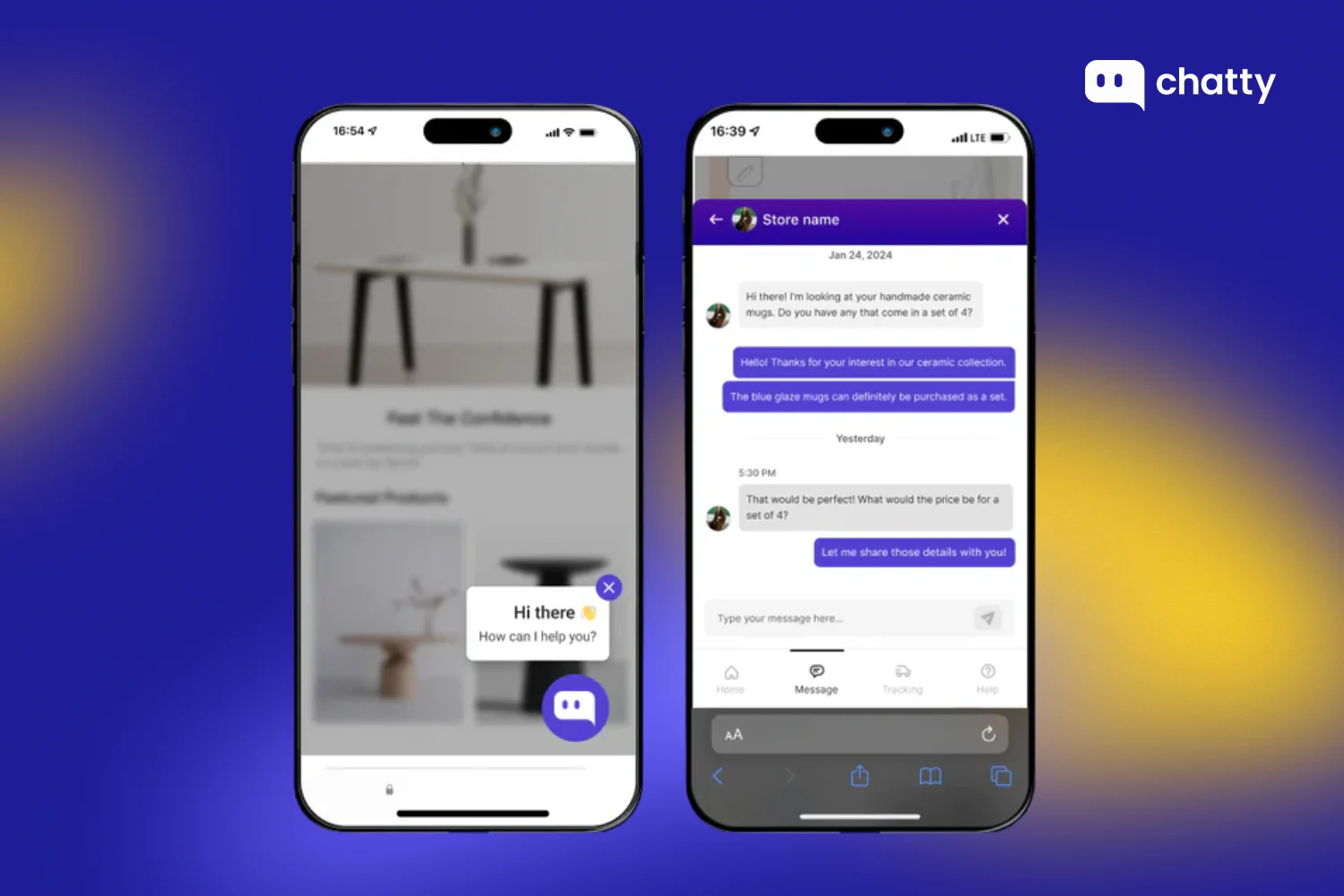
- Provide 24/7 AI self-service for how-to questions: Customers often need answers outside scheduled touchpoints. AI self-service resolves common how-to questions instantly using product knowledge and historical interactions. This reduces dependency on CSM availability while maintaining consistent guidance quality.
- Optimize playbooks based on historical success patterns: Many playbooks rely on assumptions rather than evidence. AI analyzes past customer journeys across segments. It identifies actions that consistently drive adoption and retention. Teams refine playbooks using outcomes. Execution becomes more consistent across accounts.
Empower CSMs with AI copilots
Customer success managers work in high-context environments. They manage many accounts, monitor multiple tools, and make frequent judgment calls. The limitation is not skill, but cognitive overload. AI copilots reduce friction and improve decision quality through these use cases:
- Recommend next-best actions for CSMs: CSMs often struggle to prioritize across accounts. AI analyzes real-time signals and recommends actions with the highest expected impact. This reduces reliance on intuition and improves execution consistency across the team.
- Generate success plans and quarterly business review (QBR) summaries: Preparing success plans and QBRs consumes significant time. AI generates structured drafts from usage data, goals, and outcomes. CSMs spend more time refining strategy instead of compiling information.
- Provide real-time account context before meetings: AI co-pilots automatically summarize account health, risks, and opportunities. CSMs enter conversations prepared and focused. Meetings become more strategic and value-driven.
Drive expansion & revenue growth
Expansion often fails because teams approach it too late or without clear signals. Upsell attempts without proven value realization erode trust and conversion rates.
AI enables systematic expansion by identifying readiness signals and automating revenue-critical actions. Specifically:
- Identify expansion and upsell opportunities: Expansion readiness depends on usage depth, feature saturation, and engagement momentum. AI analyzes these signals to flag accounts approaching value thresholds. Teams prioritize outreach based on evidence instead of assumptions.
- Automate follow-up emails and renewal reminders: Revenue leakage often results from inconsistent follow-up. AI automates lifecycle-based communication using timing and risk context. This ensures renewals and expansion conversations happen consistently without manual tracking.
Understand customer sentiment & intent
Product usage data explains what customers do, but not why. Many risks and opportunities first appear in language, not in metrics. AI analyzes sentiment and intent across customer communication to surface early signals of frustration, hesitation, or confidence. When these signals align with usage decline or slower engagement, teams gain the context needed to intervene earlier and respond with empathy.
Implementing AI in your customer success strategy
Effective AI implementation in customer success is not about tooling. It is a capability-building process. That process typically unfolds across four stages: readiness, adoption planning, change management, and governance.
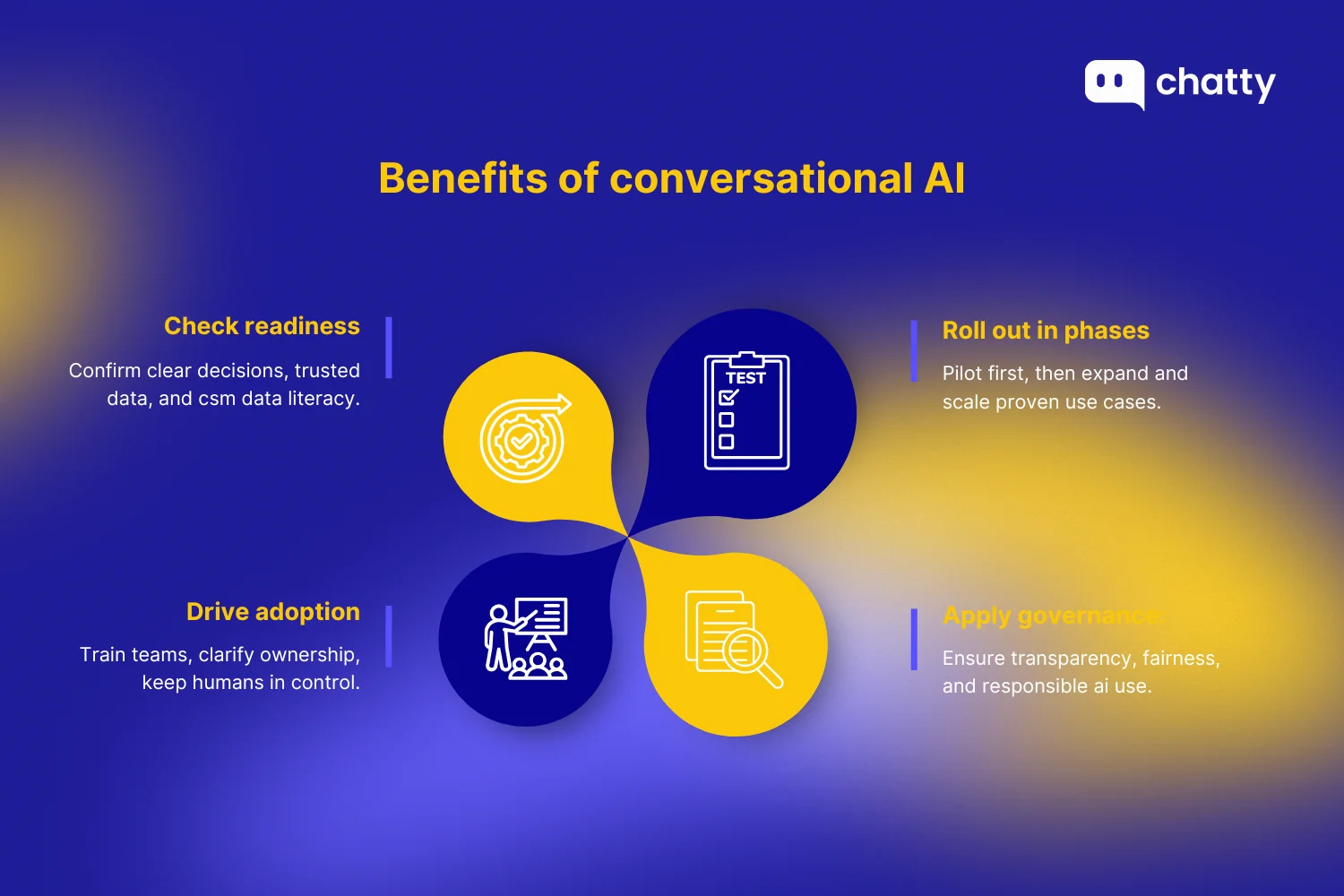
Getting started: readiness assessment
Before rolling out AI, teams need to answer a simple question: Which customer success decisions do we expect AI to improve today?
A readiness assessment is not a technical audit. It is a practical test of whether AI can meaningfully support real decisions already underway within the team.
In practice, strong teams review three areas:
- Data maturity: Can a customer success manager trust the signals shown today? For example, is product usage consistently tracked across accounts, or does adoption data vary by segment and integration?
- Team capability: Do customer success managers regularly use data to prioritize accounts, or do they rely mostly on intuition and anecdotes?
- Business focus: Is there a clear decision AI should inform first, such as which accounts need proactive outreach this week or which renewals carry the highest risk?
If teams struggle to answer these questions clearly, AI should not be deployed yet. Fixing input and decision clarity first prevents AI from amplifying noise rather than insight.
Building an AI adoption roadmap
Many AI initiatives fail because teams attempt to scale too quickly. Others stall by waiting for perfection. A phased roadmap balances learning with momentum:
- Awareness, such as educating teams on what AI can and cannot do
- Pilot, such as testing one use case, like churn risk detection on a subset of accounts
- Expand, such as applying proven models across regions or segments
- Scale, such as embedding AI recommendations into daily workflows
In addition, teams must balance quick wins with long-term capability building. Early success builds trust, while deeper integration creates a durable impact.
Change management and training
AI changes how decisions are made. Without trust and understanding, teams ignore recommendations. Change management focuses on adoption, not deployment:
- Building CS AI fluency and governance, such as explaining model logic and defining ownership
- Combining human judgment with AI insights, such as allowing CSMs to override recommendations with context
When teams understand why AI suggests an action, they use it more effectively. As a result, AI augments expertise instead of competing with it.
Ethical considerations and transparency
AI decisions affect customers directly. Poor governance creates risk. Responsible implementation requires clear standards:
- Responsible AI use, such as avoiding biased inputs and monitoring unintended outcomes
- Customer disclosure, such as explaining when AI influences guidance or prioritization
- Fairness, such as ensuring models do not disadvantage certain customer segments
Transparency builds trust with both customers and internal teams. It also reduces long-term legal and reputational risk.
The next era of AI in customer success: Orchestration replaces isolated automation
The next era of AI for customer success won't be defined by "more automation." It will be defined by orchestration: connecting signals → deciding what matters → triggering the right action across systems in near real time. Multiple research signals confirm this direction:
- By 2026, more than 80% of enterprises are expected to run generative AI in production, showing AI is moving into core operations
- 92% of executives plan to increase AI investment over the next three years, driven by efficiency and scale pressure
- A 5% increase in retention can raise profits by 25% to 95%, indicating that earlier intervention has a disproportionate financial impact
This trend is not limited to research. In practice, several businesses have already moved ahead to adapt to this shift, such as:
- Salesforce uses Einstein AI to drive automated next-best actions, prioritizing engagement and surfacing renewal risk without manual scoring.
- National Australia Bank deployed AI-driven customer insights, enabling more proactive outreach and boosting customer engagement by 40%.
So, what should your brand do to adapt to this era? Here are some practical steps to consider:
- Build real-time data flows across product, support, and CRM systems. AI delivers value only when signals are connected and updated continuously.
- Start with one end-to-end use case that automates context → decision → action, such as churn intervention playbooks or renewal risk workflows.
- Combine AI with human judgment by defining clear override paths, so CSMs own their execution and accountability rather than blindly relying on recommendations.
Final thought
AI for customer success is now a leadership decision, not a technical experiment. Organizations that treat AI as a core operating capability will move faster, intervene earlier, and scale retention more predictably. Those who delay will continue to rely on fragmented data and reactive processes. The next step is clear: choose a decision that matters, connect the signals behind it, and embed AI into execution. Competitive advantage will follow.
FAQ
AI for customer service focuses on resolving issues quickly. It optimizes response time, ticket routing, and deflection. The primary goal is efficiency in problem resolution. AI for customer success focuses on outcomes over time. It predicts risk, guides adoption, and supports retention and expansion. The goal is long-term value realization, not just issue closure.
Yes. Small teams often benefit earlier because capacity constraints are more severe. AI helps them prioritize correctly and avoid reactive work. For example, AI can flag at-risk accounts or automate follow-ups that a small team might otherwise miss. As a result, teams do more with limited headcount instead of scaling through hiring.
No. AI changes how CSMs work, not whether they are needed. AI handles monitoring, pattern detection, and routine execution. Humans provide judgment, relationship management, and strategic alignment. Teams that combine both outperform teams relying on either alone.
The main risks come from poor implementation, not the technology itself. Common risks include:
- Acting on inaccurate data, such as incomplete usage or CRM records
- Over-automation, such as triggering actions without human review
- Lack of transparency, such as unclear reasoning behind AI recommendations