











Traditional customer service models struggle with rising ticket volumes, slow response times, fragmented systems, and limited scalability. Manual workflows reduce efficiency, while disconnected channels create inconsistent experiences, all amid growing demand for real-time support across chat, voice, and messaging platforms.
Virtual agents address these challenges by combining AI-driven intent understanding, automation, and backend integration. They enable organizations to automate interactions, execute tasks instantly, and deliver consistent, scalable, and intelligent support across every customer and employee touchpoint.
In this complete enterprise guide, you'll learn what virtual agents are, how they work, their key technologies, business benefits, real-world use cases, implementation best practices, and the trends shaping their future in 2026 and beyond. Let's dive in!
- Virtual agents do far more than answer questions — they execute real tasks.
Unlike basic chatbots, virtual agents can check order status, update records, and book appointments autonomously.
- Fragmented channels and slow response times are the core enemy virtual agents solve.
Rising ticket volumes and disconnected systems create inconsistent experiences that manual workflows simply cannot scale to fix.
- Five key technologies working together are what make virtual agents genuinely intelligent.
NLP, machine learning, RPA, knowledge bases, and multimodal interaction combine to enable true end-to-end request resolution.
- Chatbots, virtual assistants, and virtual agents are not interchangeable — the differences are significant.
Only virtual agents combine AI-driven understanding with backend integration, making them capable of resolving requests rather than just responding.
- Scalability and consistency are the enterprise advantages that set virtual agents apart from human support alone.
Virtual agents handle common requests independently across every touchpoint, escalating to humans only when genuinely necessary.
What is a virtual agent
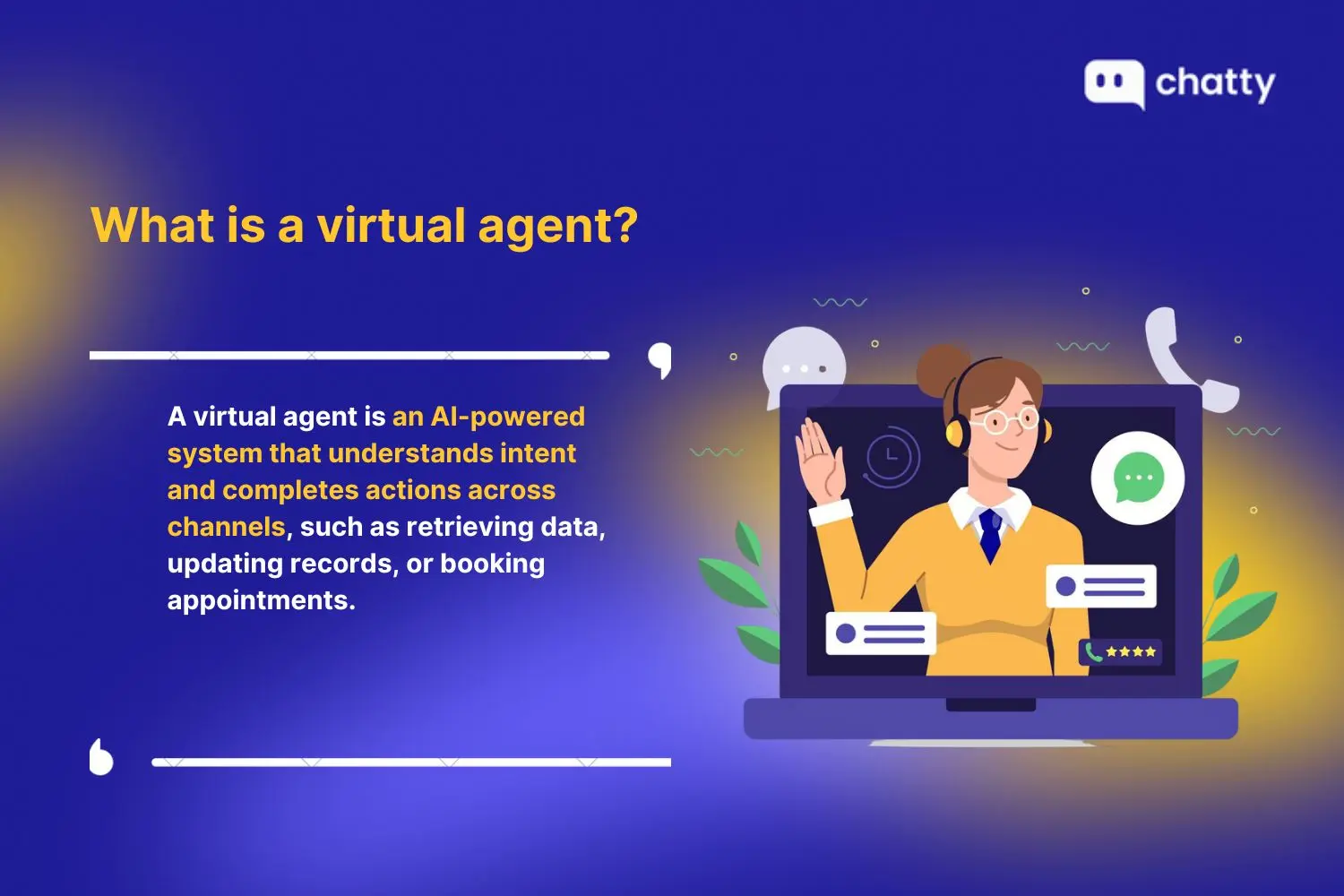
A virtual agent is an AI-powered system that understands user intent and executes tasks across multiple digital channels. Unlike basic chat interfaces, it does more than answer questions. A virtual agent can retrieve information, trigger workflows, and complete actions such as checking order status, updating records, or booking appointments.
Virtual agents are designed to work consistently across websites, mobile apps, messaging platforms, and voice channels. They handle common requests independently and escalate to human agents only when necessary. By combining conversation with backend execution, virtual agents help businesses deliver faster, more reliable service at scale.
Key technologies that enable virtual agents include:
- Natural language processing (NLP) for understanding user intent and context.
- Machine learning and agentic AI for continuous learning and improvement.
- Robotic process automation (RPA) for executing backend tasks and workflows.
- Knowledge base and intelligent search for accurate and consistent answers.
- Multimodal interaction across chat, voice, messaging apps, and applications.
With these capabilities, virtual agents go far beyond simple conversational tools. This makes it important to distinguish them from related concepts that may appear similar but serve different purposes:
- Chatbots: Typically focus on basic, text-based conversations and predefined flows, making them suitable for FAQs and simple interactions.
- Virtual assistants: May refer to software tools or human agents that provide manual support, often without deep automation or backend integration.
- Virtual agents: Combine AI-driven understanding with automated task execution and system integration, enabling them to resolve requests end to end rather than just respond.
This combination of intelligence, automation, and integration is what allows virtual agents to deliver a more seamless, efficient, and scalable customer experience.
Types and deployment models of virtual agents
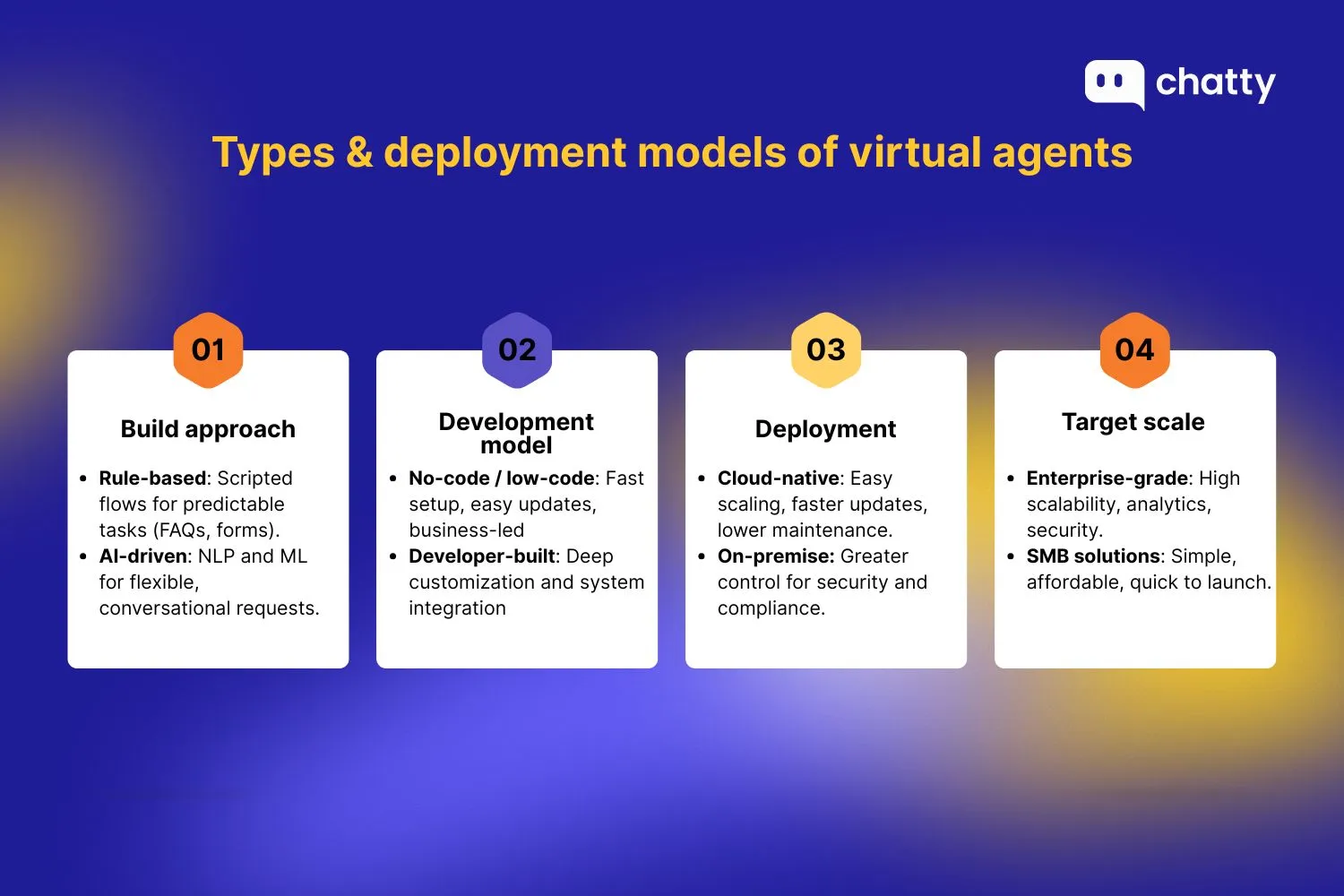
Virtual agents can be categorized in several ways depending on how they are built, deployed, and scaled. Understanding these differences helps organizations choose solutions that align with their technical capacity, budget, and customer experience goals.
Rule-based vs. AI-driven agents
Rule-based virtual agents follow predefined scripts and decision trees, making them suitable for handling predictable, structured interactions such as FAQs or simple form submissions. AI-driven agents, on the other hand, use natural language processing and machine learning to understand intent, manage context, and respond more flexibly. As customer queries become more complex or conversational, AI-driven agents are generally better suited to maintain accuracy and user satisfaction.
No-code/low-code vs. developer-built agents
No-code and low-code platforms enable business teams to quickly design and deploy virtual agents using visual builders and preconfigured templates. These are ideal for rapid experimentation and frequent updates. Developer-built agents offer deeper customization and tighter integration with internal systems, but they require engineering resources and longer development cycles.
Cloud-native vs. on-premise deployments
Cloud-native virtual agents are hosted by vendors and scale easily as demand grows, with faster updates and lower maintenance overhead. On-premise deployments provide greater control over data and infrastructure, which can be important for organizations with strict compliance or security requirements.
Enterprise-grade vs. SMB solutions
Enterprise-grade platforms emphasize scalability, advanced analytics, security, and integration across multiple channels and departments. SMB-focused solutions prioritize ease of use, affordability, and fast time-to-value, making them practical for smaller teams with limited technical resources.
How virtual agents work
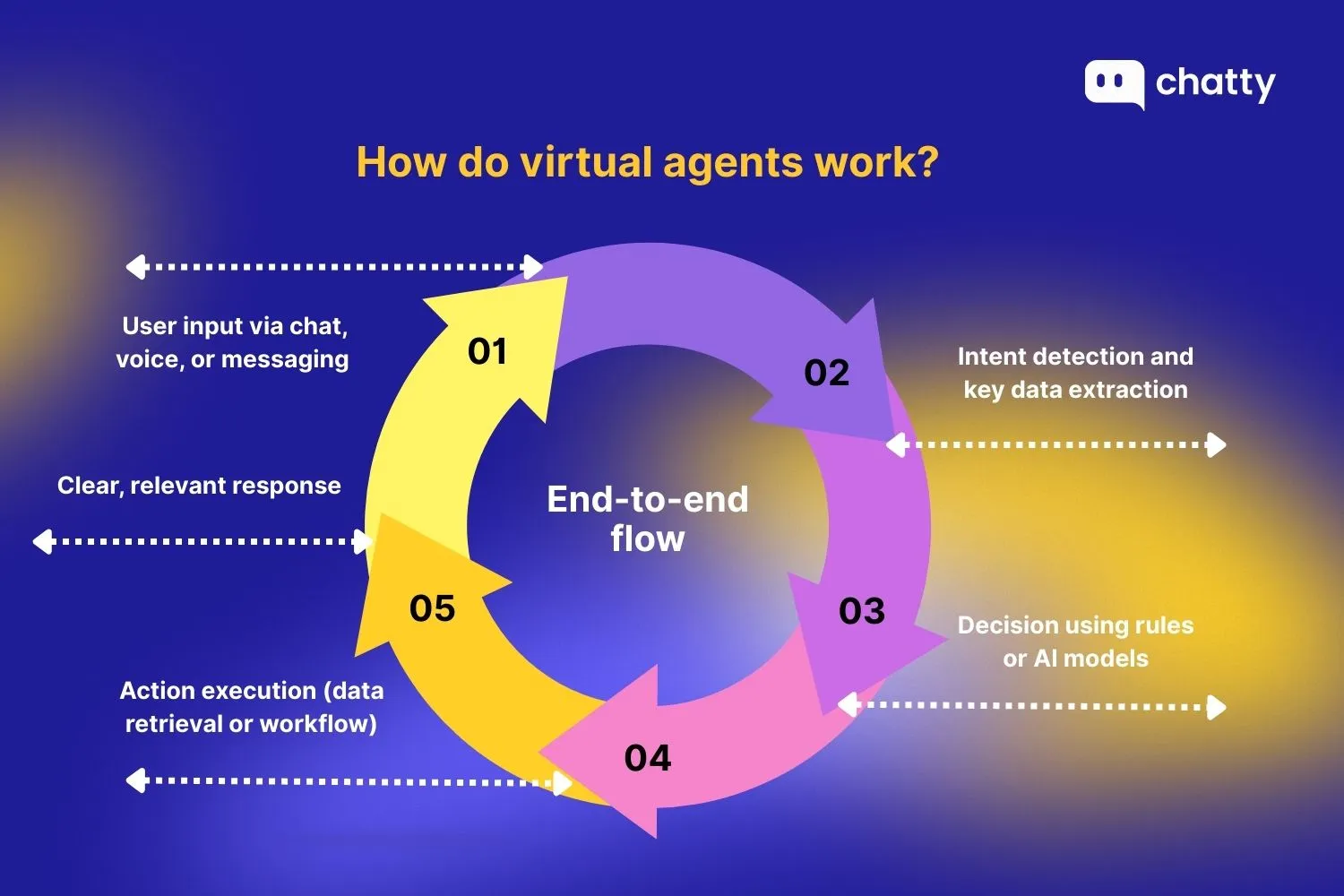
Virtual agents handle user requests through a simple, structured flow that ensures fast and consistent responses across digital channels. When a user sends a message through chat, voice, or a messaging app, the system analyzes the input to understand the user's intent and decide the best next action.
The end-to-end request flow typically includes:
- Receiving user input from the selected channel.
- Detecting intent and extracting key information.
- Making a decision based on rules or AI models.
- Acting, such as fetching data or triggering a workflow.
- Delivering a clear and relevant response.
To support natural conversations, virtual agents use context management and conversation memory. Instead of treating each message separately, the system remembers previous inputs, user preferences, and session details. This allows the agent to handle follow-up questions, complete multi-step tasks, and avoid repeatedly asking for the same information, creating a smoother experience.
When the virtual agent cannot confidently resolve a request, fallback handling is applied. The agent may ask clarifying questions or escalate the conversation to a human agent, sharing the full conversation history to prevent repetition. Omnichannel orchestration ensures the same logic and context are maintained across websites, mobile apps, and messaging platforms, so users can switch channels without disrupting the interaction.
Business benefits of virtual agents
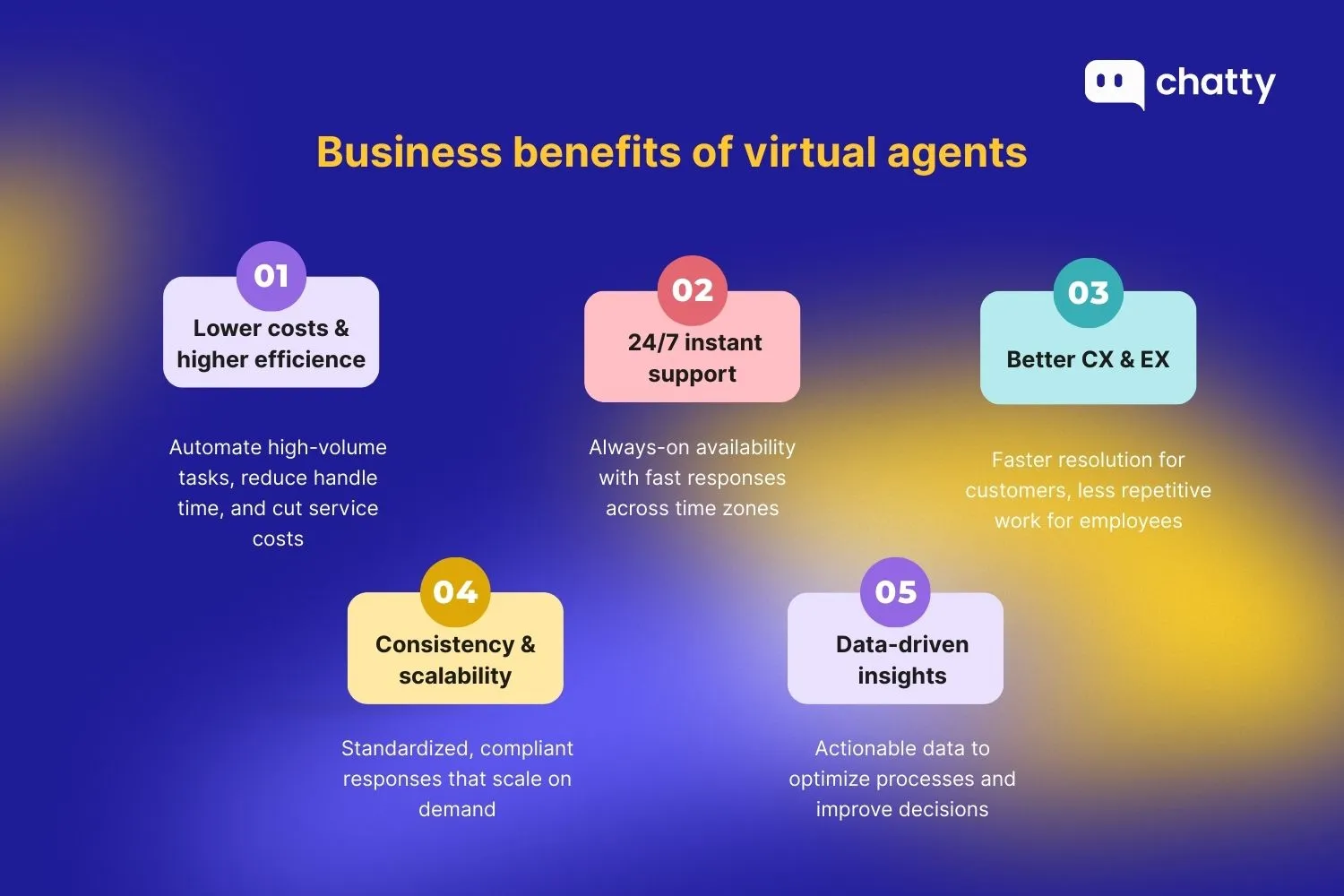
Virtual agents deliver measurable business value by combining automation, intelligence, and seamless integration with human workflows. When implemented strategically, they impact cost structures, service quality, and decision-making across the organization.
Cost reduction and operational efficiency
Virtual agents automate repetitive, high-volume tasks, reducing human agent workload and service costs. Forrester Consulting estimates that large organizations can save $6.00 per contained conversation using IBM WatsonX Assistant, while automated call routing delivers savings of up to $7.75 per correctly routed call. Additionally, average handle time decreases by 12%, significantly improving productivity.
24/7 availability and instant response
Virtual agents provide continuous customer support across all time zones, enabling immediate responses regardless of business hours. IBM research shows that organizations achieve average containment rates of 64%, allowing most routine inquiries to be resolved instantly. This minimizes wait times, reduces customer frustration, and ensures consistent service quality during peak demand periods.
Improved customer experience (CX) and employee experience (EX)
A global IBM Institute for Business Value and Oxford Economics survey of 1,005 organizations across 33 countries found that 99% reported higher customer satisfaction, with an average 8-point improvement in satisfaction and a 4-point increase in NPS. By reducing repetitive workloads, virtual agents also enhance employee morale and retention, lowering turnover-related costs.
Consistency, scalability, and quality control
Virtual agents deliver standardized, policy-compliant responses across channels, ensuring uniform service quality. Their ability to scale instantly allows organizations to handle fluctuating demand without adding staff, maintaining performance while controlling labor and infrastructure costs.
Data-driven optimization and insights
Virtual agents collect structured interaction data that reveals trends, customer pain points, and service gaps. These insights enable continuous process optimization, improved personalization, and better strategic decisions, ultimately driving operational efficiency and sustainable business growth.
Personalization, issue resolution, and other virtual agent features
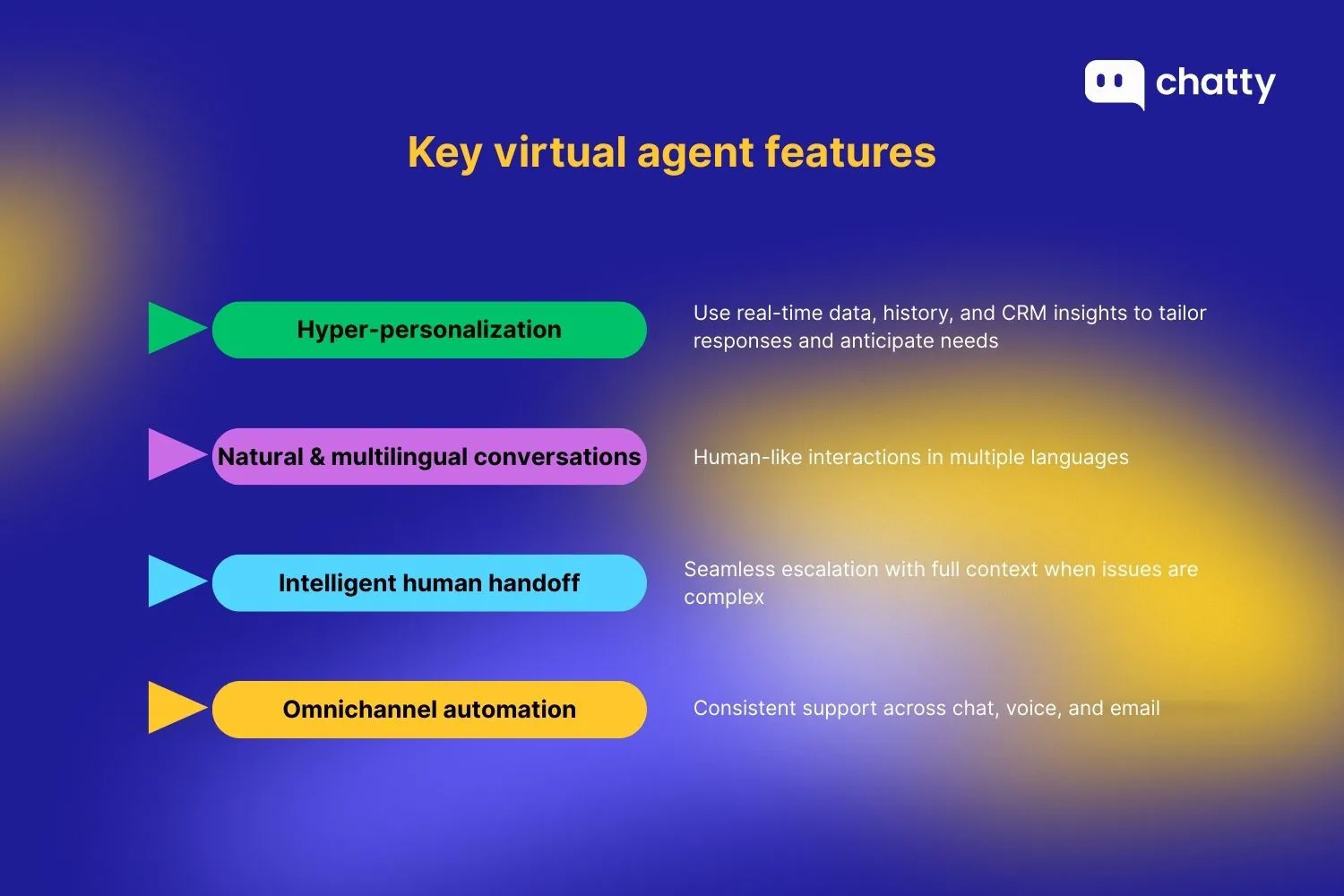
Below are the key features that enable virtual agents to deliver intelligent, personalized, and seamless customer experiences.
- Hyper-personalized customer engagement: Virtual agents use real-time data, browsing behavior, purchase history, and CRM records to tailor every interaction. For example, if a returning customer contacts support about a delayed order, the virtual agent can instantly recognize the user, check the order status, and provide a personalized update or compensation offer. Advanced AI can even anticipate needs, such as suggesting product replacements before a complaint is made, leading to faster resolutions and higher satisfaction.
- Natural and multilingual conversational interactions: Modern virtual agents communicate in a natural, friendly way, making conversations feel human-like. For instance, a customer can ask, "Where is my package?" and receive a clear, conversational response instead of a rigid, scripted reply. Multilingual support allows customers to interact in their preferred language, helping global businesses deliver consistent service across different regions.
- Intelligent human handoff: When a situation becomes complex, such as billing disputes or emotional complaints, the virtual agent seamlessly transfers the conversation to a human agent. It passes along the full context, including chat history and actions taken, so customers don't have to repeat themselves.
- Automated omnichannel support: Virtual agents work across voice calls, live chat, and email. For example, they can reset passwords via chat, confirm identities during phone calls, and send refund confirmations through email, ensuring smooth and consistent service across all channels.
Key use cases of virtual agents
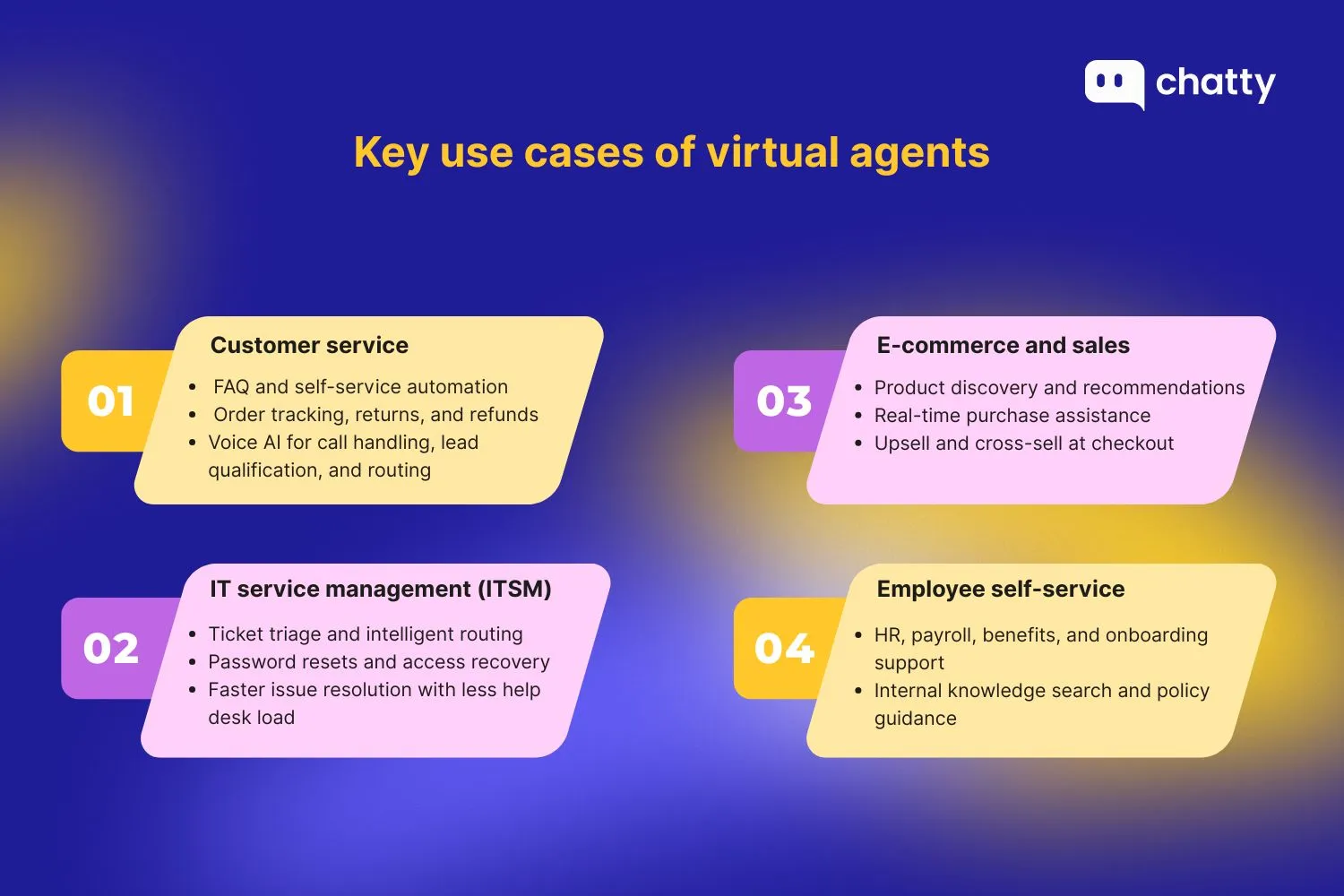
Virtual agents are widely adopted across industries because they can handle high-volume interactions, automate routine tasks, and support more complex workflows alongside human teams. Below are the most common and high-impact use cases.
Customer service (general enterprise)
Virtual agents handle routine support tasks at enterprise scale — answering FAQs, checking ticket status, and guiding users through standard procedures across business units. The focus at the enterprise level is consistency and volume: the same virtual agent policy applied across regional offices, multiple product lines, and diverse customer segments.
For e-commerce-specific customer support — Shopify product assistance, conversational shopping, order tracking, and post-purchase automation — see our dedicated guide on AI customer service for e-commerce.
IT service management (ITSM) and enterprise service desk
Enterprise virtual agents integrate directly with platforms like ServiceNow, Jira Service Management, and BMC Helix to automate the full service desk. Through ticket triage and routing, they classify incidents by category, priority, and impact, then route them to the correct L1, L2, or L3 team based on SLA requirements. A critical database outage escalates immediately to infrastructure on-call, while a low-priority software request flows to standard queues.
Beyond ticketing, enterprise virtual agents support the complete ITSM lifecycle:
- Incident management: Automatic diagnosis, status updates to affected users, and coordination with monitoring tools such as Datadog or Splunk during major incidents.
- Change management: Pre-built approval workflows, impact assessment prompts, and CAB notifications for standard, normal, and emergency changes.
- Asset and configuration management: Real-time queries against the CMDB for hardware assignments, software license allocation, and service dependency mapping.
- Access and identity: Secure self-service for password resets, MFA recovery, VPN access, and application provisioning via SAML/SSO integration.
- Service request fulfillment: Automated provisioning for standard items — new laptops, software licenses, mailing list memberships — with approval chains built directly into the conversation.
This approach reduces IT help desk overload, compresses mean time to resolution, and frees IT engineers for architecture and platform work instead of repetitive tickets.
HR virtual agents and internal helpdesk
HR virtual agents absorb the high-volume, repetitive queries that consume HR business partners' time. Integrated with HRIS platforms such as Workday, SAP SuccessFactors, or BambooHR, they handle the full employee lifecycle:
- Leave and time-off management: Policy lookup ("How many PTO days do I have?"), request submission, approval routing to managers, and calendar integration.
- Payroll and compensation queries: Paystub access, tax form retrieval, bonus schedule explanations, and deduction clarifications — with authentication gating so sensitive data never reaches unauthorized agents.
- Benefits enrollment and updates: Guided walkthroughs during open enrollment, qualifying life event updates, and plan comparison support.
- Onboarding automation: Day-one checklists, equipment requests, training assignments, policy acknowledgments, and introductions to key stakeholders — all coordinated via conversational workflows.
- Policy and compliance lookup: Instant answers about remote work policy, expense reimbursement, code of conduct, and regional compliance requirements.
Beyond HR, the internal helpdesk pattern extends across back-office functions: finance (expense approvals, purchase order status), legal (contract templates, NDA generation), facilities (room booking, maintenance tickets), and procurement (vendor lookup, requisition tracking). The common thread is that employees get instant, authoritative answers through a single conversational interface, while back-office teams reclaim hours lost to repetitive requests.
How to design and implement a virtual agent
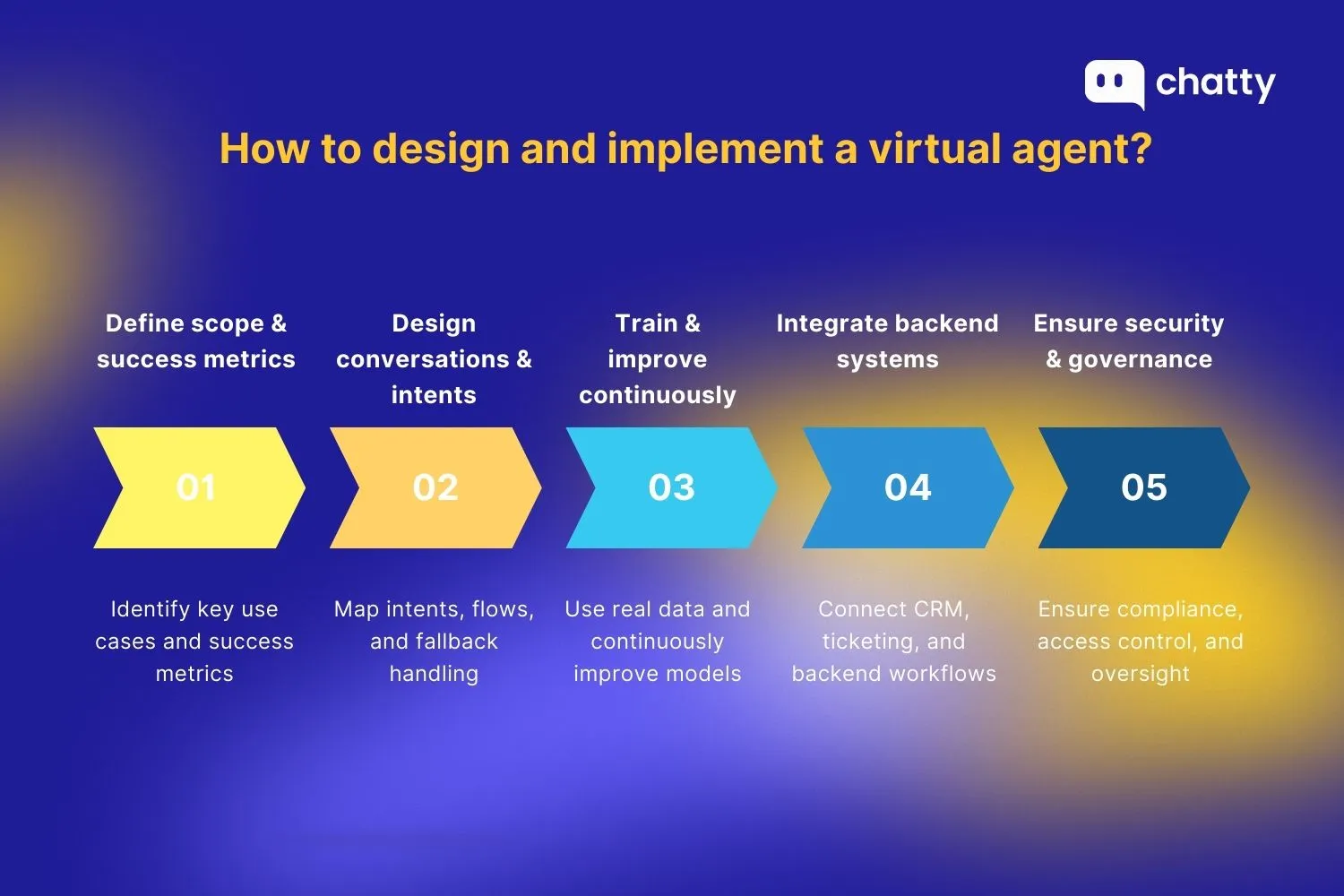
The following steps outline a practical framework for designing, building, and deploying a virtual agent in real-world business environments.
Defining scope, goals, and KPIs
Begin by defining the exact business use cases the virtual agent will support. For example, in customer service, this may include order tracking, refund requests, delivery updates, and account troubleshooting. In HR, it could cover leave requests, payroll queries, and policy lookups.
Clearly document supported tasks, escalation scenarios, and handoff rules to human agents. Set measurable goals such as reducing live chat volume by 30%, achieving a 70% self-service resolution rate, or cutting average response time below five seconds. Track KPIs including task completion rate, escalation frequency, user satisfaction (CSAT), and cost per interaction.
Conversation design and intent modeling
Analyze historical chat logs, support tickets, and call transcripts to identify high-frequency intents such as "track my order," "reset my password," or "cancel subscription." For each intent, define sample inputs, required system actions, and response templates. Design step-by-step dialogue flows that guide users logically, such as requesting an order ID before displaying shipment status. Add fallback handling through clarification prompts or guided menus to reduce misunderstandings and improve completion rates.
Training data and continuous learning
Use real customer conversations as training data, covering informal language, abbreviations, and misspellings. Label utterances by intent and extract key entities such as order numbers, dates, and product names. Review failed interactions weekly to identify gaps, and retrain models monthly with updated data. Implement feedback tools like thumbs-up/down ratings to support continuous improvement.
Backend system integration
Integrate the agent with operational systems such as CRM platforms, ticketing tools, payment gateways, and inventory databases. For example, connect to order management systems to retrieve shipment status or to authentication services for secure password resets. Use API orchestration layers to manage workflow logic, error handling, and retries. Prioritize integrations that directly reduce manual work and accelerate user resolution.
Security, compliance, and governance
Apply encryption for data in transit and at rest, and enforce user authentication for sensitive actions. Log interactions for auditing and ensure compliance with data protection regulations. Establish governance processes for content updates, model changes, and deployment approvals to maintain reliability, security, and accountability.
Challenges and limitations of virtual agents
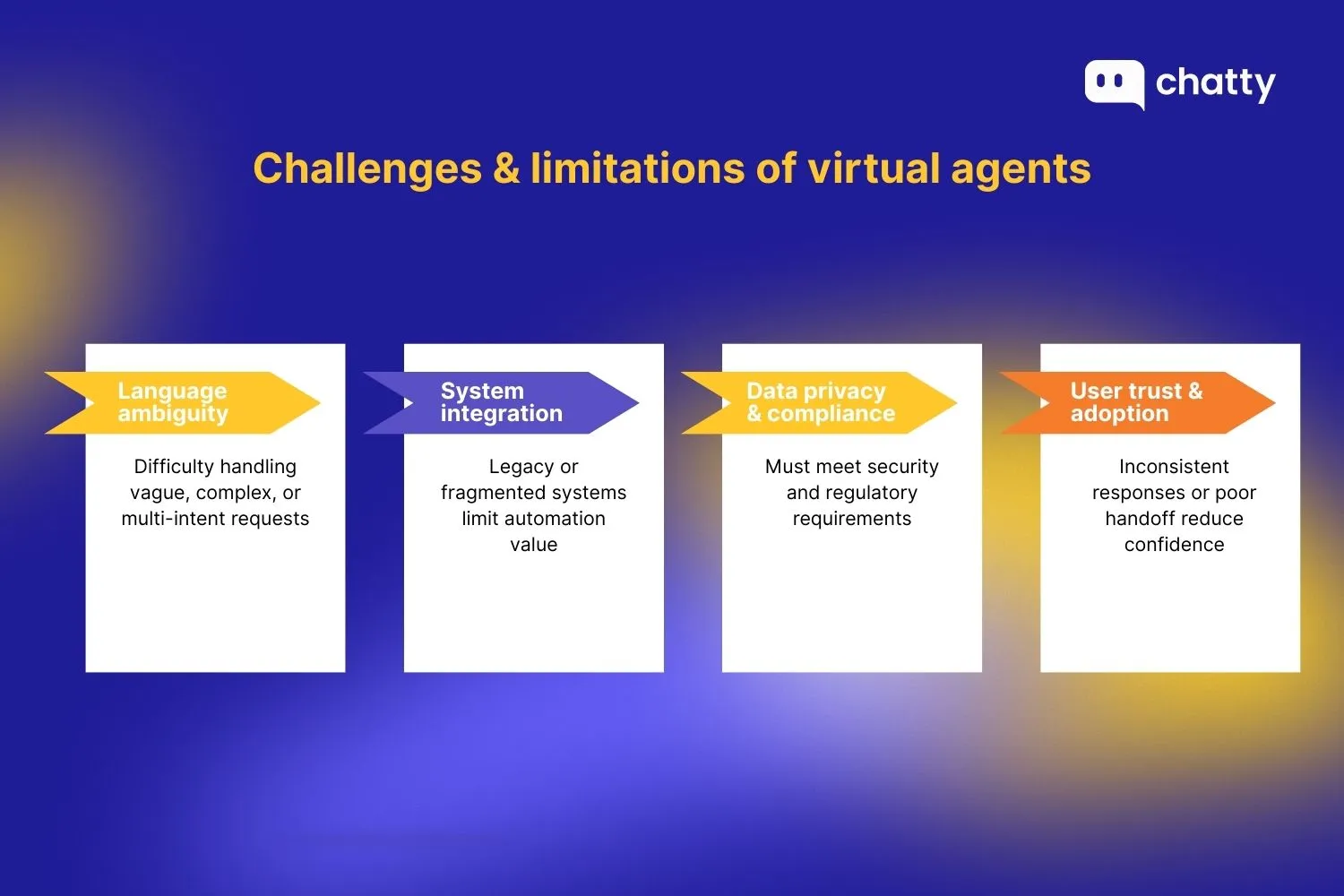
While virtual agents deliver clear operational benefits, they also come with challenges that organizations must address to ensure successful adoption and long-term value.
- Language ambiguity and complex context handling: Virtual agents can struggle with unclear or complex language. Users often phrase requests vaguely, combine multiple intents, or change topics mid-conversation. Even advanced AI may misinterpret tone, intent, or domain-specific terminology, which can lead to inaccurate responses. To avoid poor experiences, organizations must design strong context management, error handling, and human escalation flows.
- Integration complexity across enterprise systems: Virtual agents deliver the most value when connected to systems such as CRM, ERP, billing, and knowledge bases. Integrating these systems can be challenging, particularly in environments with legacy platforms or fragmented data. Limited integrations restrict what the agent can do, reducing it to basic Q&A instead of enabling end-to-end task completion.
- Data privacy and regulatory compliance: Because virtual agents process personal and sometimes sensitive data, organizations must ensure strict compliance with data protection regulations such as GDPR. This requires secure data handling, access controls, and monitoring. Failure to meet compliance standards can expose organizations to legal risk and reputational damage.
- User trust and adoption barriers: If a virtual agent delivers inconsistent answers or makes it difficult to reach a human agent, users may lose trust. Clear communication of capabilities, reliable performance, and easy escalation are essential to encourage adoption.
Future trends of virtual agents
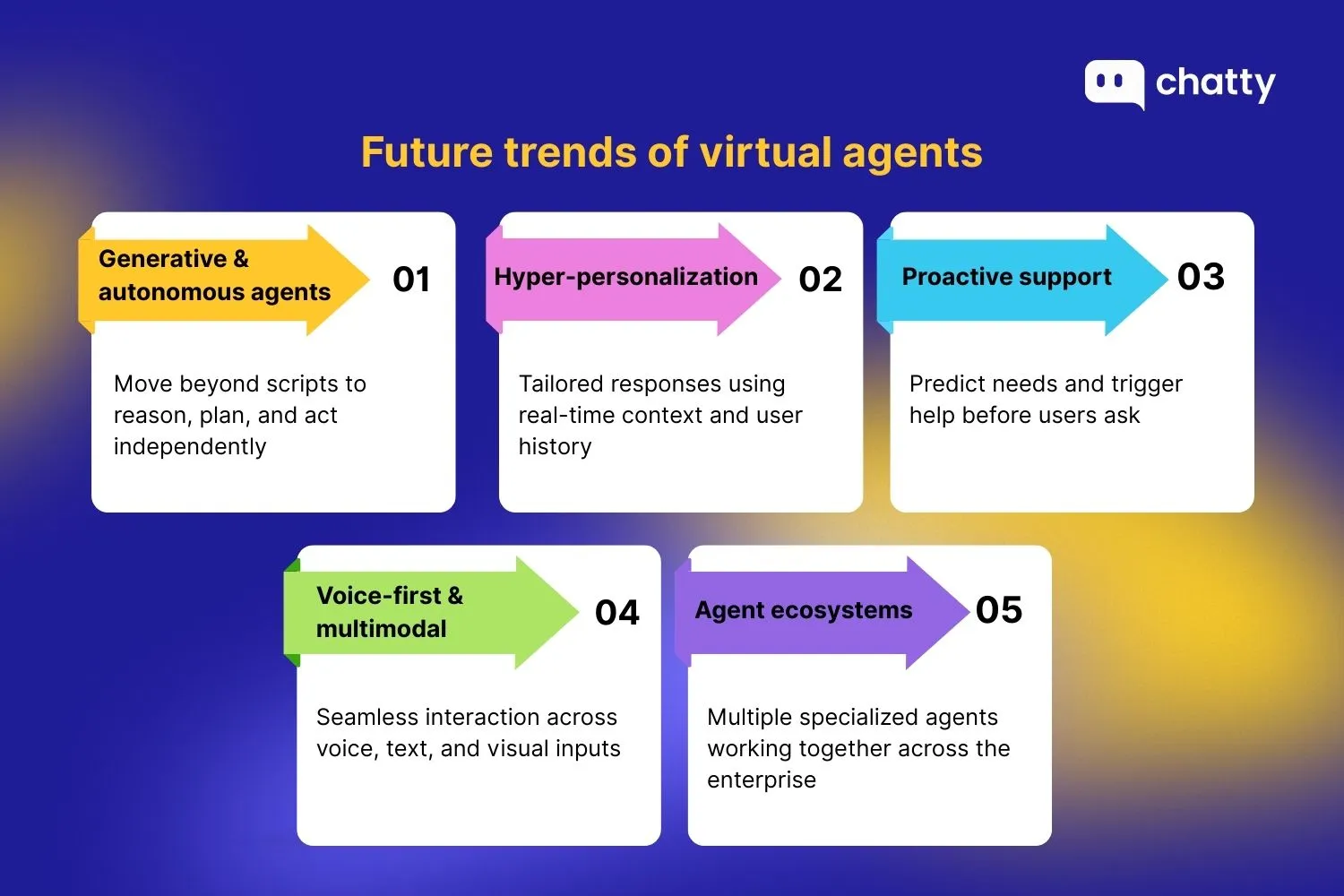
Virtual agents are evolving rapidly as AI technologies mature and enterprise adoption deepens. Several key trends are shaping how virtual agents will be designed, deployed, and used in the coming years.
- Generative AI and autonomous agents: Virtual agents are moving beyond predefined scripts toward autonomous behavior powered by generative AI. These agents can reason through complex requests, plan multi-step actions, and execute them across systems with limited human oversight. This enables more flexible problem-solving and supports advanced use cases that were previously handled only by human agents.
- Hyper-personalized conversations: Future virtual agents will deliver more personalized interactions by using real-time context, historical data, and user preferences. Instead of giving generic answers, they will adapt tone, content, and recommendations to each individual, improving relevance and engagement across customer and employee experiences.
- Proactive and predictive support: Instead of reacting to requests, future virtual agents will anticipate user needs by analyzing patterns and behaviors. For example, Cisco research projects that 68% of customer support interactions could be automated by agentic AI by 2028, enabling systems to trigger alerts and suggestions before users ask for help.
- Voice-first and multimodal experiences: As voice recognition and multimodal AI improve, virtual agents will support seamless interactions across voice, text, and visual inputs. Users will switch naturally between channels and devices without losing context.
- Enterprise-wide agent ecosystems: Organizations will deploy multiple specialized virtual agents that collaborate across departments. These agents will share data and context, creating unified, end-to-end digital experiences.
To recap
Virtual agents represent the next evolution of conversational AI by combining intelligent intent understanding with automated action execution across enterprise systems. In this guide, we explored what virtual agents are, how they work, their deployment models, core benefits, and the wide range of business use cases they enable, including customer service, IT support, sales, and employee self-service.
We also covered practical implementation strategies, key challenges, and emerging trends such as generative AI and proactive automation. As enterprises accelerate digital transformation, virtual agents will play a central role in delivering scalable, efficient, and highly personalized digital experiences.
FAQ
How is a virtual agent different from a chatbot?
A chatbot typically handles simple, text-based conversations using predefined flows. A virtual agent goes further by understanding intent, managing context, integrating with backend systems, and executing actions such as processing requests, updating records, or escalating issues across multiple channels.
Does AI power virtual agents?
Yes. Virtual agents are powered by AI technologies such as natural language processing, machine learning, and sometimes generative AI. These enable them to understand user intent, learn from interactions, improve over time, and deliver more accurate, context-aware responses.
Can a virtual agent replace human customer support?
Virtual agents are not designed to fully replace human support. They handle routine, repetitive tasks efficiently, while complex, emotional, or high-risk issues are escalated to human agents. This hybrid approach improves speed, consistency, and overall customer experience.
How much does it cost to implement a virtual agent?
Costs vary based on complexity, channels, integrations, and scale. Basic virtual agents may cost a few thousand dollars annually, while enterprise-grade deployments can reach six figures. Ongoing expenses include training, platform fees, maintenance, and continuous optimization.
What industries benefit most from virtual agents?
Industries with high interaction volumes benefit most, including customer service, e-commerce, banking, insurance, healthcare, telecom, and IT services. Virtual agents are also widely used in HR and internal operations to automate employee support and knowledge access.
How secure are virtual agents for handling customer data?
Enterprise virtual agents are built with strong security measures such as encryption, role-based access, audit logs, and compliance with regulations like GDPR or HIPAA. Security depends on proper configuration, secure integrations, and governance practices across connected systems.
How long does it take to deploy a virtual agent?
Deployment timelines depend on scope and complexity. Simple use cases can launch in two to four weeks, while enterprise implementations with multiple integrations and advanced AI training may take several months to design, test, and optimize effectively.
A chatbot typically handles simple, text-based conversations using predefined flows. A virtual agent goes further by understanding intent, managing context, integrating with backend systems, and executing actions such as processing requests, updating records, or escalating issues across multiple channels.
Yes. Virtual agents are powered by AI technologies such as natural language processing, machine learning, and sometimes generative AI. These enable them to understand user intent, learn from interactions, improve over time, and deliver more accurate, context-aware responses.
Virtual agents are not designed to fully replace human support. They handle routine, repetitive tasks efficiently, while complex, emotional, or high-risk issues are escalated to human agents. This hybrid approach improves speed, consistency, and overall customer experience.
Costs vary based on complexity, channels, integrations, and scale. Basic virtual agents may cost a few thousand dollars annually, while enterprise-grade deployments can reach six figures. Ongoing expenses include training, platform fees, maintenance, and continuous optimization.
Industries with high interaction volumes benefit most, including customer service, e-commerce, banking, insurance, healthcare, telecom, and IT services. Virtual agents are also widely used in HR and internal operations to automate employee support and knowledge access.
Enterprise virtual agents are built with strong security measures such as encryption, role-based access, audit logs, and compliance with regulations like GDPR or HIPAA. Security depends on proper configuration, secure integrations, and governance practices across connected systems.
Deployment timelines depend on scope and complexity. Simple use cases can launch in two to four weeks, while enterprise implementations with multiple integrations and advanced AI training may take several months to design, test, and optimize effectively.